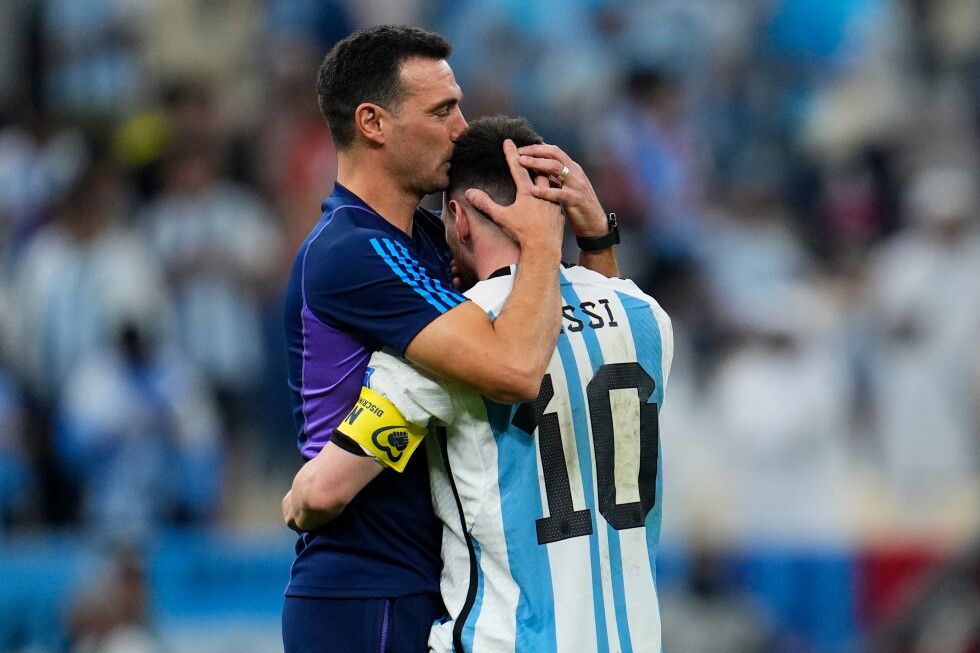
As Argentina counts down to the 2026 FIFA World Cup, all eyes are fixed on head coach Lionel Scaloni, the quiet architect of the nation’s 2022 global title who is now chasing an almost unprecedented back-to-back championship. The iconic image of his icy composure after Gonzalo Montiel’s decisive penalty sealed Argentina’s third World Cup crown against France in 2022 remains etched in football fans’ memories: instead of erupting in celebration, Scaloni stood motionless and silent on the touchline, seemingly numb to the historic achievement he had just helped deliver. It was only minutes later, when a player embraced him and whispered the words “We are world champions,” that the coach finally broke down in tears. That unflappable temperament, it turns out, is no accident — it has been honed by a daily routine far from the roar of football stadiums.
Longtime acquaintances of Scaloni trace his remarkable emotional control to his post-playing career hobby: long-distance cycling. Picked up on the advice of his friend, former Spanish tennis star Carlos Moyá, the 48-year-old dedicates two to three hours every day to pedaling, whether it be through the mountainous terrain of Mallorca — the Spanish island he calls home — or along the quiet trails of his native Pujato, in northwest Argentina. For Scaloni, cycling is far more than a fitness activity: it is a mental reset and a form of therapy that allows him to work through tactical plans, analyze opponents, and stay grounded amid the pressure of international football.
“On the bike, you can think about your team, your opponent, how to prepare for the match. It really clears my head. It’s a good escape … it helps me lower my expectations, be calmer,” Scaloni explained in recent interviews.
That calm has been tested repeatedly throughout his tenure as Argentina’s head coach, a role he never expected to hold long-term. After Argentina’s humiliating round-of-16 exit from the 2018 Russia World Cup, Scaloni — a former Argentina international with zero prior experience managing a professional club — stepped into the role on an interim basis, while the Argentine Football Association (AFA) courted high-profile candidates such as Mauricio Pochettino and Diego Simeone. At the time, even Argentine legend Diego Maradona dismissed him, sneering, “Scaloni? He can’t even direct traffic.”
Undeterred by the widespread criticism of his inexperience, Scaloni steadily built a cohesive, hungry team. He led Argentina to the 2021 Copa América title, navigated a successful 2022 World Cup qualifying campaign, and silenced doubters again in Qatar after a shocking opening-match loss to Saudi Arabia. Mid-tournament, he revamped his lineup, giving opportunities to young rookies including Enzo Fernández, Alexis Mac Allister, and Julián Álvarez, and drew out the best performance of Lionel Messi’s long World Cup career, ultimately lifting the sport’s biggest prize.
Today, Scaloni prepares to make history as only the third Argentine coach to lead the national side into consecutive World Cups, following legendary champions César Luis Menotti (1978, 1982) and Carlos Bilardo (1986, 1990). The youngest of the three, however, rejects any comparison to the iconic managers who came before him, noting “They have established careers, they defined an era.”
Now, the challenge of repeating as champion looms larger than ever. No men’s World Cup champion has successfully defended their title since Brazil in 1962, and Scaloni faces no shortage of obstacles: his star player Messi, 38, is nearing the end of his international career; the AFA is mired in off-field turmoil, with leadership facing corruption accusations and widespread internal anger over league format changes and refereeing calls. Even World Cup preparation has drawn criticism: the AFA has arranged warm-up friendlies against low-ranked sides, including Indonesia, Puerto Rico, Angola, Mauritania, and Zambia, with two final pre-tournament matches scheduled against non-qualifiers Honduras and Iceland in June.
Scaloni, for his part, has refused to publically air grievances. While he shocked fans in November 2023 by hinting at a potential exit after a qualifying win over Brazil — later clarifying he was overwhelmed by serious health issues affecting his elderly parents, amid unconfirmed rumors of friction with players over off-field behavior — he has remained in the role and stayed true to his no-nonsense approach. He has made clear to his squad that winning the 2022 title does not guarantee anyone a spot on the 2026 roster, demanding constant focus and hunger from his players.
“I don’t dwell on past achievements; you always have to keep looking ahead,” he said in late 2025. “With this jersey, you don’t have time to relax and think your place is secure.”
His approach has paid off in the years since Qatar: Argentina claimed back-to-back Copa América titles in 2021 and 2024, and finished top of South American 2026 World Cup qualifying, even with Messi missing multiple matches due to injury. 20 of the 26 players from the 2022 title-winning squad, including Messi, have been included in Scaloni’s preliminary 55-man roster for the upcoming tournament.
Jorge Valdano, a 1986 World Cup champion with Argentina, praised Scaloni’s work in an interview with the Associated Press, noting “Argentina has achieved the best thing a national team can achieve: being a team. It’s a team with very clear leadership, that of the coach and Leo Messi, and players who haven’t lost their hunger.”
Argentina kicks off its 2026 World Cup Group J campaign in Kansas City on June 16 against Algeria, followed by matches against Austria on June 22 and Jordan on June 27. Scaloni retains the same calm demeanor that carried his side to glory four years ago, fully aware of the weight of expectation from Argentine fans who demand another title and will not accept disappointment.
“We’re doing well, we’re eager. We’re aware that our opponents will play us differently because we’re the reigning champions,” Scaloni said. “The important thing is that we’ll be there. After that, it’s football, and anything can happen.” “To win a World Cup, a lot of things have to come together, not just playing well. It’s very difficult, but not impossible.”