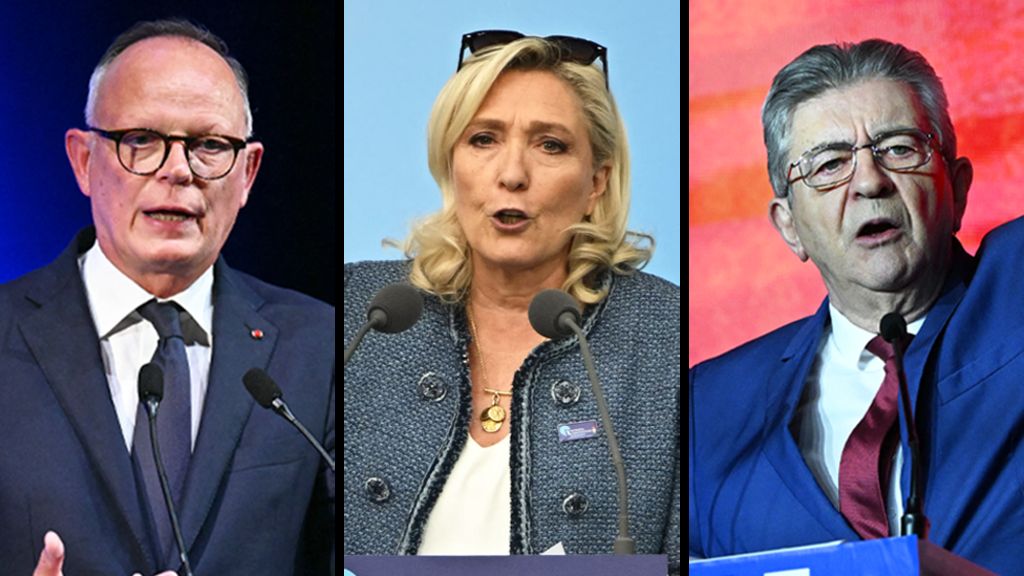
With exactly 12 months remaining until France heads to the polls to elect its next president, the most pressing question hanging over the race is whether any candidate can prevent the final runoff from devolving into a head-to-head clash between the hard left and hard right. As of now, polling consistently points to one figure as the answer: Emmanuel Macron’s former prime minister, centre-right politician Edouard Philippe.
Recent public opinion surveys are unanimous: the 55-year-old leader of the small Horizons party is the sole centrist contender capable of defeating any hard-right National Rally (RN) candidate in the May 2026 second round, whether that be veteran party leader Marine Le Pen or her 30-year-old rising deputy Jordan Bardella. In every other projected matchup, all other centrist candidates would fall short, clearing the path for a populist-right head of state. Beyond that, Philippe is also the best-positioned candidate to block hard-left leader Jean-Luc Mélenchon from advancing to the runoff, eliminating the outcome that ranks as a nightmare for French business leaders and the country’s European Union partners: a binary choice between two far-flung radical extremes.
For Philippe’s backers, these polling numbers make a clear case for him to emerge as the unified, natural candidate of France’s centre-right in the coming months. They expect other contenders occupying the same moderate political space to recognize his lead by the end of 2025 and gracefully exit the race to avoid splitting the centrist vote. Those potential rivals include former centrist prime minister Gabriel Attal, who formally launched his candidacy for Renaissance on May 23, and conservative Republicans hopeful Bruno Retailleau.
The structure of France’s presidential election system makes this vote-splitting risk particularly catastrophic. In the first round of voting, all candidates appear on the ballot, with only the top two finishers advancing to the decisive runoff. When multiple candidates compete for the same demographic of voters, their support is fragmented, and all end up failing to qualify for the second round – a outcome that amounts to political suicide for the centre. This dynamic has existed throughout French political history, but it has grown far more acute in recent years as traditional mainstream left and right parties have been steadily displaced by populist movements on their ideological flanks.
Mindful of the reality that early front-runner status in French presidential races is as often a curse as a blessing, Philippe has begun ramping up his campaign slowly and cautiously. Earlier this month, during a gathering in Reims, a city east of Paris, he unveiled his three senior campaign directors and launched his election slogan: “France Libre”, a distinctly Gaullist framing that nods to conservative French political tradition. On policy, Philippe leans clearly right on economic issues: he supports raising the retirement age beyond the current 64 years, and has proposed enshrining a requirement for balanced national budgets in law. Both policies would be put to early public referendums if he wins next year. In June, he plans an innovative campaign event: a mass “apartment meeting” that will beam his image directly into 1,000 private living rooms across the country, followed by his first official candidate rally in Paris on July 5.
As a profile in Le Monde newspaper put it, Philippe’s core strategic goal is to cement a narrative of the race pitting him against the RN as the inevitable final matchup, casting himself as the only credible bulwark against far-right control of the presidency. But the path to the Elysee Palace is littered with far more unknowns than certainties, and it remains unlikely that the race will unfold as smoothly as Philippe’s supporters hope.
First, there is no guarantee that his centre-right rivals will choose to step aside voluntarily. Even if they eventually exit, most are expected to stay in the race as long as possible to build their own political profiles, opening rifts within the centrist camp that radical candidates will be quick to exploit. For the moment, the challenge from the centre-left, made up of the Socialists and their allies, appears minor: the faction remains as divided as ever over candidate selection, with the real possibility that four or five different centre-left names will appear on the first-round ballot. But that could change: facing the threat of total electoral wipeout, the mainstream left could coalesce around a single unifying candidate such as MEP Raphael Glucksmann, leader of the small Place Publique party, who could draw moderate left-centre voters away from Philippe.
Another complicating factor is the recently launched corruption investigation into Philippe’s conduct while serving as mayor of Le Havre, the major northern French port city. Philippe’s campaign team has denied the favoritism allegations outright and says they will contest the claims vigorously, but the cloud of investigation is unlikely to help his standing with voters.
Most notably, any sober assessment of Philippe’s chances must acknowledge that the strongest political momentum in France ahead of next year’s election lies not in the moderate centre, but with the radical extremes – particularly on the right. Widespread anti-elite sentiment, persistent economic insecurity, rising social tensions, and declining access to public services have created fertile ground for candidates promising radical systemic change. For these movements, Philippe is an easy target: he is a walking symbol of the old established political order, having served as Macron’s prime minister from 2017 to 2020, and opponents never miss an opportunity to brand him as a loyal Macron loyalist.
Two days after Philippe’s July 5 Paris rally, a critical pre-campaign milestone will arrive: an appeals court will deliver its verdict in the RN’s EU funds corruption trial, and the country will learn whether Le Pen will be found ineligible to run for office next year. Polling suggests that Le Pen’s eligibility status may barely shift the RN’s electoral fortunes; Bardella, the party’s young media-savvy leader, actually polls slightly better than Le Pen in hypothetical matchups. Philippe is widely reported to favor a Bardella candidacy, arguing that the 30-year-old’s relative inexperience will become a clear liability once full campaigning gets underway, in contrast to Le Pen – a 57-year-old seasoned campaigner with deep connections to voters across the country.
The RN, a nationalist party, has campaigned on strict limits to immigration, including ending family reunification for migrant workers and repealing birthright citizenship. The party also officially supports rolling back the recent retirement age increase to return it to 62 years.
On the opposite extreme, hard-left France Unbowed (LFI) leader Jean-Luc Mélenchon formally launched his candidacy earlier this month, promising that one of his first acts as president would be dismantling the media empires controlled by French billionaires such as Vincent Bolloré. The 70-year-old former minister is calling for steep new taxes on large corporations and France’s withdrawal from key EU rules, and has built a substantial support base in the high-immigration working-class banlieues surrounding major French cities, as well as among university-educated young people facing limited economic prospects. He came within a hair’s breadth of advancing to the 2022 runoff against Macron, and is convinced he will ultimately face off against Le Pen next year. “When the rest are gone, it’ll be me and her,” he has said.
But if the race does end in that long-feared “battle of the extremes” pitting populist left against populist right, all polling points to one clear winner – and it is not Mélenchon.