An escalating insurgent blockade targeting Mali’s capital Bamako has entered a more dangerous phase, with jihadist fighters aligned with al-Qaeda burning dozens of civilian and commercial vehicles on key arteries leading into the city, multiple verified sources confirm.
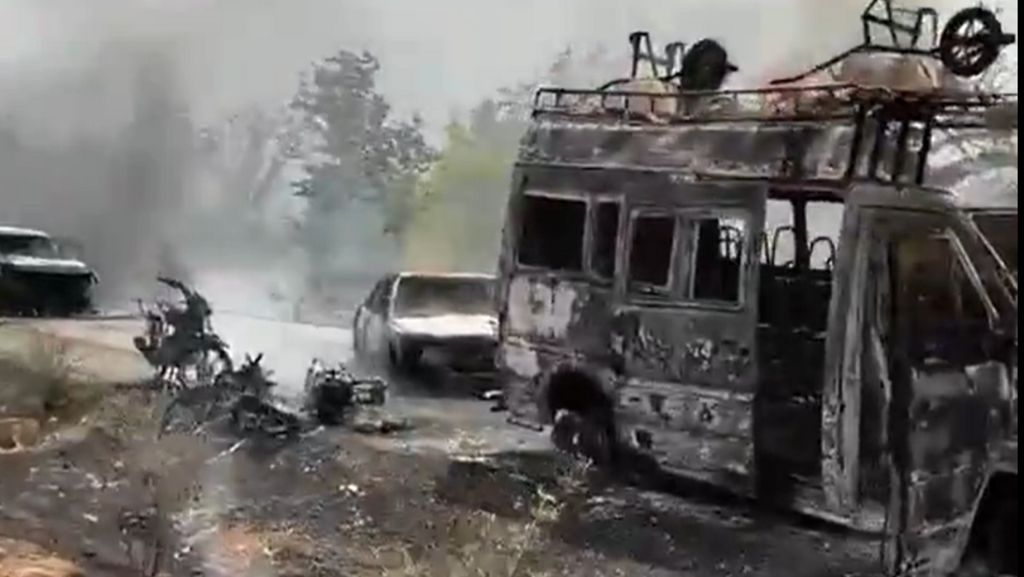
The destruction, which took place on a major roadway roughly 45 kilometers west of the capital, was captured on video by witnesses traveling through the area. Independent analysis by BBC Verify confirmed the footage was authentic: analysts cross-referenced two distinct roadside structures with recent satellite imagery to confirm the location, and ruled out artificial manipulation of the video. Complementary verification came from NASA’s Fire Information for Resource Management System (FIRMS), a satellite platform designed to detect surface heat sources, which recorded a significant heat signature matching the attack site on Tuesday.
Footage of the incident shows the charred, smoldering wreckage of more than a dozen vehicles, including commercial fuel tankers, passenger minibuses, and cargo trucks. Crucially, there have been no reports of civilian casualties in this latest attack: witnesses report militants ordered all drivers and passengers to exit their vehicles before setting them alight.
This attack is part of a broader, year-long campaign by Jama’at Nusrat al-Islam wal-Muslimin (JNIM), the al-Qaeda-affiliated jihadist group that has waged a fuel blockade on Bamako to cripple the West African nation’s ruling military junta. The group dramatically tightened the blockade last month, following coordinated large-scale attacks across multiple Malian cities that killed the country’s defense minister, Sadio Camara, in a suicide truck bombing targeting his residence near the capital.
As a landlocked nation, Mali relies entirely on overland fuel shipments from neighboring coastal states including Senegal and Ivory Coast to keep its economy running and civilian services operational. Since the blockade began last year, JNIM militants have kidnapped transport workers and destroyed more than 100 fuel trucks on major national highways. While military escorts have allowed a limited number of fuel convoys to reach the capital, persistent attacks have created a sustained national fuel crisis. Just before this latest incident, government officials had signaled the crisis was beginning to ease, raising hopes for a return to normalcy.
The current Malian government is led by General Assimi Goïta, who first seized power in a 2020 coup. Goïta rose to power on a promise to stamp out the country’s years-long Islamist insurgency and restore security across national territory. In January of this year, he appointed Brigadier General Famouké Camara to lead a new specialized counter-blockade operation aimed at breaking JNIM’s grip on key supply routes. Despite this new initiative, attacks on fuel convoys have continued unabated.
When the military junta first took power five years ago, it enjoyed broad popular support from Malians frustrated by the government’s failure to contain a growing insurgency that grew out of a 2012 Tuareg separatist rebellion in northern Mali, which was later co-opted by JNIM and other Islamist militant groups. Despite receiving military backing from Russian mercenary forces, the junta has failed to roll back insurgent gains, leaving large swathes of northern and eastern Mali effectively ungovernable.
Security analysts say the blockade is a deliberate strategic move by JNIM: by cutting off fuel supplies to the capital, the group aims to choke off Mali’s already fragile economy and erode public confidence in the ruling military leadership, whose core mandate has been resolving the country’s security crisis. The BBC has reached out to Mali’s transitional government for official comment on the latest attack, but has not yet received a response.