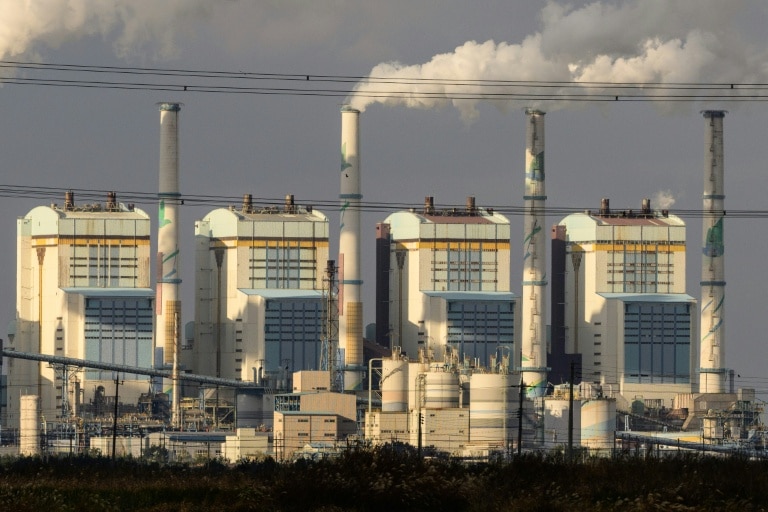
A new analysis released Thursday reveals a striking global contradiction in coal power development for 2025: while nations continued to build and bring online new coal-fired generating capacity at a 3.5% annual growth rate, total global electricity generated from the polluting fossil fuel actually declined over the same period. Only one major world economy bucked this trend, recording a substantial increase in coal generation, according to data from Global Energy Monitor (GEM), an organization that has tracked global coal infrastructure development for more than a decade.
As the single largest source of anthropogenic planet-warming greenhouse gas emissions, phasing out coal power is widely recognized as a core priority for limiting global temperature rise and mitigating the worst impacts of climate change. In recent years, plummeting costs and widespread deployment of wind and solar power have allowed these clean energy sources to meet nearly all new global electricity demand, a shift that pushed total 2025 global coal generation down 0.6% from 2024 levels.
Nearly all of the new coal capacity added in 2025 – 95% of total new construction – was concentrated in just two nations: China and India. Even in these two major coal markets, the disconnect between growing capacity and falling generation held: China’s total coal capacity expanded 6% over the year, but coal-generated electricity fell 1.2% thanks largely to the country’s explosive growth in renewable energy capacity. India followed a nearly identical pattern, with coal capacity growing almost 4% while generation fell nearly 3% year-over-year.
Christine Shearer, project manager of GEM’s Global Coal Plant Tracker and lead author of the report, explained that regional economic incentives drive continued coal construction in both nations. “Many of the provinces and states leading coal development are major coal-producing regions,” Shearer told AFP, noting these areas hold “strong industrial incentives to keep building coal.”
Broader systemic factors also sustain coal growth in the two countries. For China, coal is viewed as a reliable backup to offset the intermittency of wind and solar power, a policy shaped by widespread power shortages experienced several years ago. For India, the world’s most populous nation, coal has long been relied on to meet rapidly rising electricity demand, even as non-fossil sources now make up 50% of the country’s installed capacity. Persistent transmission and grid infrastructure gaps mean India still generates roughly three-quarters of its total electricity from coal.
Beyond new construction, the report also found that the global pace of retiring old, uneconomical coal plants slowed sharply in 2025, with nearly 70% of coal units originally scheduled for decommissioning instead remaining operational. In Europe, most delayed retirements trace back to policy decisions made during the 2022–2023 global energy crisis triggered by Russia’s invasion of Ukraine, when nations scrambled to secure alternative energy supplies. In the United States, by contrast, delayed retirements and rising coal use stem directly from intentional government policy, Shearer said.
“US coal-fired generation rose by more than 80 terawatt hours year-on-year, a figure so large that no other country came close,” Shearer noted. This surge “was not simply a function of demand growth, it reflected a policy environment that actively encouraged it,” she added.
More recent geopolitical instability has also pushed some nations to reverse course on coal phase-outs: the global energy market volatility sparked by the US-Iran conflict linked to the Israel-Gaza war has led some countries to reactivate idled coal units and extend the lifespan of operating plants.
In China, coal generation saw an early-year spike in 2025 driven in part by lower-than-expected output from wind and nuclear power, but Lauri Myllyvirta, co-founder of the Centre for Research on Energy and Clean Air and a report contributor, said systemic bias toward coal played an outsize role. “The oversupply and favouritism of coal power is an important factor,” he told AFP. While data from May 2025 indicates China’s coal generation has since returned to a downward trajectory, “the problem of excess coal capacity and entrenched favouritism of coal in the grid remain,” he added.
As of mid-2025, global coal-fired generation is up just 0.3% year-to-date, while combined wind and solar generation has jumped 10% over the same period. Shearer emphasized that this split makes clear a key global trend: clean energy is absorbing almost all new global electricity demand, leaving coal with almost no growth in actual use.