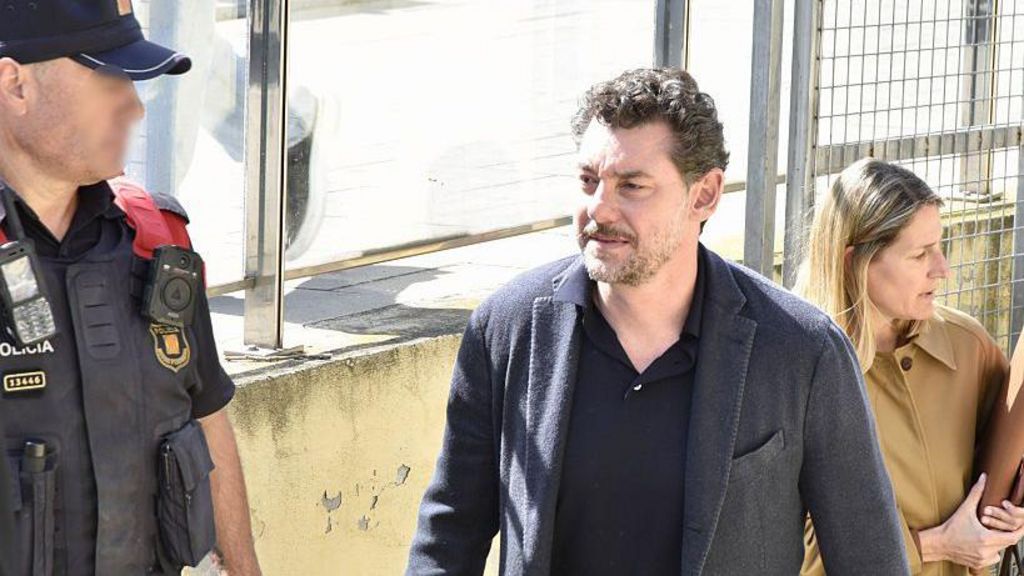
A high-profile legal saga that has captured public attention across Spain took a dramatic new turn this week, when 45-year-old Jonathan Andic, eldest son of deceased Mango fashion empire founder Isak Andic, was arrested on suspicion of premeditated involvement in his father’s 2024 death. After a judge ruled there was sufficient evidence to reclassify Isak’s death as non-accidental, Jonathan was taken into custody, and subsequently released after posting €1 million ($1.07 million) in bail. He has repeatedly and vehemently maintained his innocence throughout the ongoing investigation.
Isak Andic, a 71-year-old retail titan who built Mango into one of Europe’s largest clothing brands, died on December 14, 2024, after falling roughly 150 meters from a cliff in the Montserrat Natural Park, a popular mountainous region north of Barcelona. The founder was hiking at the time alongside Jonathan, who placed the emergency call that led to the recovery of his father’s body. Initially, responding authorities ruled the incident a tragic accident, marking a sudden end to the life of one of Spain’s wealthiest individuals.
According to case documents from the Martorell court near Barcelona, investigators have uncovered multiple inconsistencies and suspicious details that undermine Jonathan’s account of the incident. Jonathan told police he had been walking ahead of his father when he heard falling rock debris, then turned to see Isak plummet from the path. However, forensic analysis has raised significant doubts about this narrative: the rugged, lightly trafficked hiking route near Collbató’s caves is a relatively gentle trail common for family and student outings, and investigators argue an accidental slip matching Jonathan’s description would be highly unlikely in that exact location.
Further inconsistencies have emerged in key details of Jonathan’s testimony. The footprint he marked as the spot of his father’s slip does not match the marks that would be left by someone losing their footing accidentally. The position of Isak’s body and the pattern of his injuries also contradict the profile of an accidental fall, with the forensic report noting the arrangement looked “as if he had launched himself down a slide, feet first.” Investigators have also flagged conflicting accounts from Jonathan about his own position at the time of the fall: he claimed at different times that he was walking far ahead of Isak and that the two were close together. An additional discrepancy surrounds Isak’s phone: Jonathan told officers his father had been taking photos with the device moments before the fall, but the phone was found undisturbed in Isak’s pocket when the body was recovered.
Suspicion has also fallen on three pre-hike visits Jonathan made to the cliffside site on December 7, 8, and 10, just days before the incident. The investigating judge has described these trips as evidence of “planning and study of the site.” Compounding these questions is the disappearance of Jonathan’s personal phone around the time the case was reopened for further investigation. Jonathan told police the device was stolen during a short trip to Ecuador, a detail that has not resolved investigators’ concerns.
Prosecutors are also exploring a potential financial motive tied to the future of the Mango brand. Isak Andic, a Turkish-born Sephardic Jew who relocated to Catalonia as a teenager and co-founded Mango in the mid-1980s, grew the company into a global retail giant that employs more than 16,000 workers and posted €3.3 billion in turnover in 2024, making him Catalonia’s wealthiest individual. Jonathan worked closely with the brand for 20 years, leading the expansion of its popular menswear line, and he currently shares control of a family holding company that owns a 95% stake in Mango alongside his two younger sisters. He is married to social media influencer Paula Nata, and the couple welcomed their first child in September 2025.
According to the investigating magistrate, tensions emerged between father and son over Isak’s plan to establish a charitable foundation, and text message exchanges between the two confirm these frictions. The judge claims Jonathan engaged in “emotional manipulation over his father in order to achieve his economic objectives” and had repeatedly expressed “feelings of hatred, resentment, ideas related to death and blame” toward Isak. Jonathan has pushed back against these claims, telling investigators he maintained a warm, positive relationship with his father up until his death.
In the months after Isak’s death, the case was reopened in October 2025, and investigators have since questioned Jonathan’s two sisters and his uncle as part of their inquiry. Executors of Isak’s will released an early statement defending Jonathan, arguing that the public scrutiny surrounding the case has compounded the family’s private grief. Following his arrest this week, the entire Andic family issued a formal statement of support, insisting “there does not exist, nor will there exist, legitimate evidence against him.” Jonathan’s defense attorney, Cristóbal Martell, has dismissed the homicide theory entirely, calling it baseless and deeply harmful to an innocent man. “The homicide theory does not hold up,” Martell said. “But, above all, it is painful. It stigmatises an innocent man.”