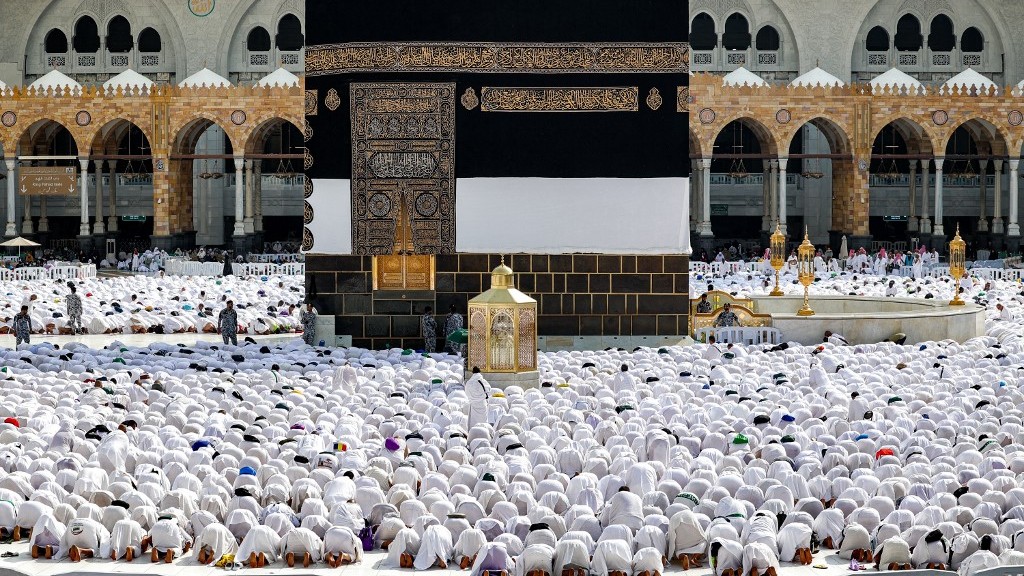
Exclusive reporting from Middle East Eye has confirmed that US President Donald Trump has put a planned military offensive against Iran on hold this week, after urgent warnings from key Gulf Arab allies and his own senior administration officials that an attack during the annual Islamic Hajj pilgrimage would trigger widespread regional instability. Two high-ranking Gulf officials, speaking on condition of anonymity due to restrictions on discussing closed-door diplomatic communications, shared details of the pressure campaign that swayed the US president. Their accounts reveal that officials emphasized a strike during the sacred religious period would spark a major political crisis across Gulf Cooperation Council states, leaving hundreds of thousands of pilgrims from across the globe stranded in the middle of their journey. They also warned that an attack timed to coincide with the Hajj, which leads directly into the major Islamic festival of Eid al-Adha, would cause lasting and severe harm to the United States’ already strained reputation across the entire Muslim world. A senior US official with direct knowledge of internal debates within the Trump administration has independently confirmed these discussions took place, adding that the president’s own national security team warned that restarting military hostilities against Iran at this juncture would carry significant long-term reputational damage for Trump himself. The United States previously launched military strikes against Iran during the holy Islamic month of Ramadan, but a strike during the Hajj carries unique logistical and political risks for Saudi Arabia, the host nation that welcomes roughly one million international pilgrims to the annual religious gathering each year. This year’s Hajj is scheduled to open on 24 May and run for six days, with hundreds of thousands of pilgrims already on the ground in Saudi Arabia in preparation for the rituals. Beyond Saudi Arabia, disruptive risks from a US attack would extend to major Gulf air travel hubs in Qatar and the United Arab Emirates, as well as the South Asian and East Asian nations that send large contingents of pilgrims to the event. All three officials who spoke to Middle East Eye agree that the pause in military planning is temporary: they widely expect offensive operations to restart in the coming weeks once the Hajj period concludes. The US has a documented recent history of using deceptive signaling and tactical misdirection to lull Iranian leadership into a false sense of security ahead of strikes. The February 2026 attack, which launched the current conflict, came after Washington claimed it was making meaningful progress on diplomatic negotiations with Tehran in Geneva. Earlier this week, Trump publicly acknowledged the delay, confirming on his Truth Social platform that Gulf leaders had directly requested he hold off the planned strike. “I have been asked by the Emir of Qatar, Tamim bin Hamad Al Thani, the Crown Prince of Saudi Arabia, Mohammed bin Salman Al Saud, and the President of the United Arab Emirates, Mohamed bin Zayed Al Nahyan, to hold off on our planned Military attack of the Islamic Republic of Iran,” Trump wrote. He added that the allied leaders “believe a Deal will be made” in lieu of military action. The ongoing conflict between the US, Israel and Iran began on 28 February 2026, when joint US-Israeli strikes launched open hostilities. Iran responded immediately with missile attacks targeting US military bases and allied interests across Gulf states. Tehran has issued clear public warnings that any new strikes against its civilian and energy infrastructure by Washington and Tel Aviv will be met with retaliatory attacks on Gulf state infrastructure, and will draw the conflict beyond the borders of the Middle East. Saudi Arabia, Qatar and Oman have been among the most vocal regional actors pushing to prevent further escalation, as the ongoing Iranian blockade of the Strait of Hormuz — one of the world’s most critical energy chokepoints — has already severely cut into oil and liquefied natural gas exports from these nations. Independent assessments of Washington’s initial February offensive widely judge it to have failed in its core strategic goal: despite the killing of long-time Iranian Supreme Leader Ayatollah Ali Khamenei, the attack did not succeed in toppling the Iranian government. Khamenei’s son and successor, Mojtaba Khamenei, has led Iran through weeks of sustained bombardment, with the regime maintaining control of the country and retaining its large arsenal of ballistic missiles. The Israeli government, which views Iran as its most dangerous regional rival, has continued to lobby Trump aggressively to restart offensive operations, even as internal US intelligence and military assessments flag severe risks to American service members and the global economy. Citing reporting from the *New York Times*, US Pentagon officials have highlighted two major obstacles that threaten the success of any new US offensive: growing shortages of critical military munitions, and major improvements in the sophistication of Iranian air defense tactics that have made US airstrikes far less effective than initial planning anticipated.