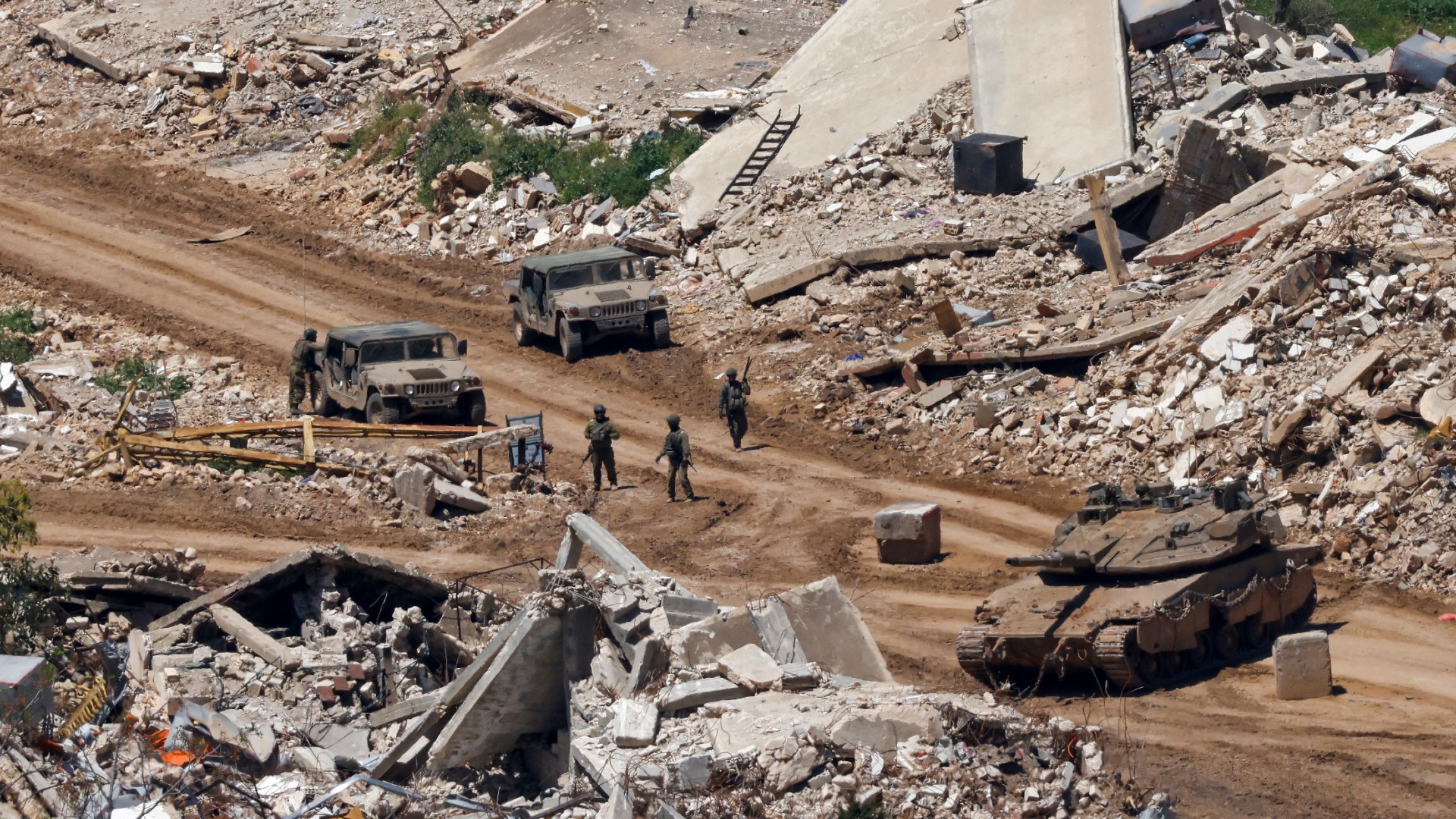
Israel’s public broadcaster Kan has released a bombshell assessment from military insiders confirming that Hezbollah’s expanding drone arsenal has crippled up to 80% of Israeli offensive operations targeting southern Lebanon, reshaping the dynamics of the ongoing cross-border conflict.
According to Kan’s Monday reporting, Israeli military estimates make clear that Hezbollah’s unmanned aerial vehicles have dramatically constrained Israeli troop movements across southern Lebanon and have directly contributed to mounting Israeli battlefield casualties. A critical supply gap has worsened the problem: Israel’s anti-drone defense systems are only allocated to a small fraction of frontline troops, forcing commanders to scrap most planned daytime operations entirely to avoid devastating drone strikes.
The growing threat posed by these drones has become a top priority crisis for Israel’s national government, prompting officials to assemble a dedicated cross-sector task force bringing together military commanders, defense industry specialists, and civilian technology experts to accelerate development of effective counter-drone systems.
Israeli military intelligence sources told Kan that Hezbollah has also overhauled its operational model in the wake of Israeli assassinations of multiple high-ranking commanders from its elite Radwan Force. Moving away from a rigid centralized command-and-control structure, the group has shifted to decentralized, cell-based guerrilla warfare. Small autonomous Hezbollah units now move between southern Lebanese villages, carrying out opportunistic targeted attacks on Israeli forces with far greater operational flexibility than before.
The advance of Hezbollah’s drone program is not a recent development: last month, Israeli outlet Ynet News first reported that the group had carried out major upgrades to its drone fleet, most notably the widespread adoption of fiber-optic tethered first-person view (FPV) drones for offensive operations against Israeli troops. Unlike larger, more expensive long-range missiles, these FPV drones are low-cost, easily assembled, and modified locally in southern Lebanese workshops. Local technicians add custom components including reinforced landing skids, high-resolution cameras, and lethal explosive payloads to convert the commercially derived platforms into effective weapons.
The key fiber-optic upgrade has proven particularly devastating to Israeli defense efforts. Tethering the drone directly to its ground control station via a fiber-optic line eliminates the need for vulnerable radio signals to transmit control data and video feed. This not only makes the drones far harder for Israeli electronic warfare systems to detect, but also blocks Israeli jamming attempts that would otherwise disable the aircraft.
In response to the escalating threat, Israel’s cabinet last week approved $700 million in emergency emergency defense funding earmarked exclusively for developing and deploying countermeasures against Hezbollah’s drones. The approved plan includes two core components: the installation of new fixed radar systems along Israel’s entire northern border to detect incoming small drones, and the procurement of five million specialized shotgun rounds engineered to shoot down low-altitude, short-range unmanned aircraft.
The ongoing cross-border hostilities have already unleashed a catastrophic humanitarian crisis across Lebanon. Since Israeli large-scale operations began on March 2, more than 3,000 Lebanese people have been killed in Israeli strikes, and another 9,301 have been wounded. The violence has displaced at least 1.6 million people – roughly one-fifth of Lebanon’s total population. Though a ceasefire was first announced on April 16 and extended last week, Israeli forces have continued to conduct near-daily airstrikes across Lebanese territory.