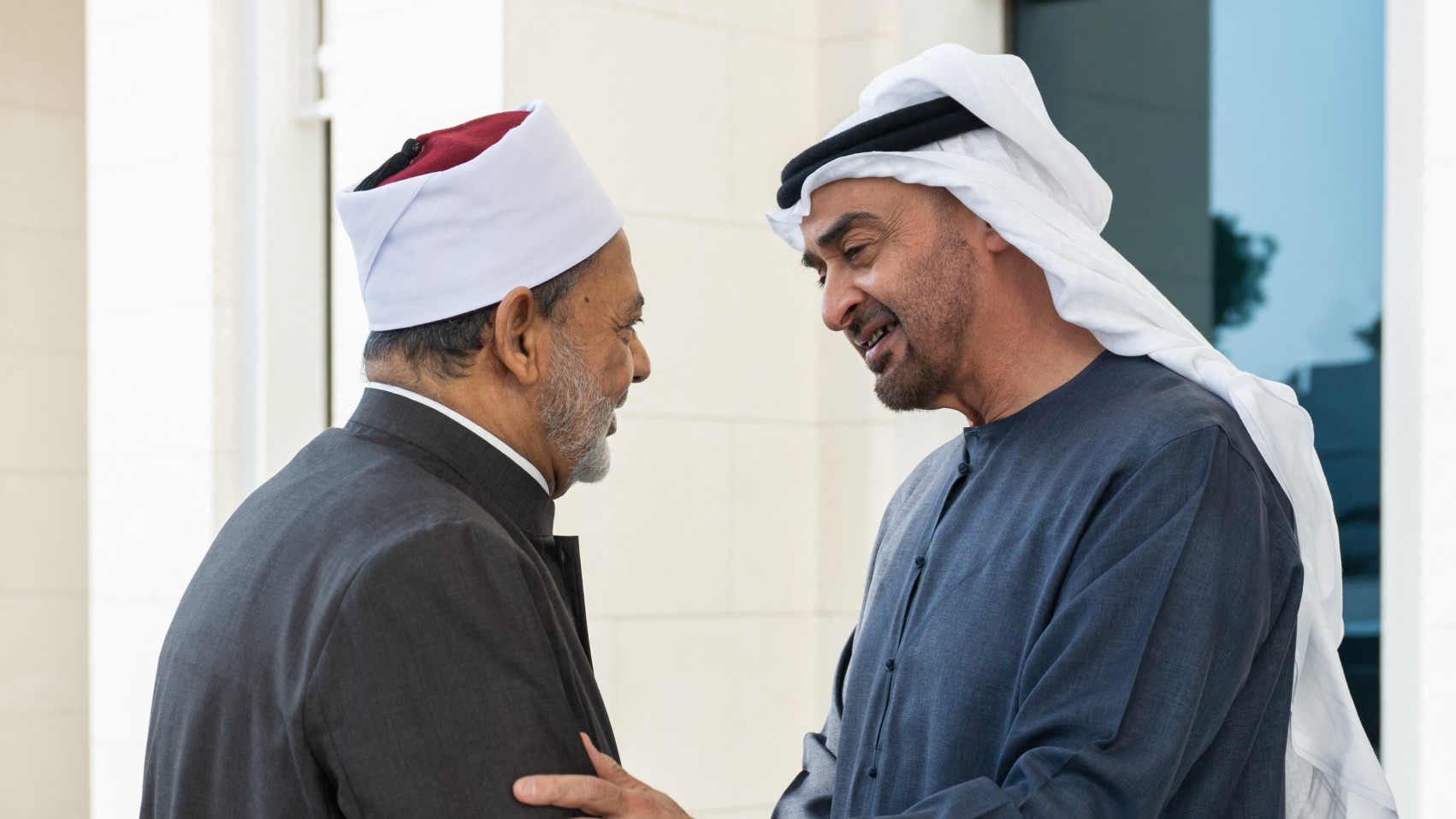
Behind the public-facing statements of one of Sunni Islam’s most influential institutions lies a story of political pressure, national economic interests, and shifting regional alliances, multiple anonymous sources with direct knowledge of the matter have revealed. Egypt’s presidential administration has explicitly pressured Al-Azhar, the Cairo-based leading center of Sunni Islamic learning, to publicly align with the United Arab Emirates and other Gulf nations in their ongoing confrontation with Iran, according to security sources and insiders close to Al-Azhar’s Grand Imam Ahmed al-Tayeb.
Since the outbreak of the latest round of regional conflict, Al-Azhar has released four official public statements, with one explicitly branding Iranian strikes on UAE territory as “the aggression of the Islamic Republic of Iran against its Muslim neighbour, the United Arab Emirates”. What is notable in all four statements, however, is the complete absence of any condemnation of American or Israeli strikes targeting Iran. This marks a clear departure from the institution’s position during 2023’s regional conflict, when it openly labeled attacks on Iran as “the aggression of the occupying entity against the Islamic Republic of Iran”.
Sources confirm that Al-Azhar’s 2023 stance triggered significant anger from UAE officials, even though no Gulf territory had been attacked at that point. The Emirati daily Al-Khaleej publicly launched criticism of Grand Imam Tayeb over his position last year. From the very start of the current conflict, Egyptian state agencies issued a clear mandate to Al-Azhar: align unreservedly with Gulf allies and avoid any reference to U.S. or Israeli strikes on Iran, senior leadership sources within Al-Azhar told Middle East Eye.
One senior source shared the explicit message delivered by Egypt’s presidential institution: “It was stated plainly and directly by the presidential institution that there are major interests with the Gulf and the US that we cannot sacrifice under the current economic conditions, that what happened over Gaza cannot be repeated, and that Al-Azhar would bear the blame for the Egyptians who lose their jobs in the Gulf if it takes a contrary position.” This is not the first time such pressure has been applied: MEE previously reported that Egyptian authorities used identical tactics last year to force Al-Azhar to withdraw a statement calling for global intervention to address famine in Gaza. At that time, the state threatened to hold Al-Azhar responsible for derailing ceasefire efforts and blocking humanitarian aid from entering the enclave.
Gulf officials have also held direct meetings with Tayeb, framing their narrative of regional harm from Iranian actions, which sources describe as having been “greatly exaggerated”. A closer look at Al-Azhar’s four released statements reveals the carefully calibrated alignment that resulted. The first, issued on March 2, called for an immediate end to hostilities and an end to further bloodshed, while rejecting violations of Arab state sovereignty—but made no mention of Iran by name. The second, released March 17, explicitly condemned Iran’s “unjustified attacks” against a list of nations including all six Gulf Cooperation Council states, as well as Jordan, Iraq, Turkey and Azerbaijan. The third statement, dated April 9, warned the “occupying entity”—Al-Azhar’s longstanding term for Israel—against attempts to inflame regional tensions and violate the temporary truce, noting that a lack of international accountability had emboldened further criminal acts, but made no reference to strikes on Iranian soil. The most explicit statement, released May 5, singled out “the aggression of the Islamic Republic of Iran against its Muslim neighbour, the United Arab Emirates” for condemnation.
Sources close to the Egyptian presidency defend the pressure campaign, arguing that Al-Azhar is an inherent part of the Egyptian state apparatus, and unifying its public position is a critical necessity tied to Egypt’s core national interests with Gulf states. Gulf governments have themselves been closely monitoring Al-Azhar’s positions and raised the issue directly during high-level diplomatic talks throughout the current conflict, the Egyptian sources added. The close personal relationship between Egyptian President Abdel Fattah el-Sisi and UAE President Mohamed bin Zayed Al Nahyan, paired with Egypt’s deep-seated economic reliance on Emirati investment and support, made a targeted statement condemning Iranian strikes on the UAE a non-negotiable requirement, they noted.
MEE has not been able to independently verify the anonymous accounts provided by multiple sources. Requests for comment from Al-Azhar, the office of the Egyptian president, and the office of the UAE president have not yet received a response.
Even with this shift on the Iran-Gulf confrontation, sources note that previous pressure campaigns from Egypt and Gulf governments—led by the UAE—have failed to change Al-Azhar’s longstanding stance on Palestinian armed factions, which the institution continues to publicly support. That difference of opinion has drawn pushback from Palestinian leadership: Palestinian President Mahmoud Abbas personally called Tayeb to argue that Al-Azhar’s pro-faction stance benefited political groups outside the Palestinian Authority’s official decision-making framework. Sources say the Grand Imam rejected this characterization during the call, prompting Abbas to take his complaint directly to President Sisi. The Palestinian Authority has not responded to MEE’s request for comment on the matter.
Insiders close to Tayeb have also pushed back against claims that the UAE’s 2019 mediation of a domestic crisis surrounding the Grand Imam has influenced Al-Azhar’s current position. At that time, Egyptian media reported that President Sisi planned to remove Tayeb from his post through constitutional amendments governing Al-Azhar’s leadership, and that UAE Foreign Minister Abdullah bin Zayed Al Nahyan stepped in to mediate the dispute, preserving the existing constitutional framework in exchange for the removal of two senior officials close to Tayeb. But Al-Azhar sources say the UAE’s role in that 2019 crisis has been widely overstated.
They explain that the UAE did not object to Tayeb’s removal in principle, but was dissatisfied with the proposed replacement candidates, judging that none could match Tayeb’s global standing in countering extremism and promoting a moderate interpretation of Islam—an area where Egypt and the UAE had once cooperated extensively. That cooperation slowed dramatically after the UAE normalized relations with Israel in 2020 as part of the U.S.-brokered Abraham Accords, and today is limited to only specific narrow policy areas, with the condition that Al-Azhar avoid taking any public stance on issues involving Israel, insiders added. In the 2019 crisis, real support for preserving Tayeb’s position came from within Egyptian state agencies, the sources confirmed.
Those opposing agencies leaked news of the planned removal at the exact moment Tayeb was signing the landmark Document on Human Fraternity with Pope Francis, a timing calculated to frame the removal as punishment for Tayeb’s outreach and openness. The leak sparked public demonstrations in Luxor, Tayeb’s hometown and the base of his family, where protesters rallied holding the Grand Imam’s portrait. Widespread public pushback was paired with formal objections from Southeast Asian Muslim-majority nations, and private messages to Sisi from multiple African heads of state during a continental tour. This led Sisi to conclude that he had been misled by advisers hostile to Tayeb, sources say. After those advisers were removed from their posts, relations between the presidency and the Grand Imam recovered.