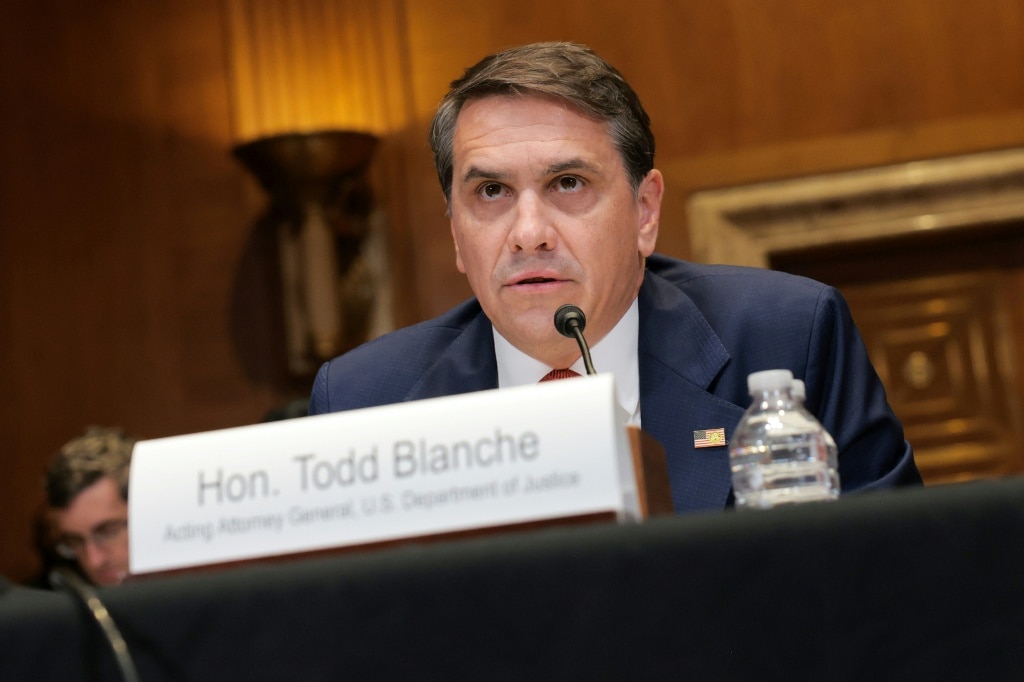
A fierce partisan debate erupted on Capitol Hill this week as Acting U.S. Attorney General Todd Blanche defended the newly established $1.8 billion “Anti-Weaponization Fund”, a initiative designed to compensate individuals who claim they were wrongfully prosecuted during the Biden administration. The fund, created as part of a settlement ending former President Donald Trump’s lawsuit against the Internal Revenue Service over a 2023 tax return leak, has drawn sharp condemnation from congressional Democrats who frame it as an unprecedented misuse of taxpayer dollars to benefit the sitting president’s political allies.
During hours of testimony before the Senate Appropriations Committee, Blanche, Trump’s former personal defense attorney who took over the top Justice Department role, faced repeated questioning from Democratic lawmakers over the fund’s structure and purpose. Washington Senator Patty Murray called the initiative outright corruption, arguing it amounted to the sitting president draining public treasury for personal political gain, labeling it a corrupt “slush fund” reserved for Trump’s loyalists.
Blanche pushed back aggressively against these claims, stressing that Trump himself would be ineligible to receive compensation from the fund and rejecting assertions that only Republican allies of the president would qualify. He noted that even individuals like Hunter Biden, the former president’s son convicted of gun and tax crimes during his father’s tenure, would be eligible to apply for compensation if they believe they were targeted by politically motivated prosecutions. When pressed repeatedly about whether rioters convicted for their roles in the January 6, 2021, Capitol attack could receive payouts, Blanche refused to rule out eligibility, stating that any U.S. citizen who believes they were a victim of politically weaponized law enforcement would be allowed to apply.
Blanche will personally appoint the five commissioners tasked with overseeing the fund, a detail that drew further criticism from lawmakers who highlighted his long-standing professional ties to Trump. Rhode Island Senator Jack Reed drew a comparison between Blanche and a mafia political adviser, calling him the “president’s consigliere,” while Maryland Senator Chris Van Hollen argued Blanche was continuing to act as Trump’s personal attorney rather than an independent government official. Blanche defended the fund’s necessity, framing it as a corrective measure for what he described as four years of abusive law enforcement practices under former Biden Attorney General Merrick Garland.
The fund was established Monday as part of a legal settlement with Trump, who dropped his $10 billion damages lawsuit against the IRS over the leak of his tax returns. A former IRS contractor pleaded guilty in 2023 to leaking Trump’s returns and those of other wealthy individuals to media outlets, and was sentenced to five years in prison for the crime. As part of the new settlement addendum released by Blanche Tuesday, the IRS is formally barred from pursuing back tax claims against Trump, his immediate family members, or any of his corporate entities.
This move aligns with a broader pattern of action Trump has taken since starting his second term in office: he has moved swiftly to punish perceived political opponents, purge disloyal government officials, issue mass pardons to political allies—including hundreds of January 6 defendants on his first day back in office—target law firms that worked on cases against him, and pull federal funding from universities he accuses of political bias. The two criminal cases against Trump handled by special counsel Jack Smith, one over efforts to overturn the 2020 presidential election and a second over improper handling of classified documents, were both dropped after Trump won the 2024 election, with Blanche having served as his lead defense attorney in both matters.