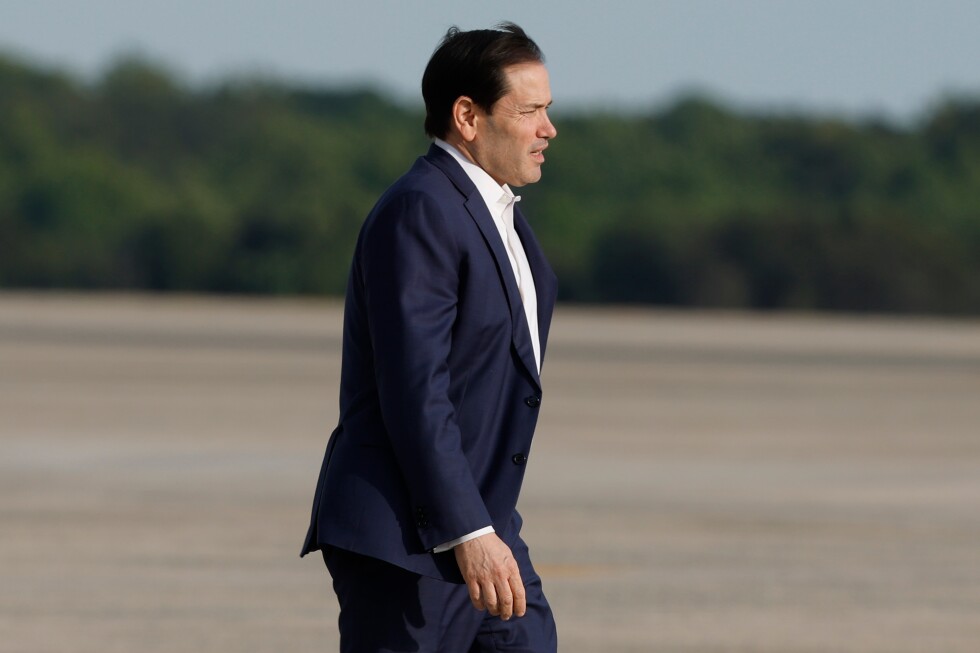
Amid growing transatlantic unease over shifting U.S. security commitments and unpredictable leadership from the Trump administration, U.S. Secretary of State Marco Rubio is set to depart this week for a critical NATO foreign ministers gathering in Helsingborg, Sweden. The high-stakes meeting comes as the alliance navigates cascading global crises: ongoing fallout from the Iran war, skyrocketing global energy prices, and deepening uncertainty over Washington’s long-term commitment to collective European defense. This gathering also marks one of the final senior-level diplomatic gatherings ahead of NATO’s full leadership summit scheduled for July in Ankara, Turkey.
Following the Sweden talks, Rubio will embark on a multi-stop tour of India, where he will visit Kolkata, Agra, Jaipur, and New Delhi. In the Indian capital, he is slated to hold bilateral talks with senior Indian government officials and join a gathering of foreign ministers from the Quad, the four-nation Indo-Pacific democratic grouping that also includes Australia, India, and Japan.
In a formal statement released this week, the State Department outlined that Rubio will reiterate longstanding U.S. demands at the NATO meeting: pushing alliance members to boost their national defense spending and take on a larger share of the collective security burden for the bloc. He will also prioritize discussions of Arctic strategy, holding targeted talks with NATO’s Arctic member states to align on shared economic and security interests in the region and reinforce the alliance’s enhanced military posture in the High North.
While the State Department’s statement did not explicitly reference Greenland, the strategically positioned autonomous Danish territory has emerged as a new source of transatlantic friction, after Donald Trump repeatedly drawn international backlash for his open discussion of seeking to acquire the territory for the United States. This week, Trump’s special Greenland envoy, Louisiana Governor Jeff Landry, traveled to the island for talks with local leadership. Greenlandic Prime Minister Jens-Frederik Nielsen told Danish broadcaster TV 2 after the meeting that while the discussion was respectful and constructive, he made clear that Greenland’s people are committed to full self-determination. “The Greenlandic people are not for sale. Greenlandic self-determination is not something that can be negotiated,” Nielsen said.
For European allies who have grown increasingly uneasy with Trump’s confrontational approach to the alliance, Rubio’s presence at the gathering is widely seen as a reassuring constant. The secretary of state, known for a less antagonistic style and measured demeanor compared to the president, has been tapped for multiple high-profile transatlantic diplomatic missions this year alone. These included a trip to February’s Munich Security Conference, and a recent visit to Italy where he met with Italian leaders and Pope Francis, shortly after Trump publicly criticized the pontiff over his positions on the Iran war and transnational crime.
In comments ahead of the ministers’ meeting, NATO’s top serving military officer offered partial reassure to anxious allies on Tuesday. U.S. Lieutenant General Alex Grynkewich stated he does not anticipate additional American troop drawdowns in Europe in the near term, beyond the 5,000 troops that Trump previously announced would withdraw from the continent. Grynkewich’s remarks followed Trump’s surprise announcement of the drawdown earlier this month, which caught alliance leadership off guard despite longstanding U.S. pledges to coordinate all major military moves with NATO allies to avoid creating gaps in regional security.
The Pentagon later clarified that the drawdown will be implemented by canceling planned rotating deployments to Poland and Germany, rather than withdrawing thousands of active-duty troops already stationed on the continent. Tensions have run particularly high between Trump and German leadership recently, after German Chancellor Friedrich Merz stated that the United States was being “humiliated” by Iranian leadership and publicly criticized what he called the Trump administration’s “lack of a coherent strategy” for the ongoing Iran war.
Lorne Cook contributed reporting to this article from Brussels, Belgium.