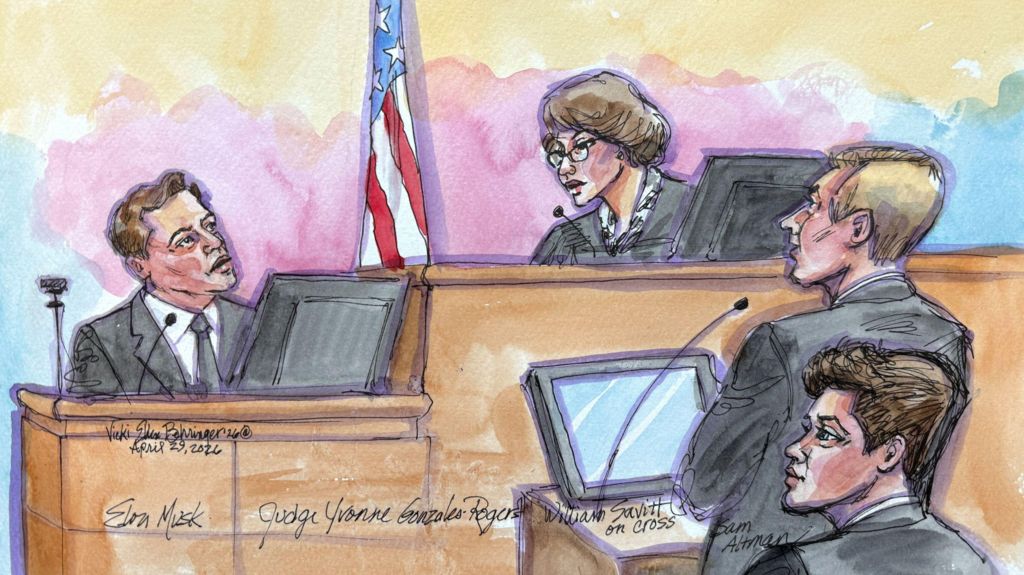
For weeks, a high-profile legal battle in Oakland, California, has pulled back the curtain on the cutthroat power struggle unfolding between the most influential men at the peak of the global artificial intelligence industry. When the gavel fell on the case pitting billionaire Elon Musk against OpenAI, the verdict sent a clear message: fierce competition and profit-driven ambition in the fast-growing AI sector are just standard business practice, even as Musk walked away with a technical defeat that leaves his original claims unaddressed.
What many have framed as a watershed moment for the industry does more than resolve one dispute between two former collaborators. It has torn away the carefully cultivated public image of unified collective action that top AI firms have long presented to the public. For years, industry leaders have positioned themselves as collaborative partners working together to advance safe, inclusive AI research for the good of humanity. But this trial has exposed the deep cracks running through that carefully constructed facade.
This is not the first time the veil of unity has been pulled back. Earlier this year, at a global AI summit hosted in New Delhi by Indian Prime Minister Narendra Modi, tech leaders were invited on stage to hold hands in a show of collective purpose. Among them were Sam Altman, OpenAI’s chief executive, and Dario Amodei, head of rival AI firm Anthropic – one-time colleagues at OpenAI who are now bitter industry competitors. Rather than clasp hands as directed, both men clenched their hands into tight fists to avoid any physical contact, a small but loaded act that laid bare their deep personal and professional animosity.
The same brand of dramatic, ego-fueled tension played out across the California courtroom over the course of the trial. No party emerged from the proceedings looking like a hero: the entire spectacle laid bare the oversized personal ambitions that drive many of the men vying for control and profit in the multibillion-dollar AI sector.
For OpenAI, the verdict comes at a critical moment. The company has burned through hundreds of millions in investor capital in its race to scale its AI products, and has recently brought on Denise Dresser, a veteran executive from workplace communication platform Slack, as its new chief revenue officer to build out sustainable income streams. In a recent meeting, Dresser declined to comment on the trial, but outlined OpenAI’s plan to split future revenue equally between consumer users and enterprise clients. She also highlighted the company’s underdiscussed coding tool Codex, which she described as her internal “chief of staff” for day-to-day work.
Prior to the ruling, economist and author Sebastian Mallaby projected that OpenAI faced a 50% chance of collapsing into bankruptcy by 2027, driven by its massive spending and mounting competitive pressure. Avoiding a multibillion-dollar damage payout to Musk has drastically improved those odds, and clears the way for OpenAI to move forward with its long-rumored initial public offering, which insiders hint could value the company at as much as $1 trillion. Amid widespread market concerns that the AI sector is a overinflated bubble poised to burst, the court outcome has arguably bought the industry vital time to prove its long-term value.
For Musk, the technical loss is unlikely to cause lasting damage. The world’s richest man has a long history of high-stakes courtroom battles, and his well-documented tendency to hold grudges means he will almost certainly continue to attack OpenAI and Altman via his social media platform X. While the two AI titans have been distracted by their legal clash, competing firms have surged ahead. Anthropic has drawn global attention with its latest large language model Claude Mythos, which the company claims has advanced hacking capabilities – a claim dismissed by some as empty hype but hailed by others as a defining turning point for AI capability. Meanwhile Google, whose early AI advances originally prompted Musk, Altman and other founders to launch OpenAI as a competitor, continues to rapidly integrate generative AI across its most popular consumer and enterprise services.
Industry analysts and policy experts say the trial leaves far more questions unanswered than it resolves. “The trial served as a reminder of how much the future of AI still depends on a remarkably small group of powerful tech figures and their personal rivalries,” explained Sarah Kreps, director of the Cornell University Tech Policy Institute. The ruling’s focus on a legal technicality “leaves a lot of questions and debates unresolved,” she added, ranging from how cutting-edge AI systems should be regulated to who gets to capture the massive economic gains the sector is projected to generate. The case also highlighted a wider gap between the small group of people building AI technology and the much larger global population that is now expected to live and work alongside increasingly capable systems, Kreps noted.
Veteran tech journalist Kara Swisher argued the spectacle has done lasting damage to public trust in the AI industry. Speaking to BBC Radio 4’s *Today* programme, Swisher noted that widespread mistrust of AI, particularly among younger generations, has only been amplified by the trial’s drama. “Right now the brand of AI has just been trashed and this certainly doesn’t help,” she said. “When you look at these testimonies of people who are very petty, there’s a lot of weird drama, obsession with money… the whole thing feels weird and dramatic.”
On balance, the verdict confirms that the global AI sector still holds enormous market value. But it has also definitively exposed the oversized personal egos and cutthroat competition that are driving its fastest growth – a reality that industry leaders have spent years working to hide from public view.