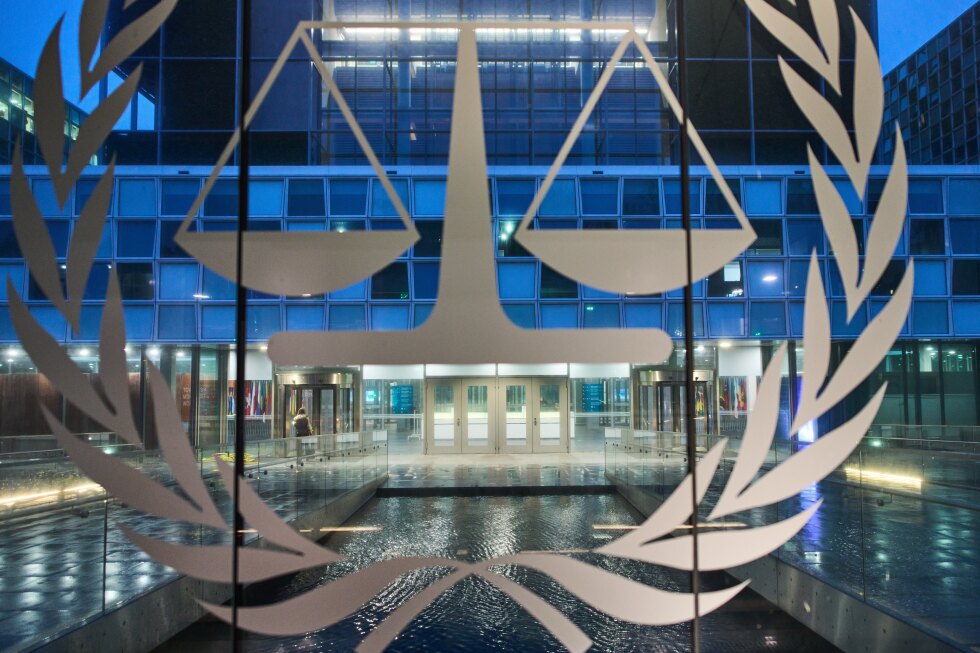
In a landmark proceeding marking the International Criminal Court’s first case involving a Libyan national, pretrial hearings got underway this week in The Hague for a former senior prison commander charged with gross violations of international law. Khaled Mohamed Ali El Hishri, 47, faces 17 counts of crimes against humanity and war crimes for atrocities allegedly carried out at Tripoli’s notoriously violent Mitiga prison between 2015 and 2020, years after the fall and killing of long-time Libyan dictator Moammar Gadhafi plunged the North African nation into widespread lawlessness.
Deputy ICC Prosecutor Nazhat Khan laid out the grim details of the allegations in her opening statement to judges this Tuesday. Citing testimony from nearly 1,000 documented victims connected to the case, Khan told the court that detainees dubbed El Hishri the “Angel of Death” for his pattern of brutal violence against people held at the facility. According to the charges, El Hishri served as a senior commander at the prison and oversaw the facility’s women’s section, where systematic sexual violence was endemic. Prosecutors further allege that El Hishri routinely carried a loaded firearm and deliberately shot detained people in the legs and knees to inflict permanent harm. He stands accused of personally carrying out murders and rapes inside the prison, in some cases committing these violent acts in front of victims’ own children. Photographs from the opening hearing showed El Hishri, dressed in a blue suit and matching tie, maintaining a blank expression as prosecutors detailed the charges against him.
Khan emphasized to the court that the atrocities documented at Mitiga were not isolated abuses by rogue low-level guards, but actions linked to the facility’s command structure, where El Hishri held a senior leadership role. This week’s proceeding is not a full trial; rather, it is a pretrial hearing that allows ICC prosecutors to present a full outline of their evidence to the judges. Following the conclusion of the hearing, the panel of judges will have 60 days to review the prosecution’s case and determine whether there is sufficient credible evidence to proceed with a full public trial.
El Hishri was taken into custody by German law enforcement in July this year on a previously sealed ICC arrest warrant, and was extradited to the Netherlands to face the charges this past December. His case is poised to become the first trial of a Libyan suspect at the ICC, a process that originates from a 2011 United Nations Security Council mandate that ordered the court to open an investigation into crimes committed in Libya as the uprising against Gadhafi unfolded. The ICC issued an immediate arrest warrant for Gadhafi in 2011, but rebel forces killed the former dictator before he could be apprehended and transferred to The Hague for prosecution.
To date, the court has active open arrest warrants for nine additional Libyan suspects accused of grave crimes, including one of Gadhafi’s surviving sons. The ICC’s effort to hold perpetrators accountable for crimes in Libya has faced repeated setbacks in recent years, most recently in January when Italian authorities arrested one of the wanted suspects—Ossama Anjiem, also known as Ossama al-Masri, who was also charged with atrocities at Mitiga prison—only to release him on a procedural technicality. That decision sparked widespread outrage from global human rights advocates who have pushed for full accountability for crimes committed in Libya in the decade following Gadhafi’s ousting.