On Wednesday, a Brazilian federal court in Brasilia is set to issue a landmark ruling that will shape the future of the highly contested Volta Grande gold mining project, developed by Canadian firm Belo Sun in the heart of the Brazilian Amazon. The core legal question before the court is which level of government holds the authority to issue critical environmental licenses for the venture: the federal government, or the northern state of Para, where the proposed mine is located.
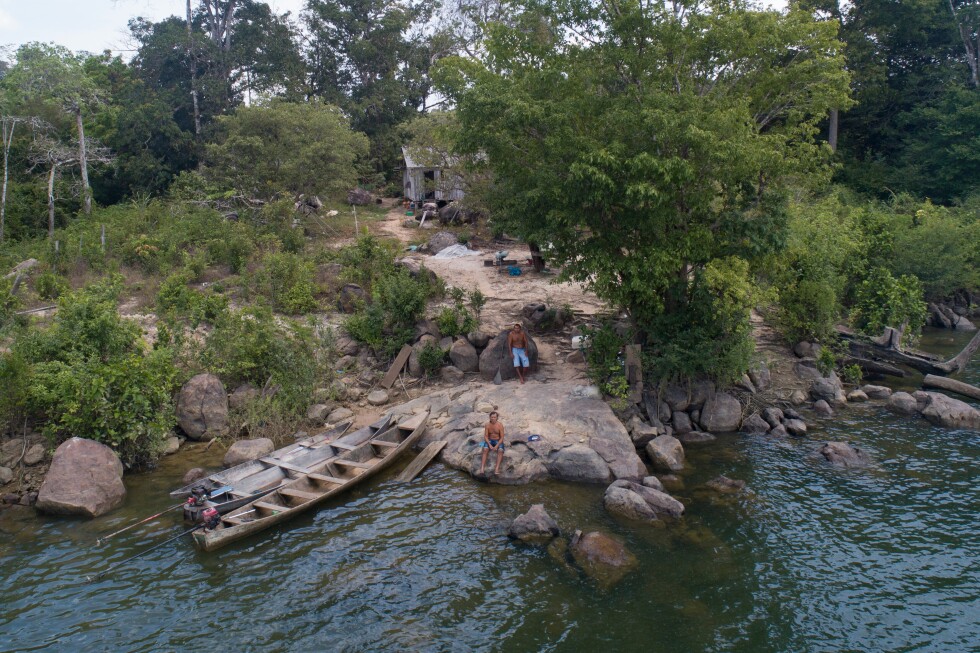
First proposed in 2012, the Volta Grande project is positioned along the banks of the Xingu River, roughly 12 miles from the Belo Monte Dam—currently the world’s third-largest hydroelectric facility. Operations at Belo Monte have already drastically reduced the Xingu’s water flow, bringing severe disruption to local and Indigenous communities that rely on the river. If approved, Volta Grande would become the largest gold mining operation in the Brazilian Amazon. According to Belo Sun’s 2015 feasibility analysis, the company plans to extract 3.52 million ounces of gold over 17 years, moving more than 600 million tons of earth across a 24-square-kilometer site that would clear 309 acres of intact Amazon rainforest.
Environmental and community advocates have spent years warning of the severe risks posed by the project. A 2021 independent assessment conducted by scientists from the University of Sao Paulo and the University of Amazonas concluded the venture carried unacceptable risks and should be blocked entirely. The researchers’ top concern is the project’s planned tailings dam, which will store toxic mining waste directly above a water channel connected to the Xingu. A failure of this structure would release poisonous runoff into the river in a matter of hours, endangering the lives of Indigenous and riverine populations and destroying the region’s unique aquatic ecosystem.
Data from the nonprofit Amazon Watch cited by federal prosecutors estimates the project would generate a total of 3.7 million tons of carbon dioxide emissions, a major contribution to global climate change, based on a calculation of one ton of CO2 for every 28 grams of extracted gold. The Articulation of Indigenous Peoples of Brazil (Apib) also reports the mine would displace 813 families, many of whom are already suffering from persistent droughts triggered by the Belo Monte Dam’s diversion of the Xingu’s flow.
Legal battles over the project’s licensing have dragged on for more than a decade. Opposition emerged as early as 2013, when prosecutors filed a motion to halt the licensing process over the failure to conduct required consultations with affected Indigenous groups. In 2017, a full federal court panel ruled in favor of opponents, mandating that the project secure federal approval and complete formal Indigenous consultation before moving forward. But in 2025, a panel of justices overturned that 2017 ruling and returned licensing authority to the state of Para. Prosecutors have since appealed the decision, arguing the 2025 ruling amounted to an unauthorized new trial without proper procedure. It is this appeal that the court will decide on Wednesday.
Last December, the Juruna and Arara Indigenous communities of the Xingu released a public open letter reaffirming that they have never granted consent for the project, a requirement laid out in the 2017 court order. In a statement provided to the Associated Press, Belo Sun countered that it has completed all required consultation processes, following protocols established by the affected communities and overseen by Brazilian regulatory authorities.
Federal prosecutors leading the appeal argue that the project’s cross-jurisdictional impacts make licensing a federal responsibility. The mine would affect federal Indigenous territories, the Xingu—a federally protected waterway—and the federal government-built Belo Monte Dam. “From the start, as we did in Belo Monte, we have argued that the licensing falls under federal jurisdiction because it affects Indigenous lands and a federal river,” explained Felício Pontes Jr., the federal prosecutor handling the case. He emphasized that the combined cumulative impacts of the dam and the proposed mine are a core issue, noting that Brazilian courts have already ruled that Belo Monte’s actual environmental and social harms far exceeded initial projections.
In recent rulings related to the dam, courts have ordered the dam’s operator, Norte Energia, to compensate affected communities, provide clean drinking water to households whose natural water sources dried up after the dam’s construction, and re-evaluate the volume of water diverted from the Xingu to power the dam’s turbines. “This could create a major conflict if there isn’t a single authority licensing both projects, given the impacts one project has on the other,” Pontes added.
The ruling on Wednesday will set the immediate path for the project. If the court sides with prosecutors and returns licensing authority to the federal government, the 2025 environmental approvals granted by Para state could be invalidated. Regardless of the outcome, legal challenges are expected to continue: multiple other lawsuits questioning the project’s legality are still pending in Brazilian courts.
Ahead of the court’s decision, Belo Sun announced it has launched new technical studies for the project to address regulatory concerns. On May 12, the company confirmed it had hired an independent mining consultancy to review and update the technical analysis required for an Installation License. The work will identify needed project improvements, update the definitive feasibility study, and develop a phased implementation plan, with completion expected by the third quarter of 2026. Belo Sun has stated that the Volta Grande project remains subject to all environmental licensing requirements set by Brazil’s competent regulatory and judicial bodies.
This coverage of climate and environmental issues is supported by funding from multiple private foundations, with the AP retaining full editorial control over all content.