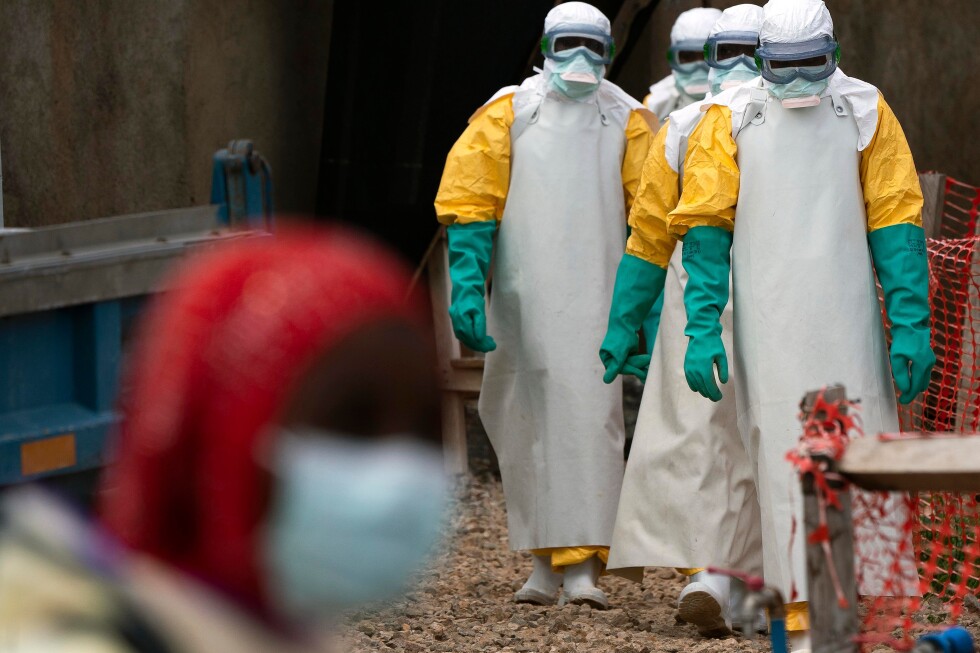
A new, lethal Ebola outbreak spanning the Democratic Republic of Congo and Uganda has laid bare the growing vulnerability of African health systems, as plummeting international donor assistance forces the continent to confront a long-deferred reckoning: ending decades of dependency on foreign aid for public health emergency response.
According to the Africa Centers for Disease Control and Prevention (Africa CDC), the continent is grappling with an unprecedented health financing crisis. Official development assistance for health has been cut in half over just four years, plummeting from roughly $26 billion in 2021 to a projected $13 billion in 2025. Wealthy nations have redirected global health resources to prioritize geopolitical conflicts and domestic economic pressures, with sweeping cuts implemented during the Trump administration worsening the funding shortfall. The shrinking budget crisis arrives as Africa’s population has surpassed 1.5 billion and disease outbreaks are surging: the Africa CDC recorded a jump from 153 public health emergencies across the continent in 2022 to 242 in 2024, ranging from mpox and cholera to this latest Ebola strain, which has no approved vaccines or targeted treatments.
For decades, African governments signed pledges promising to increase domestic investment in public health, but few have followed through on those commitments. In the 2001 Abuja Declaration, 54 African nations committed to allocate a minimum of 15% of their national budgets to the health sector. Today, only three countries — Rwanda, Botswana, and Cape Verde — are on track to meet that target. Dr. Jean Kaseya, director-general of the Africa CDC, framed the funding gap as a threat as dangerous as any emerging pathogen, noting that “every time we have an outbreak, many countries start to ask for partners because they don’t have in their budgets funding to respond, even to prepare for these outbreaks.”
Dr. Alex Ajangba, a health financing expert and co-editor of the *African Journal of Health Economics, Systems and Policy*, explained that prior commitments to self-reliance remained theoretical as long as donor funding was available. “But now that cushion is gone,” he said, adding that the current drop in foreign assistance is not a temporary dip, but a permanent shift.
Against this backdrop, the concept of “health sovereignty” has moved to the center of continental policy, with African governments accelerating efforts to build self-sufficient health systems that rely far less on external aid. Recent initiatives, including Ghana’s September 2024 Accra Reset and the continent-wide African Health Security and Sovereignty Agenda adopted by leaders in February 2025, aim to strengthen long-term public health resilience. Proposed domestic solutions include new targeted taxes on tobacco, alcohol, and sugary beverages to generate health revenue, pooled bulk procurement of medicines to cut costs, expanding local pharmaceutical and vaccine manufacturing, and eliminating systemic inefficiencies that drain limited budgets.
Currently, Africa imports more than 90% of its critical health commodities, including vaccines and prescription drugs. The Africa CDC has set an ambitious target to produce 60% of the continent’s vaccines domestically by 2040. Still, experts warn that health sovereignty risks becoming little more than a empty policy slogan without meaningful structural and financial reform.
A key barrier to expanding domestic health investment is the paradox of Africa’s natural resource wealth: the continent holds roughly 30% of the world’s total mineral reserves, including critical minerals essential for global technology and renewable energy development, but most of the economic value of these resources never reaches national governments or public budgets. Opaque and weak contracting, massive illicit financial flows, crippling national debt burdens, and the export of raw minerals with limited local value processing drain hundreds of billions of dollars from African economies annually. The United Nations Economic Commission for Africa estimates the continent loses roughly $40 billion each year to illicit financial flows alone in the extractive sector.
To bridge the funding gap, global health bodies and African governments are increasingly turning to co-financing models, which require recipient nations to contribute a growing share of health funding alongside donor contributions. Gavi, the global vaccine alliance, reports that lower-income African nations contributed a record $302 million toward domestic vaccine purchases in 2025, and have contributed roughly $1 billion total over the past five years. “This creates predictability,” Gavi chief executive Sania Nishtar told the Associated Press. “Reliance on aid for basic services does not.”
But the shift toward new financing models has become contentious, particularly as the Trump administration has made co-financing a non-negotiable condition for “America First” health agreements with nearly two dozen African nations. The deals restructure U.S. aid to require countries to increase domestic health spending within set deadlines, or lose all U.S. support entirely. Some nations have rejected the agreements outright, pushing back against U.S. demands for access to domestic health data with no guarantees that African nations will share in any commercial benefits derived from that data. Other critics have condemned proposals that would swap health aid commitments for access to African natural resources.
While most African leaders agree that long-term self-sufficiency is a necessary goal, critics argue that many of the U.S. conditions place unfair, unrealistic pressure on economies already strained by debt and underdevelopment. “They are being set up to fail,” said Asia Russell, executive director of global health advocacy group Health GAP. “When an administration says, ‘If you don’t hit these numbers, you’re not going to get resources anymore,’ that is extremely serious.”
Mounting national debt burdens already make dramatic increases in domestic health spending nearly impossible for many nations. Africa’s total sovereign debt has surged to roughly $1.2 trillion, according to the African Export-Import Bank, forcing governments to make devastating trade-offs between public health and debt repayment. For roughly 40% of African countries, annual debt servicing costs exceed total national health spending. The United Nations reports that debt repayment consumes an average of 19% of total government revenue across sub-Saharan Africa. Jen Kates, senior vice president of global health policy nonprofit KFF, noted that “at the end of the day, it’s going to be people who live in those countries who will feel the effects” of underfunded health systems. The Associated Press receives financial support from the Gates Foundation for coverage of global health and development in Africa, and maintains full editorial control over all content.