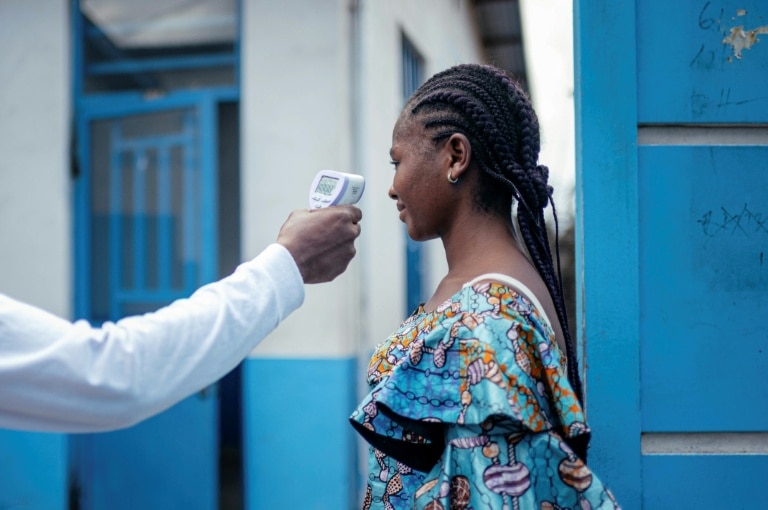
The World Health Organization has officially designated the ongoing Ebola outbreak in the Democratic Republic of the Congo (DRC) a Public Health Emergency of International Concern (PHEIC), amid rising death tolls and growing warnings of cross-border spread across East Africa. As of the latest official update from Congolese Health Minister Samuel-Roger Kamba, the outbreak has been linked to 91 suspected deaths and approximately 350 suspected infections, with most cases affecting adults aged 20 to 39 and over 60% of cases recorded among women. To date, only a small number of suspected cases have received confirmatory laboratory testing, meaning most official counts remain preliminary.
The epicenter of the outbreak is located in Mongbwalu health zone, northeastern Ituri province, a mineral-rich region bordering Uganda and South Sudan marked by constant population movement tied to artisanal gold mining. Large swathes of the province are also destabilized by ongoing violence from multiple armed factions, creating significant security barriers that slow the deployment of response teams and limit access to affected communities. The outbreak’s first officially recorded case was a nurse who sought care in Ituri’s capital Bunia on April 24, but local authorities were not alerted to the unusual cluster of high-mortality illness until May 5, when four healthcare workers died within four days in Mongbwalu. Delays in reporting were compounded by local community beliefs that the disease was a “mystical illness” or curse caused by witchcraft, leading many sick residents to seek treatment at religious prayer centers rather than formal medical facilities, allowing the virus to spread undetected. Initial symptoms of the Bundibugyo Ebola strain also mirror common illnesses like influenza and malaria, further delaying timely identification and isolation of cases.
Alarmingly, the virus has already spread beyond Ituri’s borders. One suspected case has been recorded in Goma, a major eastern DRC urban hub in North Kivu province that has been controlled by the Rwanda-backed M23 rebel group since early 2023. Additionally, one confirmed Ebola case and one death have been recorded in Uganda, involving two Congolese travelers who crossed into the country from the DRC. No secondary local transmission clusters have been reported in Uganda to date, but the Africa Centres for Disease Control and Prevention has warned that neighboring East African nations face a high risk of further spread.
A key complicating factor in the response is that the outbreak is driven by the Bundibugyo strain of Ebola, for which no approved vaccines or targeted antiviral treatments currently exist. All licensed Ebola vaccines are only effective against the Zaire strain, which has caused the largest recorded Ebola outbreaks in history. The Bundibugyo strain was first identified in 2007, when it caused a small outbreak in Uganda, and a second outbreak occurred in the DRC in 2012, with historical mortality rates ranging between 30% and 50%. Without pre-existing medical countermeasures, all current containment efforts rely on rapid case detection, isolation of infected people, rigorous contact tracing, and widespread adherence to protective hygiene measures to cut chains of transmission.
The DRC has a long history of managing Ebola outbreaks, with this event marking the 17th recorded outbreak in the country since the virus was first co-discovered by Congolese virologist Jean-Jacques Muyembe in 1976. Even so, experts warn the current outbreak carries unique and severe risks. “It’s an outbreak that will spread very rapidly, all the more so because it has broken out in a densely populated province,” Muyembe, now head of the DRC’s national infectious disease research institute, told Agence France-Presse. If all currently suspected cases are confirmed, the outbreak will rank as the seventh-largest Ebola outbreak ever recorded across all strains, and the second-largest ever recorded involving a non-Zaire strain. Over the past 50 years, Ebola has killed more than 15,000 people across Africa. The DRC’s deadliest outbreak on record occurred between 2018 and 2020, when Zaire strain Ebola killed nearly 2,300 people across 3,500 confirmed cases. The most recent outbreak before the current event killed 45 people between September and December 2023, according to WHO data.