A nationwide strike by Kenya’s public transport operators has brought major parts of the East African nation to a standstill, as thousands of commuters are left stranded and economic activity grinds to a halt over a record-breaking jump in fuel prices that has deepened an already severe cost-of-living crisis.
The industrial action, organized by the country’s Transport Sector Alliance (TSA), was launched days after Kenya’s Energy and Petroleum Regulatory Authority (Epra) implemented a more than 20% increase in petroleum prices, pushing rates to all-time highs. As of last Thursday, diesel climbed to 242 Kenyan shillings ($1.80, £1.40) per liter, while petrol rose to $1.65 per liter.
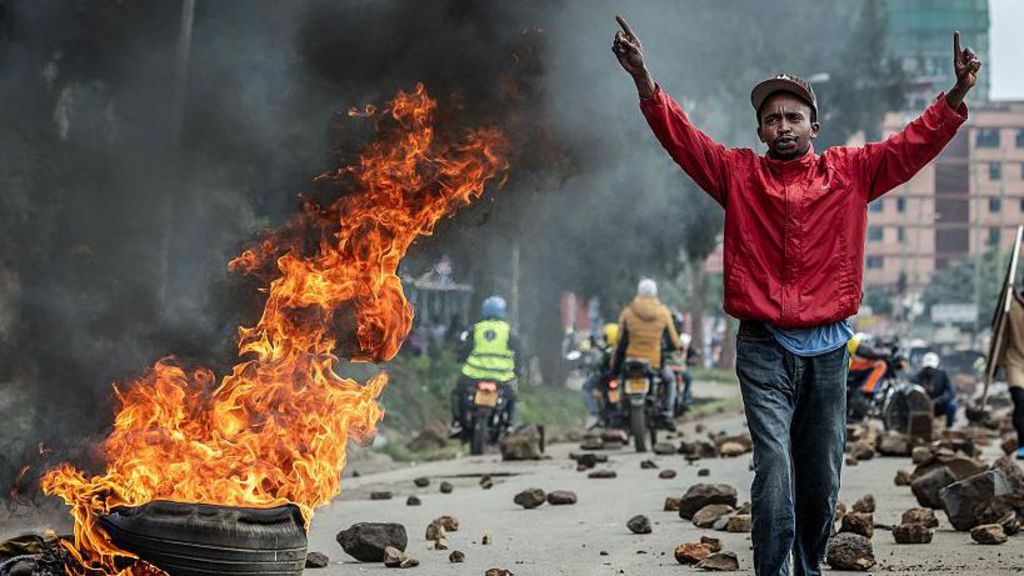
By Monday morning, key arterial roads in the capital Nairobi were nearly deserted. With nearly all public transit vehicles — including the ubiquitous local matatu minibuses — adhering to the shutdown, thousands of workers and students were forced to walk for miles to reach their destinations, while many businesses kept their doors closed and schools across affected regions advised students to stay home. Local television footage captured demonstrators barricading major thoroughfares and lighting bonfires to block vehicle access, with scattered reports of protesters harassing private motorists who defied the strike call. In multiple areas of Nairobi and other parts of the country, clashes broke out between security forces and demonstrators, with police deploying tear gas to disperse crowds. Ahead of the strike, law enforcement had already announced heightened security deployments and warned participants against engaging in disorderly conduct.
The TSA, which coordinated the shutdown, extended the strike’s scope beyond transport operators, framing it as a collective action for all Kenyan households struggling with soaring living costs. In an official statement, the alliance said the industrial action was intended to pressure the government to reverse last week’s price hike and implement an overall 35% reduction in fuel costs. It accused the Kenyan government of failing to take meaningful action to protect ordinary citizens from the spiraling cost of fuel, which has already driven up prices for food, public transit fares, and nearly all other essential goods and services.
The current fuel crisis stems from global supply chain disruptions tied to the US-Israel conflict with Iran that began in late February. Like many other sub-Saharan African nations, Kenya depends almost entirely on fuel imports from the Gulf region, a supply route thrown off balance by instability around the Strait of Hormuz — the strategic chokepoint through which roughly one-fifth of the world’s daily oil supplies pass. While a ceasefire has been agreed, the strait remains blocked, keeping global oil prices elevated and passing higher costs directly on to Kenyan consumers.
Kenyan officials have acknowledged the hardship caused by the price increase, but rejected the strikers’ demands and condemned the industrial action. Treasury Cabinet Secretary John Mbadi told local NTV on Monday that the fuel price hike was “unfortunate” and acknowledged that it was weighing heavily on the national economy. However, he argued that the strike was “completely uncalled for”, noting that the price surge is a global issue that cannot be resolved with domestic disruptive action. “Why are we trying to solve a global problem using domestic means?” Mbadi asked.
The government has already taken one limited step to ease fuel costs: last month, it cut value-added tax on fuel from 16% to 8%, a reduction that is set to remain in place until July. But critics and advocacy groups say the move has not gone far enough to offset the massive price increases that have pushed household budgets to breaking point across the country.