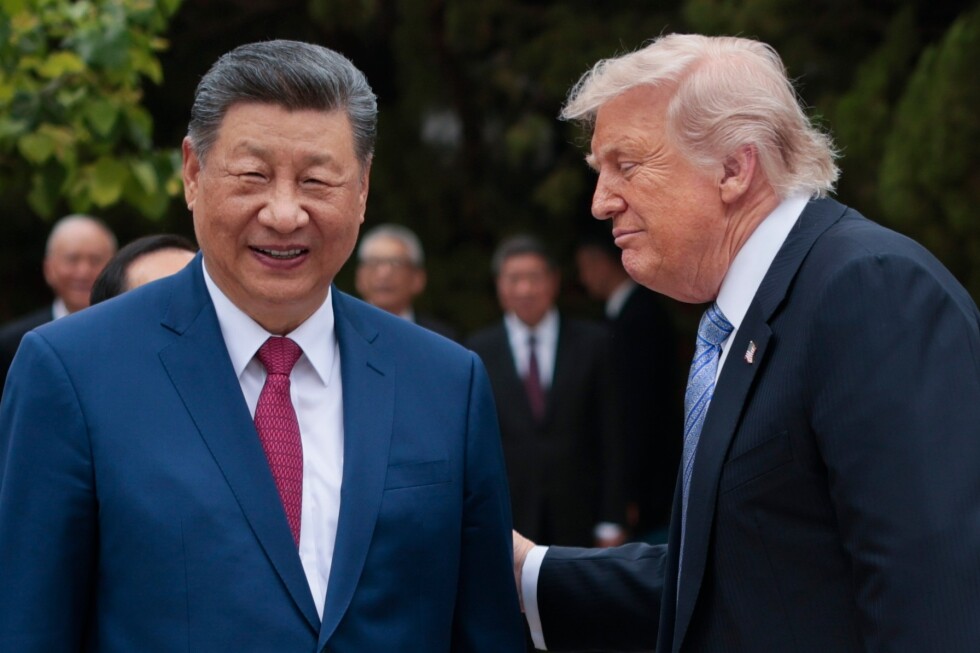
WASHINGTON (AP) – Two days after U.S. President Donald Trump concluded a high-stakes negotiating summit in Beijing aimed at mitigating economic harm to American agricultural producers from the 2024 trade war he initiated, the White House made a major announcement Sunday: China has committed to scaling up purchases of key U.S. farm products including beef and poultry, hitting an annualized purchase target of $17 billion per year starting in 2026, with this level maintained through 2027 and 2028.
According to the White House’s statement, the agreement will restore full Chinese market access for U.S. beef and resume Chinese imports of U.S. poultry from states certified as avian influenza-free by the U.S. Department of Agriculture (USDA). This new framework builds on existing soybean purchase commitments China made last year, offering a much-needed lifeline to American farmers who have lost critical export volume after China sharply cut agricultural imports amid the trade conflict.
American agricultural producers have faced overlapping economic pressures in recent months. Beyond the trade war that erased China as a major export market for soybeans and other commodities, new disruptions stemming from the U.S.-Israel military campaign against Iran have restricted shipping through the Strait of Hormuz, a critical global trade chokepoint. This disruption has shrunk global fertilizer supplies and driven input prices to record highs, squeezing farm profit margins even further.
As of Sunday, Beijing had not issued immediate public confirmation of the specific $17 billion purchase terms outlined by the White House. On Saturday, China’s Ministry of Commerce released a more general statement confirming that the two sides had reached agreement to “resolve or make substantial progress toward resolving certain non-tariff barriers and market access issues” for agricultural products.
Per the Chinese commerce ministry’s spokesperson, the U.S. has agreed to actively address Chinese regulatory concerns covering detained Chinese dairy and seafood shipments, U.S. import rules for Chinese potted bonsai, and Chinese requests for official recognition of Shandong Province as an avian influenza-free zone. In turn, China will actively advance U.S. priorities including registration approvals for American beef processing facilities and market access for U.S. poultry from eligible states. The two sides also committed to expanding overall agricultural and general trade through reciprocal tariff cuts for an unspecified “specific range of products.”
In the years since the trade war escalated, China has systematically diversified its sources of imported agricultural commodities to protect its own food and national security, shifting growing volumes of purchases to Brazil, Argentina and other supplier nations instead of the U.S. USDA data underscores the scale of the drop-off in U.S. agricultural exports to China: after peaking at $38 billion in total agricultural imports in 2022, Chinese purchases fell to just $8 billion in 2025. Soybean imports alone dropped from nearly $18 billion in 2022 to only $3 billion in 2025.
After Trump hiked tariffs on Chinese goods last year, China — long the largest foreign buyer of U.S. soybeans — halted nearly all new soybean purchases, leaving U.S. soybean producers, the hardest-hit segment of American agriculture, facing massive surplus stock and depressed prices. The new announcement builds on an October trade truce between Trump and Chinese President Xi Jinping, where China first agreed to resume soybean purchases, with an initial commitment of 12 million metric tons for the 2025-2026 marketing year and 25 million metric tons annually for the following three years.
For the U.S. beef sector, the agreement will re-open the Chinese market to hundreds of U.S. processing facilities, including major operations run by industry giants Tyson Foods and Cargill. China allowed licenses for hundreds of U.S. beef plants to expire last year, pushing total U.S. beef export value to China down to less than $500 million in 2025, a sharp drop from the 2022 peak of $2.14 billion. U.S. poultry exports to China have followed a similar trajectory, falling from over $1 billion in 2022 to just $286 million in 2025. It remains unclear what the actual annual export volume for U.S. beef and poultry will be under the new agreement.
Beyond agricultural trade, the Beijing summit focused on identifying new areas of bilateral economic cooperation, including expanded market access for U.S. firms in China and increased Chinese investment in U.S. domestic industries. The two leaders announced plans to establish two new bilateral coordinating bodies: a Board of Trade to manage trade in “non-sensitive goods” and address specific tariff reduction issues, and a Board of Investments to facilitate dialogue on cross-border investment issues. Both sides have offered few details on how these new bodies will differ from existing bilateral trade dialogue frameworks. The commerce ministry spokesperson noted that the two sides agreed “in principle” to reciprocal tariff cuts of equivalent scale for products of mutual concern.
Meeting with U.S. business leaders accompanying Trump on the trip, including Cargill CEO Brian Sikes, Xi emphasized that China’s door of opportunity for international business will continue to widen.
Soybeans, used heavily for livestock feed and biofuel production in China, have long been the top U.S. agricultural export to the country, accounting for roughly half of all U.S. agricultural exports to China in past years. As of May 7, USDA data shows U.S. exports of soybeans to China have reached 10.9 million metric tons, putting China on track to meet its original October commitment by the end of the current marketing year on August 31. That volume remains far below the 25 million to 30 million metric tons China purchased annually before the latest escalation of the trade war.
Before Trump’s originally scheduled Beijing trip in late March — postponed amid the outbreak of the Iran conflict — the American Soybean Association publicly urged the president to prioritize expanded soybean access in trade talks with Xi. Association president Scott Metzger said Thursday that the group is pushing for additional soybean purchases in the current marketing year alongside steady progress on meeting long-term purchase commitments. “Greater certainty and consistency in the marketplace help provide farmers with the confidence they need as they make decisions for the year ahead,” Metzger said.
AP journalist Kevin Vineys contributed reporting to this article.