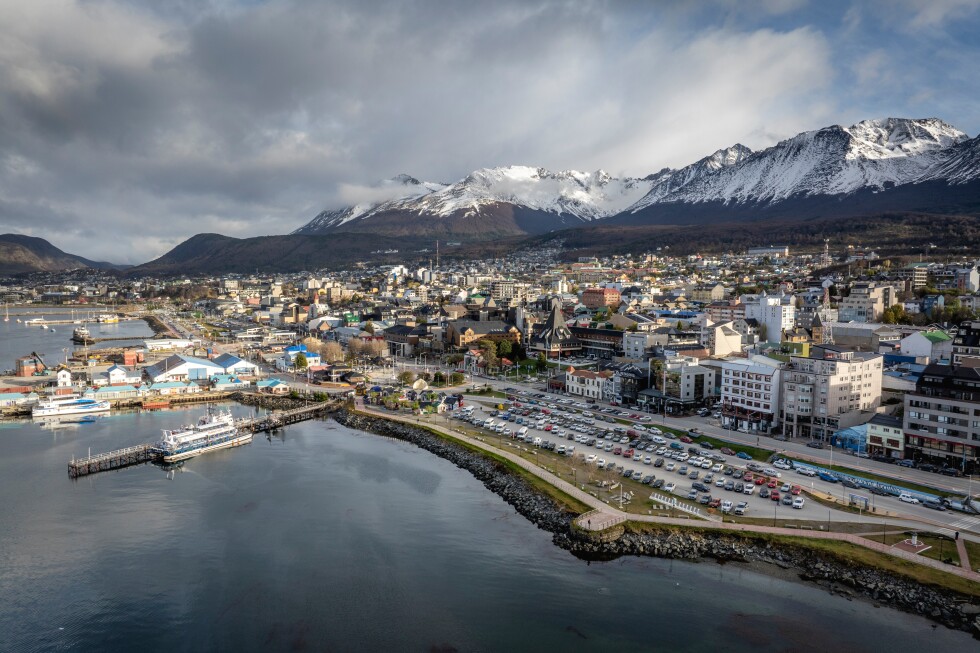
Nestled at the southernmost tip of Argentina, positioned as the world’s primary gateway to Antarctic cruises, Ushuaia has built a booming tourism brand as the remote, unspoiled “end of the world.” For years, growing legions of adventure travelers have flocked here to spot Magellanic penguins, breach-watching humpback whales, and catch departure ships for bucket-list trips to Antarctica, turning the once-remote outpost into an economic boomtown that relies on tourism for more than a quarter of its annual revenue. Today, that hard-won growth hangs in the balance, after a deadly hantavirus outbreak on an Atlantic cruise sparked unconfirmed speculation that traces the infection’s origin back to this wind-swept Patagonian city.
The outbreak’s first confirmed fatalities were a Dutch couple, avid birdwatchers who died after falling ill in April. Argentina’s national Health Ministry has launched an investigation into whether the pair contracted the rat-borne Andes variant of hantavirus while staying in Ushuaia before boarding their cruise ship. The case has quickly become tangled in political tension, as the left-leaning provincial government of Tierra del Fuego – which has frequently clashed with libertarian national President Javier Milei – claims it is the target of a coordinated smear campaign. National health officials, meanwhile, have refused to rule out any potential site of infection, noting the couple completed a months-long cross-country road trip through Argentina and Chile before embarking from Ushuaia’s port.
What makes the crisis particularly fraught for the region is that no concrete evidence has yet linked Ushuaia to the outbreak. The province has never recorded a confirmed local case of hantavirus, but that has not stopped the uncertainty from rippling through the local tourism sector, just as operators prepare for the critical summer booking season. Winter in Ushuaia is the quiet planning period for Antarctic cruises, when wealthy international travelers lock in their itineraries for the upcoming summer travel window. Local travel agents have already confirmed that an untold number of bookings from American and European travelers have been scrapped over fears of hantavirus exposure.
For local industry leaders, the biggest long-term risk is not immediate cancellations, but the permanent loss of prospective visitors who will pick alternative adventure destinations over Ushuaia. “We have seen a number of passengers canceling trips, but my main concern is not the cancellations but people who were thinking about going to Ushuaia but had two or three destinations to choose from and now may go to Southeast Asia or Africa,” explained Ángel Brisighelli, owner of Ushuaia-based tour operator Rumbo Sur. “That damage won’t be visible until much later.”
This moment exposes the extreme fragility of Ushuaia’s tourism-dependent economy, which has already faced a string of recent economic shocks under the Milei administration. The national government’s decision to roll back long-standing trade barriers has gutted the region’s core electronics manufacturing industry, while a stronger national peso has made international travel more affordable for domestic Argentines, cutting into critical off-season tourism revenue that supports local businesses through the slow winter months.
The growth of Antarctic tourism has been transformative for Ushuaia over the past decade. Just 10 years ago, only 38,400 Antarctic cruise passengers departed from the city of 80,000. For the 2025-2026 season, Argentine port authorities project more than 135,000 passengers will set sail from Ushuaia, which handles 90% of all global Antarctic cruise departures. Travelers are drawn to the region by the chance to see Antarctica’s iconic ice sheets before they are lost to climate change, turning the once-isolated military and research outpost into a global adventure travel hub.
Beyond the economic uncertainty, the investigation itself has drawn criticism for slow progress and a lack of transparent, science-driven inquiry. More than two weeks after the Health Ministry announced it would send a team of researchers to Ushuaia to test local rodent populations for the virus, the team has yet to arrive. International public health experts have expressed confusion over the delayed investigation. “The investigation is going to be key for us to see what we can learn from the outbreak,” said Mark Loafman, a family medicine and public health expert at Chicago’s Cook County Health. “We’d like to see hypotheses based on science, and not on concern over tourism.”
The Pan American Health Organization, which Argentina still partners with despite the nation’s 2023 withdrawal from the World Health Organization, has defended Argentina’s response, noting it is working with national officials to improve case detection and monitoring. “While the ongoing investigation remains important, its broader public health relevance for the Americas is limited, given that the disease is endemic in the region,” the organization said in a statement.
Ushuaia authorities argue the most logical origin of infection is the broader Patagonian region that spans southern Chile and three Argentine provinces, where Andes hantavirus is known to circulate in wild rodent populations. But national health officials say there is no record of the Dutch couple visiting these endemic areas during the virus’s 9 to 45-day incubation period before the couple developed symptoms on April 6.
Local officials across high-profile Argentine tourist destinations have moved quickly to dispel fears as the summer travel season approaches. In Epuyén, a Patagonian village that suffered a deadly 2018 hantavirus outbreak that killed 11 people, Mayor José Contreras has issued a public clarification to counter spreading misinformation. “Tourism operators tell us that many trip reservations have been canceled, so we must make this clarification,” Contreras announced. “Epuyén has no hantavirus this season. People should feel at ease and continue to visit.”
Back in Ushuaia, some local tourism leaders are framing the crisis as an opportunity to prove the destination’s safety. “We suffered a loss of prestige, yes. But this is also a chance to show that Ushuaia is one of the safest places in the world,” said Juan Pavlov, foreign affairs secretary for the Tierra del Fuego Tourism Institute. For now, though, visitors remain cautious, and the city’s economic future hangs on the outcome of an investigation that has yet to deliver clear answers.