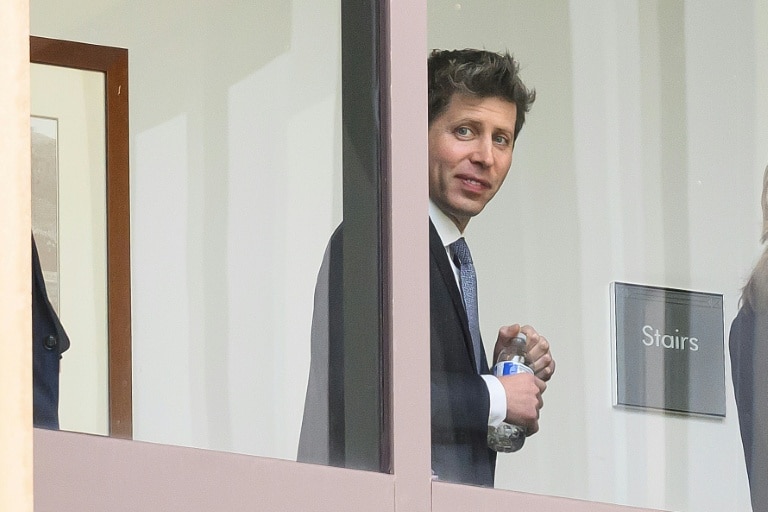
Three weeks of dramatic, star-studded testimony in one of the most consequential Silicon Valley legal battles in recent memory drew to a close this week, with jurors set to begin deliberations Monday on Elon Musk’s blockbuster lawsuit against OpenAI and its chief executive Sam Altman. At the heart of the dispute is a bitter clash over the original founding mission of the AI firm that kicked off the global generative AI boom: Musk alleges Altman and other early leaders betrayed the organization’s founding promise to develop open, non-profit AI for the public good, instead steering it toward profit-driven growth that has turned it into an $850 billion private sector powerhouse.
The trial, held in Oakland, California just outside the global tech hub of San Francisco, has seen dozens of Silicon Valley’s most prominent figures take the stand to testify about the behind-the-scenes clashes that have roiled OpenAI for years. Musk, the world’s richest person who helped launch OpenAI in 2015 before stepping down from the board in 2018, argues that the company’s radical transformation from a small, scrappy non-profit research lab to the creator of ChatGPT, the product that ignited today’s global AI race, amounts to a breach of the founding agreement and a misuse of his $38 million original donation.
Musk’s legal team centered its closing argument, delivered Thursday, on challenging Altman’s personal credibility. Lead Musk attorney Steven Molo attacked the OpenAI chief’s integrity, arguing that the company’s leadership abandoned the core non-profit mission that convinced Musk and other early donors to back the project. “A non-profit devoted to the safe development of artificial intelligence, open sourced as practical, for the benefit of humanity. You know, we’re supposed to buy that,” Molo told the nine-member jury.
OpenAI’s legal team fired back with a direct assault on Musk’s own claims, pointing out that even close associates of the billionaire have failed to back his version of events. OpenAI attorney Sarah Eddy highlighted testimony from Shivon Zilis, a business partner of Musk who is also the mother of four of his children, who acted as an intermediary between Musk and Altman in years after Musk left OpenAI. “Even the people who work for him, even the mother of his children, can’t back his story,” Eddy argued.
The trial has also brought renewed public attention to long-swirling allegations about Altman’s leadership style. The OpenAI CEO was unexpectedly ousted by the company’s board in November 2023 over claims he lacked candor with leadership, only to be reinstated days later after massive pressure from OpenAI employees and major investors. Allegations of behind-the-scenes manipulation and a toxic internal culture dogged Altman throughout the three weeks of testimony.
Before the jury can rule on the core claims of the lawsuit, it must first resolve a critical threshold question: whether Musk, who filed the suit in 2024, four years after his last financial contribution to OpenAI, brought the claim within the state’s statutory deadline for legal action. If jurors find the suit was filed too late, the case will be dismissed immediately. Judge Yvonne Gonzalez Rogers has ruled that the jury’s decision on this timeline question will be advisory, but she has indicated she will almost certainly follow the jury’s recommendation.
If the case moves forward, jurors will then weigh whether Altman and OpenAI co-founder Greg Brockman improperly misused Musk’s $38 million donation, which Musk says was earmarked to keep OpenAI operating as a public-benefit research lab, and broke binding promises to retain the non-profit structure to pursue personal profit and commercial growth.
Musk’s requested remedy is extraordinary: he is demanding that OpenAI reverse its transformation and return to full non-profit status. Such a ruling would force OpenAI to scrap its planned initial public offering, unwind its multi-billion dollar partnerships and investment ties with major tech backers including Microsoft, Amazon and SoftBank, and rewrite its entire corporate structure. The jury will also consider whether Microsoft, OpenAI’s largest single backer which has committed $13 billion to the company, knowingly facilitated OpenAI’s shift away from its original non-profit mandate.
Since leaving OpenAI in 2018, Musk has built his own competing AI initiatives, first through his rocket company SpaceX and more recently through dedicated AI startup xAI, which has so far struggled to compete with OpenAI and other leading AI players like California-based Anthropic. As Judge Rogers noted during the trial, the entire dispute ultimately boils down to a fundamental question for the nine jurors: which side of this battle between two of tech’s most high-profile billionaires can they believe? A win for Musk could deliver a fatal blow to OpenAI, upending the global AI race that the company helped launch with the 2022 release of ChatGPT.