In the immediate aftermath of U.S. President Donald Trump’s high-stakes 2025 diplomatic visit to Beijing, newly public comments from the commander-in-chief have sent waves of anxiety through Taiwan, the self-governing democracy that China claims as an integral part of its territory. Speaking in an interview with Fox News host Bret Baier that aired immediately after Trump’s return from Beijing, the president framed long-planned U.S. arms sales to Taiwan as a bargaining leverage tool for Washington’s negotiations with Beijing.
When asked whether he would approve a long-delayed $14 billion arms package for the island, Trump made the decision explicitly contingent on Chinese concessions. “I’m holding that in abeyance and it depends on China. It’s a very good negotiating chip for us, frankly. It’s a lot of weapons,” he told Baier.
This framing of Taiwan as a bargaining tool has triggered deep alarm on the island. For decades, U.S. policy has operated under the Taiwan Relations Act, a domestic law that legally requires Washington to provide Taiwan with the defensive capabilities necessary to protect itself from external aggression, and the U.S. has formally committed to viewing any threat to the island as a matter of grave national concern. Unlike many countries that maintain formal diplomatic ties with Beijing, the U.S. does not officially recognize Taiwan as a sovereign state, but it has remained the island’s closest international partner and largest arms supplier for decades.
William Yang, Northeast Asia senior analyst at the International Crisis Group, notes that Trump’s choice to tie arms sales progress to unrelated negotiations with Beijing plays directly into what Taipei has long viewed as a worst-case outcome: Taiwan being sidelined from talks while its fate is decided by outside powers. “Taiwan, instead of being at the negotiating table, is on the menu,” Yang explained.
Trump has not publicly outlined specific concessions he is seeking from Beijing in exchange for blocking the arms deal, but public records show the president has repeatedly pressed China to increase purchases of American manufactured and agricultural goods, and to cooperate more aggressively on international pressure campaigns against Iran’s nuclear program. This is not the first time a Trump administration decision on Taiwan arms sales has sparked friction: in December 2024, Trump and Congress approved a separate $11 billion arms package for Taipei, a move that triggered fierce pushback from Beijing, which responded by staging large-scale live-fire military drills in waters surrounding the island.
During his summit with Chinese leader Xi Jinping in Beijing, Xi delivered one of his strongest public warnings on the Taiwan issue to date, framing the question of Taiwan as the most sensitive core issue in U.S.-China relations. Xi explicitly warned Trump that mishandling the dispute could lead to “clashes and even conflicts” between the two global powers. The summit, which wrapped up last week, is set to be followed by a high-profile visit from Russian President Vladimir Putin to Beijing next week, a trip that has underscored deepening strategic alignment between Moscow and Beijing.
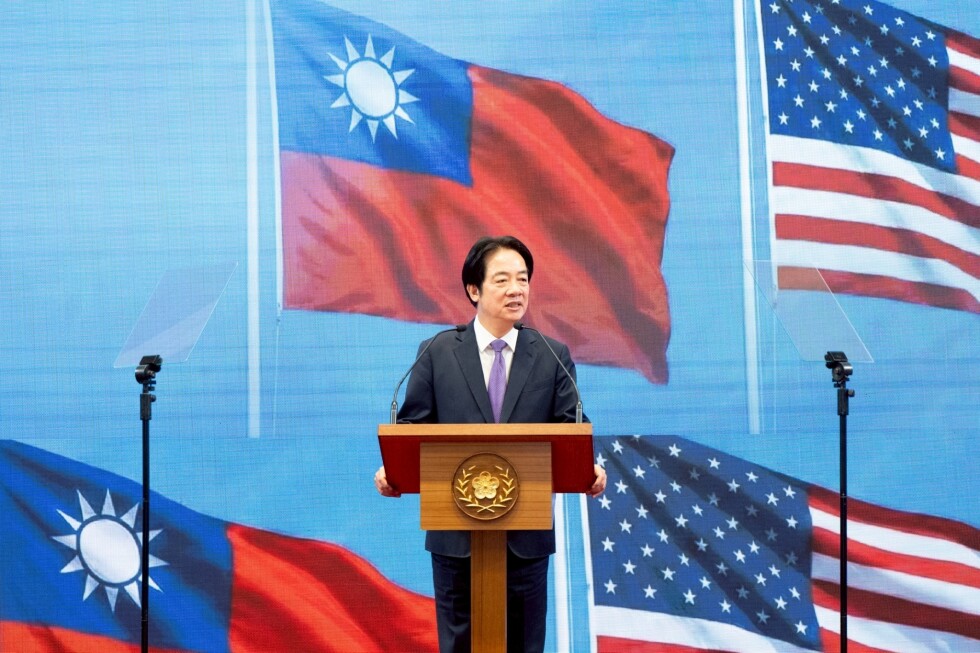
In Taipei, government officials moved quickly over the weekend to de-escalate tensions emerging from Trump’s comments, issuing a statement emphasizing that “the consistent U.S. policy and position toward Taiwan remain unchanged.” “The Republic of China is a sovereign, independent, democratic country; this is self-evident, and Beijing’s claims are therefore without merit,” said Presidential Office Spokesperson Karen Kuo. She added that the island remains grateful for bipartisan U.S. support, and stressed that U.S. arms sales to Taiwan are required by longstanding U.S. law.
The arms sales comments are not the only statement from Trump that has stoked unease across Taiwan. In the same Fox News interview, Trump repeated a longstanding call for Taiwan’s world-leading microchip industry to relocate a majority of its advanced manufacturing operations to the United States. Taiwan currently produces more than 90% of the world’s most cutting-edge semiconductors, components critical to everything from consumer smartphones and artificial intelligence systems to advanced military hardware.
“I’d like to see everybody making chips over in Taiwan come into America,” Trump told Baier, describing such a mass relocation as “the greatest thing you can do for the United States.” The president also repeated a years-old accusation that Taiwan “stole” its microchip manufacturing industry from the United States decades ago. This pressure is not new: Taiwan’s industry leader TSMC has already committed $165 billion to build a massive advanced semiconductor manufacturing campus in Arizona, and the Taiwanese government pledged a total of $250 billion in U.S.-based semiconductor investment as part of a broad bilateral trade agreement with Washington earlier this year.
Beyond trade and arms sales, many analysts have also flagged that Trump appears to have adopted key parts of Beijing’s own narrative surrounding Taiwan’s current government. During the summit with Xi, Trump did not alter formal U.S. policy wording on Taiwan, a outcome that many regional observers had feared would see major shifts in Washington’s longstanding position. However, his public comments aligned closely with Beijing’s framing of current Taiwanese President Lai Ching-te, who Beijing has labeled a “diehard Taiwan independence separatist” that threatens to drag the region into war.
Historically, while top U.S. officials do not hold formal public meetings with Taiwanese leaders, the U.S. has signaled quiet support for the island’s government through gestures such as allowing transit stops for Taiwanese leaders on U.S. soil during international trips. Lai, who is set to mark his second year in office in May, has yet to be permitted a transit stop on the U.S. mainland, a shift many analysts interpret as a rollback of U.S. support for the Taiwanese government under the Trump administration.
In his Fox News interview, Trump echoed Beijing’s framing, stating that he does not support a change to the cross-strait status quo, but added, “But they have somebody there now that wants to go independent. They’re going independent because they want to get into a war and they figure they have the United States behind them.” He added that he has no interest in fighting a war with China over Taiwan thousands of miles from U.S. soil.
Wen-Ti Sung, a fellow with the Atlantic Council’s Indo-Pacific Security Program, argues that Trump’s inflammatory comments are consistent with his long history of transactional, deal-focused rhetoric on global security issues. “What matters more is the substance, which Taiwan is holding its collective breath for,” Sung noted. For now, Taipei and regional observers remain on edge waiting to see whether Trump’s comments signal a substantive shift in longstanding U.S. policy toward the island, or just another example of the president’s unconventional negotiating style.