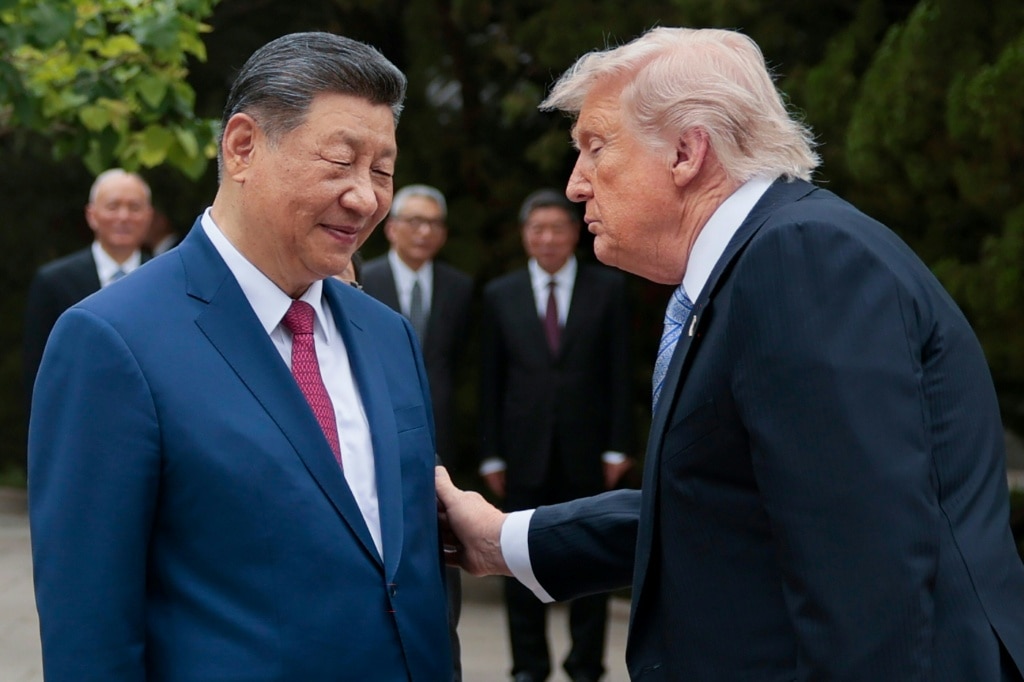
In a move that underscores the steady deepening of Moscow-Beijing ties, the Kremlin announced Saturday that Russian President Vladimir Putin will embark on a two-day official visit to China starting May 19, arriving just days after U.S. President Donald Trump concluded his groundbreaking trip to Beijing — the first visit to China by a sitting U.S. president in almost a decade.
According to an official statement from the Kremlin, the core agenda of Putin’s visit will center on advancing the comprehensive partnership and strategic cooperation between Russia and China. During high-level talks with Chinese President Xi Jinping, the two leaders will exchange detailed perspectives on pressing international and regional issues of shared concern, with a joint declaration set to be signed at the conclusion of their discussions. Putin is also scheduled to hold a separate meeting with Chinese Premier Li Qiang, where the pair will focus on expanding bilateral economic and trade cooperation, a cornerstone of the increasingly robust relationship between the two nations.
The timing of Putin’s visit announcement comes immediately on the heels of Trump’s Friday departure from China, a trip marked by ceremonial grandeur that masked the persistence of unresolved trade disputes and geopolitical rifts, chief among them the lingering conflict between Russia and Ukraine. During his talks with Xi, Trump raised the ongoing Ukraine conflict, which has stretched into its fifth year, as well as the stalled U.S. standoff with Iran that began when hostilities broke out between the U.S.-Israeli bloc and Iran on February 28. However, Trump departed China without securing any visible breakthrough on either issue, despite Ukrainian President Volodymyr Zelensky’s pre-summit request that Trump push for progress on ending the conflict during his discussions with Beijing.
Moscow has repeatedly made clear that it will not accept a ceasefire or enter into full negotiations with Kyiv unless Ukraine concedes to the Kremlin’s sweeping territorial and political demands. For its part, China has maintained a formal position of neutrality: it has consistently called for diplomatic negotiations to end the fighting, but has never condemned Russia’s 2022 full-scale incursion into Ukraine, and denies Western accusations that it supplies weapons or military components to Russia’s defense industry. Beijing has instead pinned blame for the conflict, the deadliest conflict in Europe since World War II, on Western nations, arguing that their ongoing arms shipments to Kyiv have prolonged the violence.
As the world’s largest importer of Russian fossil fuels, China has emerged as Russia’s most critical economic partner, a role that has expanded dramatically since Western powers imposed sweeping sanctions on Russian oil and gas exports following the 2022 invasion. That close alignment has been repeatedly emphasized by top Russian officials, including Foreign Minister Sergey Lavrov, who spoke on the sidelines of an event in New Delhi just one day after the China-U.S. summit.
Lavrov welcomed the outcome of the China-U.S. talks, noting that “if the agreements reached or to be reached by Beijing and Washington are in the interests of our Chinese friends, we can only be delighted.” But he was quick to underscore the unique strength of Moscow’s relationship with Beijing, emphasizing that Russia and China are “bound to China by ties… that are deeper and stronger than traditional political and military alliances.”
The contrast between the outcomes of Trump’s Beijing visit and the upcoming Putin trip is already drawing attention from global observers. Following his departure, Trump claimed he had secured “fantastic” new trade deals with China, including a purported commitment from Beijing to purchase 200 Boeing aircraft along with increased volumes of U.S. crude oil and soybeans. But the details of these agreements remain sparse and vague, and Chinese officials have not released any formal public confirmation of the trade deals. Beijing’s overall response to the Trump-Xi summit was also far more muted than Trump’s own glowing descriptions of his interactions with Xi, whom Trump called a “great leader” and “friend.”