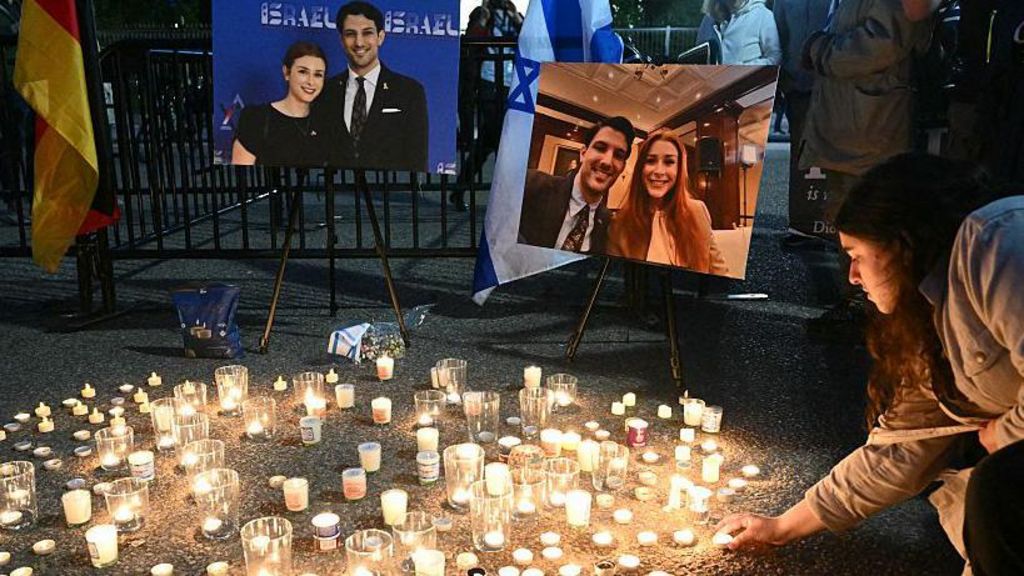
On a quiet spring evening in downtown Washington D.C., hundreds gathered across from the White House on May 22, 2025, holding flickering candles to honor the lives of Yaron Lischinsky and Sarah Lynn Milgrim, two young Israeli embassy employees killed in a targeted attack months earlier. Now, federal prosecutors have formally notified the court they will pursue the ultimate legal punishment for the man accused of their murder, in a case that intersects with the Trump administration’s sweeping reversal of Biden-era restrictions on the federal death penalty.
Thirty-one-year-old Elias Rodriguez, the suspect in the May 2024 shooting outside the Capital Jewish Museum, has entered a plea of not guilty to all 13 charges filed against him. Among those counts are three capital offenses: murder of a foreign official, discharge of a firearm during a violent felony, and second-degree murder by firearm, for which US Attorney for the District of Columbia Jeanine Pirro confirmed Friday her office will seek execution if Rodriguez is convicted. Additional charges against Rodriguez include federal hate crime violations and counts related to acts of domestic terrorism.
Prosecutors have laid out a detailed account of premeditation tied to ideological anti-Israel sentiment. According to their filings, Rodriguez traveled from his home in Chicago to Washington D.C. armed with a handgun, after researching a scheduled networking event for young Jewish professionals to be held at the downtown museum. Lischinsky, 30, and Milgrim, 26, were leaving the museum when Rodriguez opened fire, discharging 20 rounds that killed both victims immediately. Multiple law enforcement and media reports confirm the pair were in a committed relationship, and Lischinsky had purchased an engagement ring with plans to propose during an upcoming trip to Israel.
After the shooting, prosecutors allege Rodriguez entered the museum, displayed a red keffiyeh, and openly stated he carried out the attack “for Palestine” and “for Gaza.” During his arrest, he shouted “Free Palestine,” and court documents show he left behind a written manifesto titled “explication,” where he expressed explicit support for violence against Israelis, claimed Israel was carrying out an extermination campaign against Palestinians, and attempted to justify his violent actions to encourage future copycat attacks. Multiple social media posts attributed to Rodriguez in the months before the shooting contain the slogan “Death to Israel” and repeated endorsement of violent targeting of Israeli civilians.
FBI Assistant Director Darren Cox, head of the bureau’s Washington Field Office, emphasized the severity of the attack in a February 2025 press statement, noting “In addition to allegedly murdering two innocent people and terrorizing the survivors of his attack at the Capital Jewish Museum, Rodriguez wrote and published a manifesto attempting to morally justify his actions and inspire others to commit political violence.”
Pirro reiterated her office’s commitment to full accountability in comments earlier this year, saying “My office will not rest in our efforts to hold Elias Rodriguez accountable for this horrific, and targeted act of terror against Yaron Lischinsky, Sarah Milgrim and our Jewish community.”
The decision to pursue the death penalty comes amid a sweeping reversal of federal justice policy under the second Trump administration. During Trump’s first term in office, the White House reinstated federal executions after a 17-year informal moratorium, only to see the Biden administration roll back those policies and impose a formal halt on all federal executions after taking office in 2021.
On his first day back in the White House following the 2024 presidential election, Trump issued an executive order directing the Department of Justice to prioritize capital punishment in eligible cases, speed up execution schedules, and expand legal methods of execution beyond lethal injection to include practices such as firing squad. Department of Justice records confirm the administration has already resumed federal executions and streamlined court processes to reduce delays in death penalty cases.
The case has sparked renewed national conversation about political violence targeting Jewish communities in the U.S., tensions over the Israeli-Palestinian conflict spilling over into domestic attacks, and the future of the federal death penalty under the current administration.