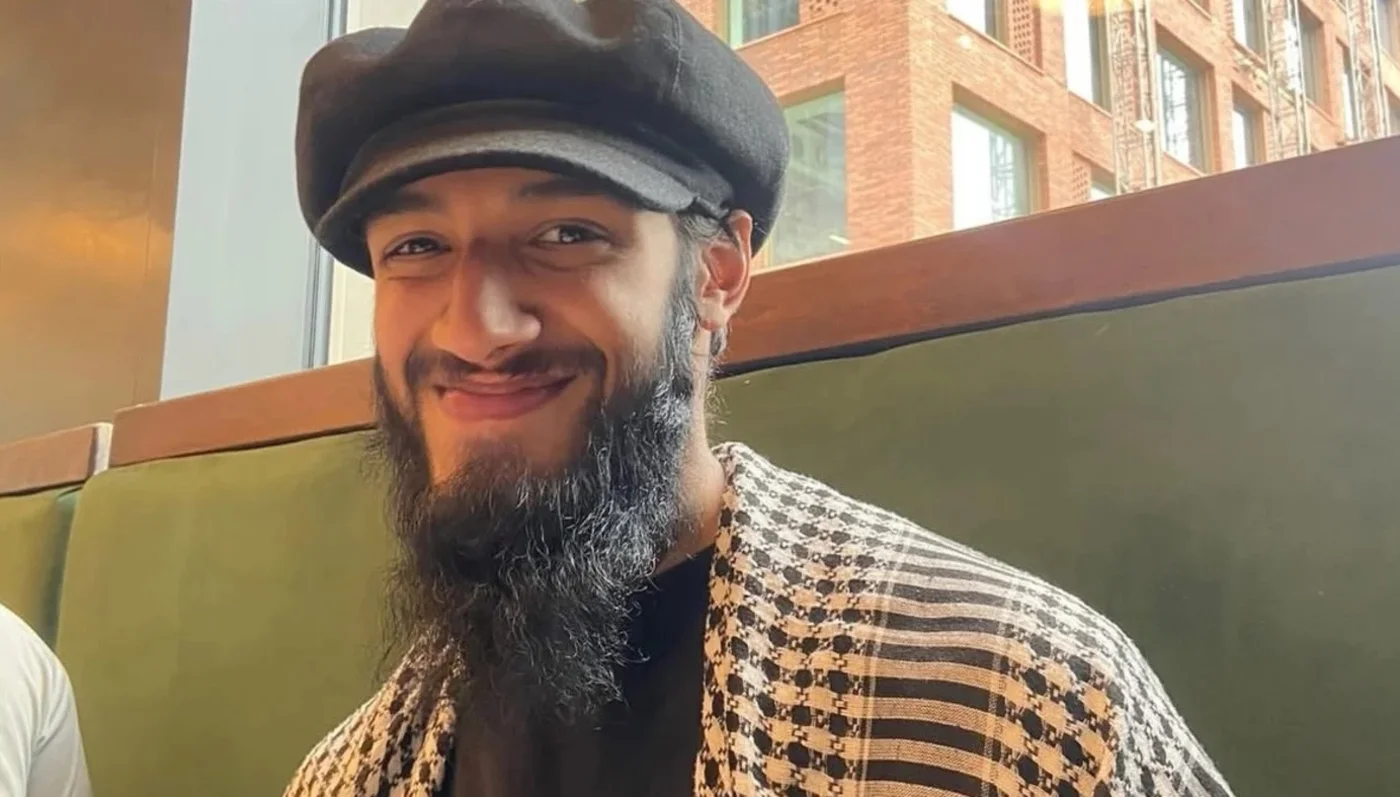
A remand prisoner linked to the activist group Palestine Action has laid bare damning allegations of systemic medical neglect and degrading treatment at a high-security London prison, detailing how failures to provide adequate mobility support and care have left him crawling across cell floors to access basic needs.
Muhammad Umer Khalid, 23, is currently held at HMP Wormwood Scrubs awaiting trial over charges connected to a June 2023 break-in at a Royal Air Force base. Living with incurable progressive muscular dystrophy – a rare genetic condition that causes gradual muscle wasting, requiring consistent physical activity and specialized high-protein nutrition to slow deterioration – Khalid claims the UK prison service has systematically failed to meet his documented medical needs for months.
Since being placed in 23-hour-a-day cell lockdown last October, Khalid says his mobility has declined sharply. What began as gradual weakness has progressed to a total loss of the ability to walk, forcing him to crawl through the prison to access medication, legal appointments, and family visits. In an interview with Middle East Eye (MEE) conducted through an intermediary, he described the humiliation of crawling past dozens of fellow inmates, saying staff treat him like a wounded animal rather than a human being entitled to dignity.
Multiple failures in providing even basic adaptive equipment have compounded his condition. Khalid submitted repeated requests for a custom wheelchair, and even after a prison physiotherapist formally approved his need for the device on March 14, the prison only issued an ill-fitting chair two weeks later. The first wheelchair provided was too large to fit through his cell door or narrow prison corridors, leaving Khalid to crawl between his bed and toilet – a journey that can take up to an hour to complete. For more than 20 weeks, the prison also ignored requests for a shower chair, leaving him unable to bathe for nearly five months.
Worse still, prison staff have cited internal health and safety rules to refuse any physical assistance to Khalid, and have barred fellow inmates from helping him. Staff cannot push his wheelchair, lift him, or support him with basic daily tasks, he says. During a facility-wide fire evacuation on April 23, Khalid was left locked in his cell alone while all other prisoners were moved to safety. Even after multiple requests, staff have refused to bring his daily medication to his cell, forcing him to crawl to the medication collection point regardless of his pain or mobility limits.
Khalid added that prison staff, including a member of the facility’s medical team, have repeatedly accused him of faking his condition’s rapid deterioration, despite existing medical documentation confirming his diagnosis and progression. Over three months, he has only been seen by a doctor three times, and has missed two critical neurology appointments – one scheduled for April 7, which he was unable to attend because the prison failed to provide a wheelchair that could transport him to the clinic. Existing medical evidence submitted to courts confirms his condition has worsened dramatically since entering custody, directly linking the decline to his poor detention conditions.
In April, Justice Cheema-Gubb denied Khalid’s most recent bail application, ruling that while there were legitimate concerns about the timeliness and quality of his care, his condition could still be managed in a custodial setting. The judge ordered that a copy of her ruling be sent to prison leadership, with instructions to urgently address the gaps in care identified in the medical evidence and conduct regular reviews. However, Khalid’s solicitor Laura O’Brien says little has changed in the weeks since the ruling.
O’Brien told MEE that the full set of Khalid’s medical records were shared with the prison immediately after his remand, to help staff understand the needs of his progressive condition. “Despite incontrovertible medical evidence that he has a progressive genetic condition, and that it is getting worse, there has been a continued suggestion that he’s putting it on,” she said. O’Brien explained that prison officials have claimed they do not need to provide a full-time wheelchair because they have seen Khalid walking short distances, but they fail to understand that even small amounts of walking causes permanent micro-tear damage to his muscles that his condition prevents him from recovering from.
“Those in a custodial setting have a right to be treated fairly and with dignity as much as anyone else,” O’Brien said. “With inadequate care from the prison, the damage could be significant if his medical needs, including being provided with a wheelchair, accessible spaces to shower, use of the toilet and access to physiotherapy, are not met.”
In a minor update this week, the prison replaced the oversize wheelchair with a smaller model that can navigate prison corridors, though it still does not fit inside his cell. Prison officials have also finally issued a shower chair and ordered a new custom-sized wheelchair. O’Brien said the legal team welcomed the small steps but hopes further delays will not force Khalid to continue fighting for basic care.
Khalid says that while he remains mentally resilient, he lives in constant pain and has begun experiencing breathing difficulties as the muscle wasting progresses to his arms. “My arms are beginning to waste away, which will stop me from even being able to operate my own wheelchair,” he said. The situation has also placed enormous strain on his family, who managed his condition carefully for nearly a decade after his 2014 diagnosis. His mother Shabana told MEE that during a recent visit, he showed her his legs, which had withered to the point of looking like “a skeleton with skin hanging off” – a sight she described as heartbreaking.
Khalid was one of eight Palestine Action-linked prisoners who held a hunger strike last winter to protest poor detention conditions, ending the action in January. MEE reached out to the UK Ministry of Justice for comment on the allegations but did not receive a response ahead of publication.