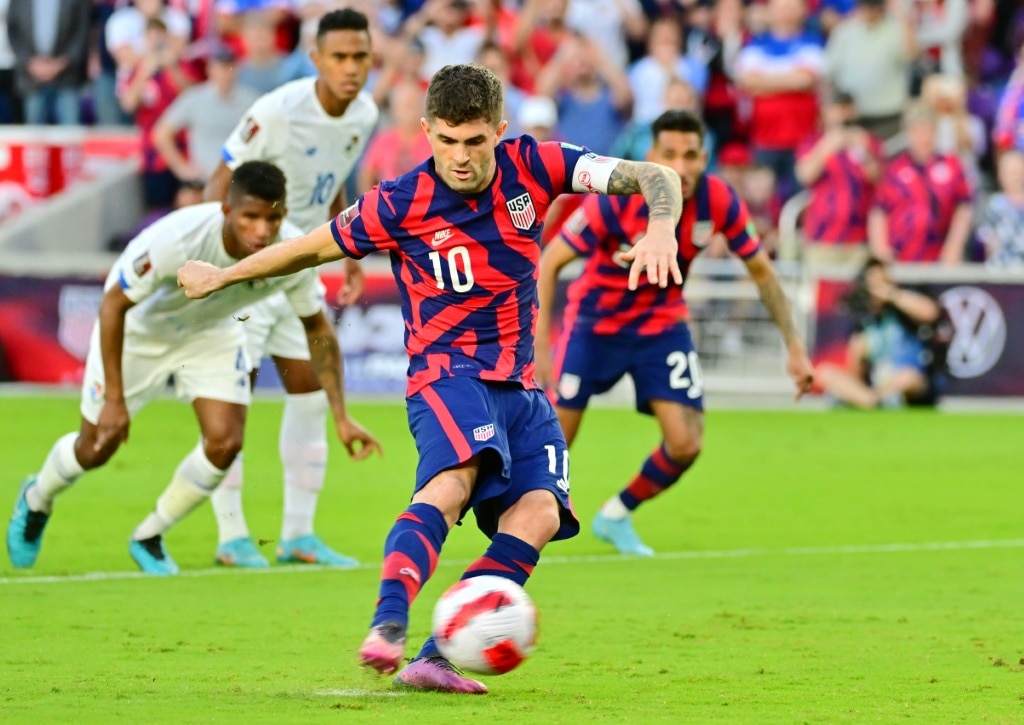
For generations, North America was widely regarded as the last major untapped market for global soccer. But over the past 30 years, the region’s love affair with the beautiful game has grown at a staggering pace – and the 2026 FIFA World Cup, co-hosted across the United States, Canada and Mexico, is poised to push that expansion to unprecedented heights.
Any visitor can see the shift firsthand: at Miami’s Nu Stadium, the sparkling new home of Inter Miami CF and global superstar Lionel Messi, stands are packed week in and week out, with crowds brimming over with unbridled enthusiasm. In Los Angeles, sports bars open their doors before dawn for English Premier League kickoffs, drawing packed houses of fans, most speaking with American accents.
US soccer legend Mia Hamm, who helped lead the American women’s national team to back-to-back World Cup titles in the 1990s, says the transformation still astonishes her as she travels across the country. “You didn’t see that when I was growing up playing,” she told AFP. “It was just the small soccer community… (now) you can go along the street here in Los Angeles, anywhere across the country, people know the players.”
Hard data confirms Hamm’s on-the-ground observations. According to Daniel Monaghan, a senior analyst at research firm Ampere Analysis, when American sports fans are asked to name their favorite sport, soccer sits comfortably in third place – trailing only the region’s long-dominant American football and basketball. Since at least 2021, when Ampere launched its annual survey, soccer has pulled ahead of the once-untouchable baseball, and that gap widened dramatically last year: 15 percent of respondents named soccer their top sport, compared to just 8 percent for baseball.
That explosive growth in fan enthusiasm has been matched by a parallel surge in the sport’s financial value across North America. FIFA projects it will generate a record-breaking $11 billion in total revenue from the 2026 World Cup, marking a new high for the global tournament. But the boom in soccer-related revenue was well underway long before the tournament was set to kick off.
Total spending on media rights for soccer content in the US – covering everything from Major League Soccer (MLS) matches and US national team games to top European and global leagues – has already surpassed that of baseball. Ampere’s data shows that North American soccer audiences skew disproportionately toward higher-income demographics, and they are far more willing to pay premium prices for sports content than fans of many other traditional sports.
Even domestic league growth has hit new milestones. Data analytics firm Opta reports that 400,000 fans attended MLS’s 2025 opening weekend matches, and the 2024 season drew a total of 12.1 million attendees – a figure that puts MLS second only to the English Premier League for total annual attendance among top-tier global soccer leagues. While transfer fees for MLS clubs still pale in comparison to those of Europe’s elite sides, they have risen sharply in recent years: last year alone, MLS clubs spent a combined $336 million on new player signings.
Across North America, roughly $11 billion has been invested in new soccer-specific stadiums and elite training facilities over the past decade, a figure that includes massive shared venues built for the 2026 World Cup that also host National Football League games, such as Atlanta’s Mercedes-Benz Stadium. New purpose-built soccer stadiums for top MLS clubs including New York City FC, Chicago Fire FC and the New England Revolution are set to open to fans in the near future.
The origins of North America’s soccer boom trace all the way back to 1994, when the United States last hosted the FIFA World Cup. At that time, top-tier competitive soccer was still in its infancy in the US, but the 1994 tournament still holds the record for the highest total attendance in World Cup history, drawing more than 3.5 million spectators over the course of the event. As part of the agreement to host the tournament, the US was required to launch a professional top-tier domestic league, laying the critical foundational groundwork for all the growth that followed.
Around the same time, the US women’s national team claimed gold at the 1996 Atlanta Olympics and won the 1999 FIFA Women’s World Cup on home soil – a watershed moment that sparked widespread interest in soccer across all genders and age groups.
“A lot of the parents that grew up playing now have kids, and you just see them sharing the love of the game with the next generation,” Hamm explained. “There’s such access to the game now that we didn’t have back then.”
Today, demand for World Cup content in the US is so strong that the cost of domestic broadcast rights has nearly doubled since the 2022 tournament in Qatar, jumping from around $450 million to $870 million, according to Ampere Analysis. “The US is actually the highest paying market for World Cup rights globally,” Monaghan noted.
As the 2026 tournament approaches, industry analysts and fans alike are watching closely to see just how much this global event will accelerate the already rapid rise of soccer in North America, cementing its place as one of the region’s most popular sports.