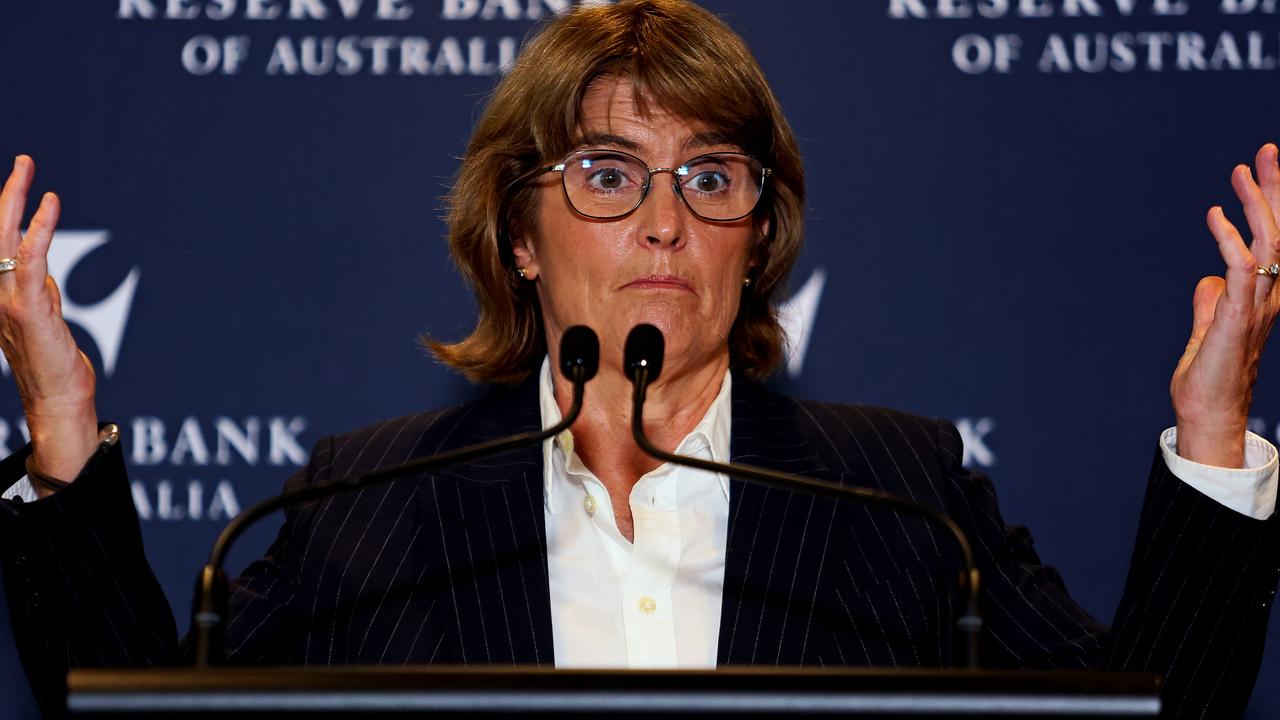
Australia’s recently unveiled federal budget has left many financially squeezed mortgage holders bracing for steeper home loan repayments, with leading economists warning the document fails to rein in excessive government spending, tame persistent inflation, or ease pressure on the Reserve Bank of Australia (RBA) to implement additional monetary tightening. The outcome has put already overstretched household budgets at further risk, as global energy market volatility driven by Middle East tensions between the U.S. and Iran continues to push up fuel and broader living costs.
AMP’s chief economist Shane Oliver, one of the most widely followed experts on Australian monetary and fiscal policy, sounded the alarm over the budget’s structural trajectory, noting that it locks in elevated public spending and ongoing budget deficits over the medium term. In comments to Australian NewsWire, Oliver explained that the budget even includes minor near-term stimulus measures that could add marginal upward pressure on inflation, which remains above the RBA’s target range. “It’s not huge but it certainly doesn’t make the Reserve Bank’s job any easier,” he said. Prior to the release of Treasurer Jim Chalmers’ fifth budget on Tuesday, Oliver had already predicted the RBA would implement another interest rate hike in August. The budget’s lack of meaningful fiscal contraction has not changed that forecast, he confirmed.
David Bassanese, chief economist at leading investment firm Betashares, echoed Oliver’s assessment. While he noted the budget does not dramatically worsen near-term inflation risks, it also fails to deliver the fiscal restraint needed to reduce the RBA’s burden of further policy tightening if inflation remains stubborn. “The Budget is hardly super restrictive either, so does not lessen the burden on the RBA to tighten policy further if need be,” Bassanese said.
On a more positive note, economists did acknowledge that the federal government resisted widespread political pressure to roll out broad, untargeted relief for households struggling with rising cost of living — a move that Oliver said would have been a catastrophic mistake for long-term inflation and interest rates. Many state Australian budgets have rolled out broad household relief in recent months, but the federal government held back from large-scale across-the-board support even as mortgage and energy costs climb. Oliver noted that broad-based relief would have added significantly to inflation, ultimately forcing bigger rate hikes that would leave mortgage holders worse off over time. “The temptation would have been to do more – like some of the state budgets – that would have been disastrous,” he said. “It was good to see the government holding back, I think we needed to see more of a cut back in the near term.”
Oliver added that any government support should be targeted exclusively at the most vulnerable households, rather than distributed to all Australians regardless of income. Untargeted universal relief is unnecessarily costly and adds unnecessary inflationary pressure, he argued. That pressure is already being amplified by a sharp rally in global crude oil prices, which have surged from roughly $US56 per barrel to briefly touch $US131 per barrel amid Middle East supply fears, driving up fuel prices across Australia. Industry calculations show every $US10 per barrel increase in crude adds 10 Australian cents per liter to retail fuel prices, stretching household transport budgets further. Official budget forecasts project oil prices will remain above $US100 per barrel before easing to $US80 per barrel next year.
Along with inflation and interest rate risks, the budget also reveals a steep upward trajectory for Australia’s national gross debt over the coming decade. Current data from the Australian Office of Financial Management puts gross national debt at $964.2 billion at present. Treasury projections show debt will rise every year over the next four years, hitting $982 billion by the 2026 financial year, crossing the $1 trillion mark in mid-2026, rising to $1.051 trillion in 2027, $1.12 trillion in 2028, and peaking at $1.249 trillion, equal to 35.6% of national GDP. After hitting that peak, debt is projected to gradually decline, falling back to 27.2% of GDP by 2037 as the country begins paying down accumulated obligations.
Oliver argued that Australia needs far more aggressive fiscal consolidation to get public spending back to sustainable pre-pandemic levels, which would ease pressure on the RBA, reduce inflation, and free up economic capacity for private sector growth. He estimates the government needs to cut roughly $100 billion in cumulative spending over the next four years to bring public spending down to 25% of GDP, a level that prevailed before the COVID-19 pandemic. “If you did that it would take us back to levels that prevailed prior to covid and free up capacity for stronger private sector activity and allow for lower interest rates without generating inflation,” he explained. “We saw only a small share of that in Tuesday’s budget.”