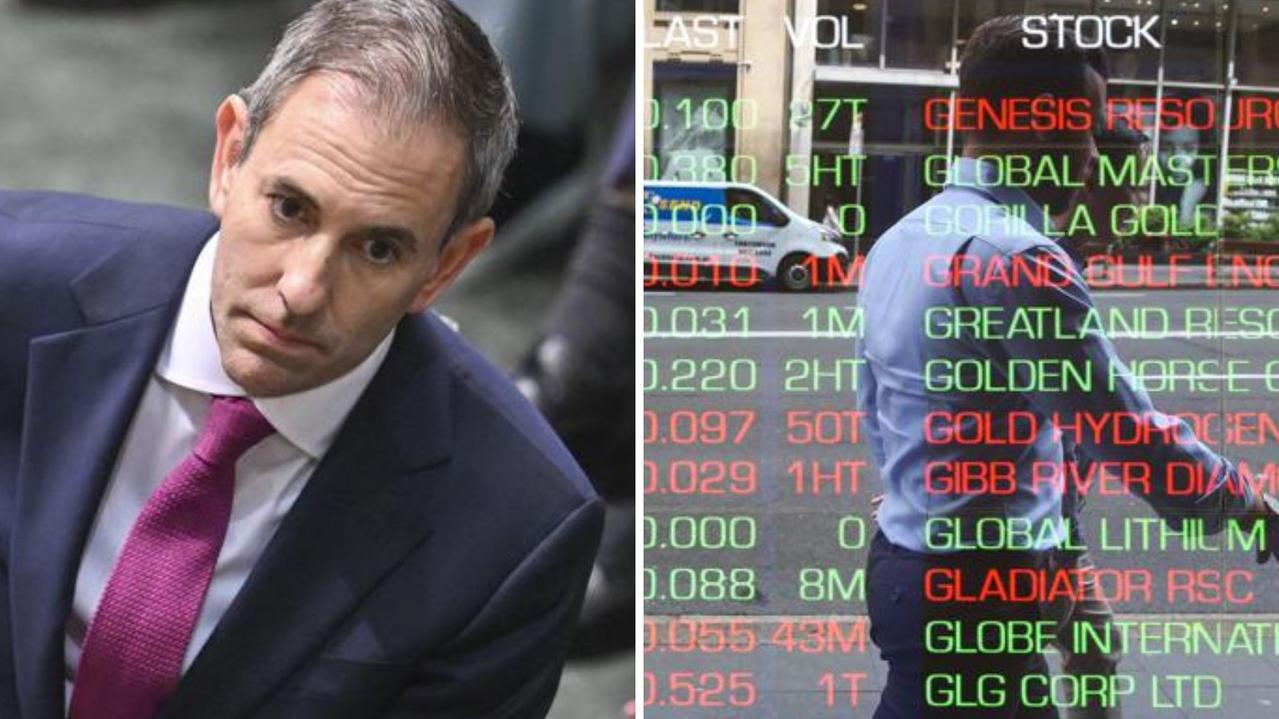
Australia’s freshly unveiled federal budget, delivered on Tuesday, has emerged as a polarizing policy package, with industry leaders across technology, renewable energy, and finance clashing over its long-term economic impact. While Commonwealth Bank analysts have concluded the budget fails to meaningfully curb persistent nationwide inflation, segments of Australia’s tech and clean energy sectors argue the policy changes will unlock fresh capital and drive strategic growth across key innovative industries.
Global market volatility has already rippled through Australian financial forecasts following the budget announcement. Overnight, the Australian dollar posted minor gains against the U.S. dollar, supported in part by rising global oil prices even as higher-than-anticpected U.S. inflation readings rattled American investor confidence. Futures markets now point to a slight 0.1% dip for the ASX 200 at Wednesday’s opening bell, mirroring marginal losses recorded on Wall Street overnight.
Stakeholders in Australia’s startup and tech ecosystem have delivered sharply divergent assessments of the budget’s key business and tax adjustments. Shaun Broughton, Regional Director for Shopify across Asia Pacific and Japan, framed the policy package as a net step forward for domestic entrepreneurs. “Yesterday’s budget moves in the right direction for Australian entrepreneurs – from a permanent instant asset write-off to venture capital reform and measures that support productivity and growth,” he noted. However, Broughton cautioned that proposed adjustments to the capital gains tax discount send mixed signals to founding teams, early startup employees, and growth-focused investors. For founders who spend years building businesses from scratch, he explained, long-term incentive structures are critical, rewarding not just the risk of launching a venture but the work of scaling and sustaining long-term success.
That caution was echoed as a full-throated critique from accounting industry body CPA Australia, which argues the tax changes directly undermine the federal government’s stated goals of boosting productivity and supporting sustainable economic growth. Jenny Wong, Lead Tax Advisor at CPA Australia, emphasized that productivity growth relies on investment, particularly in high-potential areas like startups, innovation, and business expansion. “These changes make that equation harder,” Wong said. “If you’re taking a risk, building something, investing in growth, you’re handing over a significant portion of that return. That is a clear disincentive. It reduces the incentive to invest in the kinds of businesses that drive long-term productivity and job creation. For anyone looking to invest, grow a business or take on risk, the message is clear – the government will take at least 30 per cent, regardless of the outcome.”
Despite the criticism over tax adjustments, some tech leaders see meaningful progress in the budget’s commitments to advancing Australia’s artificial intelligence strategy. Charlie Farah, Field Chief Technology Officer at global analytics firm Qlik, pointed to the budget’s alignment with the National AI Plan the government unveiled last December. “The $3.5bn-plus business tax package to support risk taking and the R&D tax incentives announced in the budget will boost AI investment and are a welcomed step in the right direction for Australia becoming a global leader in AI,” Farah said. He added that growing interest in building domestic AI enterprises currently outpaces the nation’s existing skilled workforce and capabilities, calling the government’s new focus on AI a welcome move even amid the budget’s broader goal of stabilizing the national economy. Still, Farah noted, significant gaps remain: “There is still work to be done in making Australia truly AI ready and championing AI skills. As a next step, we would like to see updates to the National Skills Agreement or Digital Economy Strategy with frameworks for AI and data literacy. This way, the government is facilitating future workforce training and reskilling, making AI a national skills priority for Australian workers.”
For leaders in Australia’s renewable energy sector, the budget’s ambition to accelerate the national energy transition has drawn praise, even as questions remain over whether the policy matches ambition with sufficient investment. Jack Curtis, co-founder of Australian unicorn startup Neara – which achieved a $1 billion valuation earlier this year – said the government’s energy transition targets outlined in the budget are directionally correct. “The question is whether we’re investing equally in the solutions required to deliver it,” Curtis said. He noted that the budget includes the most sweeping reform to the National Electricity Market’s wholesale trading framework since the 1990s, paired with an expansion of the national Capacity Investment Scheme, changes that will trigger a new wave of investment in transmission and distribution infrastructure. “But the scale and pace of change raise the stakes on decision quality,” Curtis warned. “Utilities will need to make significant infrastructure calls at speed, with the margin for error narrowing as the cost of getting it wrong widens.”
On the macroeconomic side, Commonwealth Bank currency analyst Kristina Clifton said the budget delivers only a minor improvement to Australia’s fiscal position. The document outlines stable budget deficits holding around 1% of GDP over the next three years, before gradual fiscal improvement begins. “Our Aussie economics team note that the budget is unlikely to shift the RBA’s near‑term view on interest rates, but it does little to help in the fight against inflation,” Clifton said. She added that more aggressive spending restraint scheduled for 2026-27 would have reduced aggregate demand across the economy and created additional policy headroom for the Reserve Bank of Australia (RBA) if inflation remains sticky. “As it stands the risk sits with further tightening by the RBA,” Clifton said. Currently, financial markets are pricing in roughly a 20% probability that the RBA will implement another cash rate hike at its upcoming June policy meeting.
The budget announcement comes against a backdrop of persistent global economic headwinds, with rising inflation and slowing growth driven in large part by the ongoing global energy crisis. Energy supply shocks have pushed up headline inflation across all major advanced economies, with the steepest increases recorded to date in the European Union and the United States.