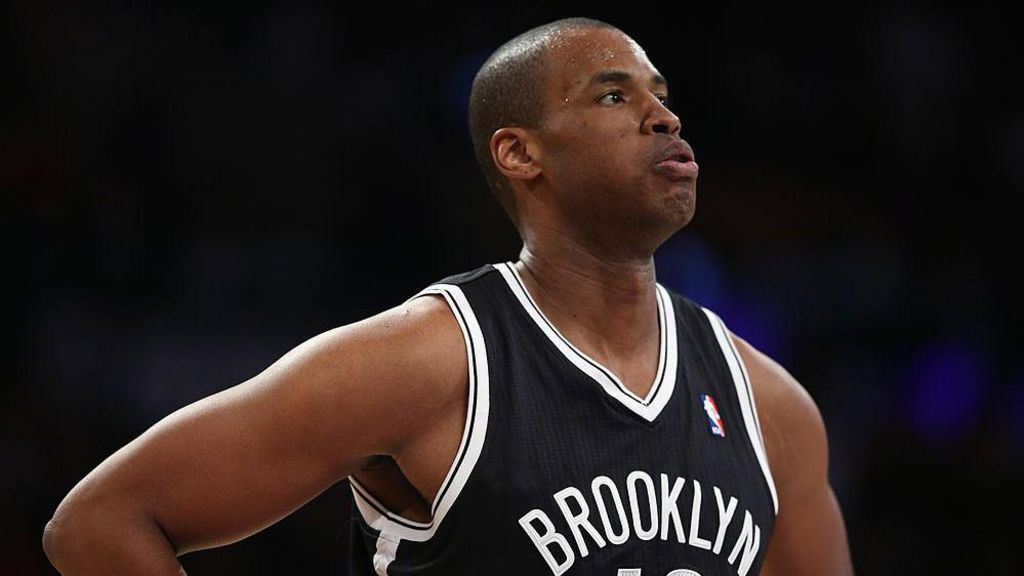
Jason Collins, the former NBA center who made history as the first active male athlete from one of the United States’ four major professional team sports to publicly come out as gay, has passed away at the age of 47 following a courageous fight against glioblastoma, an aggressive and deadly form of brain cancer.
The news of his death was confirmed in a family statement shared publicly by the National Basketball Association, the league where Collins built a 13-year professional career. Collins first opened up about his diagnosis a year ago, revealing that the inoperable tumor had been detected after he began experiencing persistent difficulty concentrating. In a public update in December 2025, he described the growth as “a monster with tentacles spreading across the underside of my brain the width of a baseball.” Medical professionals told him at the time that without targeted treatment, he would not survive more than three months.
To slow the tumor’s progression, Collins underwent treatment with the drug Avastin, and made repeated trips to Singapore to receive specialized targeted chemotherapy. Throughout his treatment, he maintained the same radical honesty that defined his 2013 coming out, framing his cancer battle as another chapter of living authentically. “Your life is so much better when you just show up as your true self, unafraid to be your true self, in public or private. This is me. This is what I’m dealing with,” he said at the time, drawing a parallel between his decision to share his cancer diagnosis and his choice to come out 12 years prior. He added that the years after coming out had been “the best of my life.”
Born and raised in California, Collins launched his NBA career in 2001 with the New Jersey Nets, and went on to play for six different franchises across his 13 seasons in the league, retiring from professional basketball in 2014. Long recognized for his outsized impact beyond the court, he was named one of Time Magazine’s 100 most influential people in the world in the years following his coming out.
When Collins published his iconic coming out essay as the front-page cover story for Sports Illustrated in 2013, he opened the groundbreaking piece with a simple, unflinching declaration: “I’m a 34-year-old N.B.A. center. I’m Black and I’m gay.” At the time of publication, Collins was a free agent, and many wondered whether his decision to come out would force an early end to his NBA career. Though the LGBTQ+ rights movement had made notable gains by 2013, same-sex marriage would not be legalized across the entire United States until two years later.
Collins went on to re-sign with the Nets, who had by that time relocated to Brooklyn, officially becoming the first openly gay active athlete to compete in any of the four major U.S. professional sports leagues. His barrier-breaking move paved the way for greater LGBTQ+ inclusion across all levels of organized sports, a legacy that league leaders and loved ones emphasized in tributes following his death.
“Jason Collins’ impact and influence extended far beyond basketball as he helped make the NBA, WNBA and larger sports community more inclusive and welcoming for future generations,” NBA Commissioner Adam Silver said in a statement Tuesday. “Jason will be remembered not only for breaking barriers, but also for the kindness and humanity that defined his life and touched so many others.”
In their own statement released Tuesday, Collins’ family echoed that sentiment, noting his far-reaching impact beyond the hardwood. “Jason changed lives in unexpected ways and was an inspiration to all who knew him and to those who admired him from afar,” the family said.