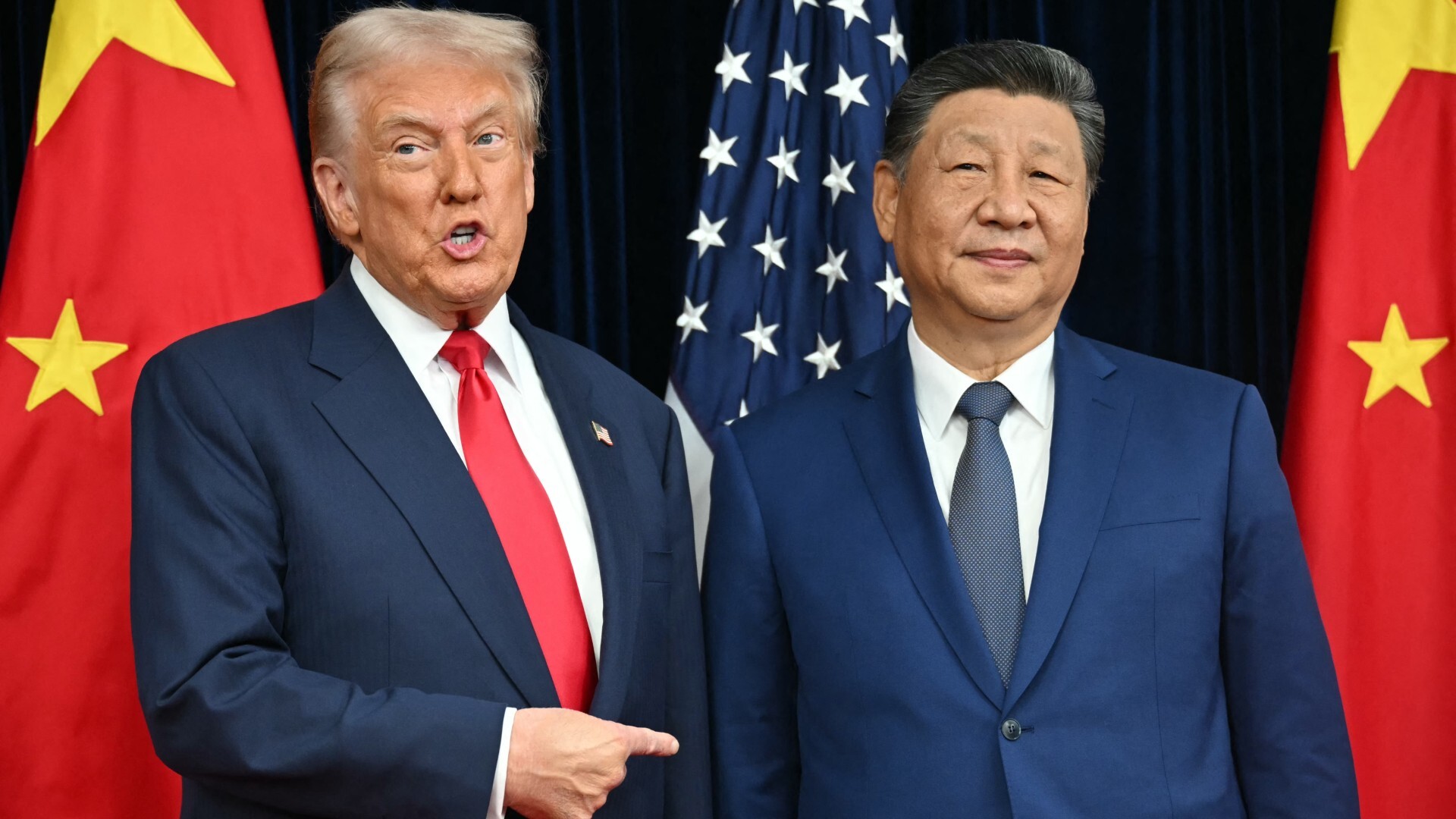
As U.S. President Donald Trump prepares to land in Beijing for a high-stakes two-day summit with Chinese President Xi Jinping this Thursday, trade and economic agreements between the world’s two largest economies top the official agenda — but the lingering conflict between the U.S.-led coalition and Iran will hang over every closed-door discussion, shaping the trajectory of bilateral relations amid shifting global power dynamics.
Analysts point out that China’s ongoing military and technical support to Iran amid its war with the U.S. and Israel has delivered tangible strategic benefits, but the regional conflict has also created unforeseen strains on Beijing’s ties with wealthy Gulf Arab states and exposed vulnerabilities in China’s export-driven economic model.
For Beijing, the U.S.’s failed campaign to neutralize Iran has been a quiet strategic win, says Wang Yiwei, an international relations scholar at Renmin University of China. “Iran’s brave response to U.S. attacks taught Trump a lesson,” Wang told Middle East Eye. “Trump cannot blackmail China — let alone Iran — with his so-called ‘art of the deal.’”
Long framed as peer competitors, the U.S. and China remain locked in systemic rivalry spanning cutting-edge artificial intelligence development, access to critical mineral supplies, and competing claims over the Taiwan Strait. Far from remaining a passive bystander, China has played an active role in arming Iran throughout the escalating conflict, multiple media outlets have confirmed.
Middle East Eye was the first outlet to reveal that China supplied advanced air defense systems to Iran after the 2025 June war between Iran and Israel that ended with U.S. strikes on Iranian nuclear infrastructure. MEE further reported that Beijing delivered kamikaze drones to Iran on the eve of the 2026 U.S. escalation. The New York Times later corroborated that shipments of Chinese man-portable air defense systems to Iran took place in April, while the Financial Times has confirmed that Iran used sophisticated Chinese satellite intelligence to target U.S. military installations across the Persian Gulf.
A number of geopolitical analysts have drawn a parallel between the U.S.’s stalled campaign against Iran and the 1956 Suez Crisis, framing the conflict as a “Suez moment” that could mark the beginning of the end of long-standing U.S. regional dominance in the Middle East, just as the 1956 conflict accelerated the collapse of British imperial influence in the region.
Despite a sustained U.S. blockade of Iranian ports, former senior U.S. official Amos Hochstein acknowledged earlier this month that Iran will retain permanent control over the strategic Strait of Hormuz, the chokepoint through which 20% of the world’s daily oil shipments pass. To date, the U.S. has failed to seize Iran’s stockpile of enriched uranium or eliminate the country’s large arsenal of ballistic missiles, leaving core U.S. war objectives unmet.
Jake Werner, director of the East Asia program at the U.S.-based Quincy Institute, told MEE that a successful U.S. overthrow of the Iranian government earlier this year would have sparked panic in Beijing. But even amid this strategic windfall, Beijing remains deliberate and cautious. “They see a very powerful country, the U.S., bogged down, and they don’t want to provoke it unnecessarily,” Werner explained.
The Iran war has already delivered tactical gains for China closer to its own backyard: to bolster its military operations in the Middle East, Washington has been forced to temporarily reposition key military assets away from the Indo-Pacific, easing pressure on China’s regional interests. Even so, both Beijing and Washington share overlapping core interests in securing a ceasefire in the region, notes Ahmed Aboudouh, associate fellow at Chatham House and head of the China Studies unit at the Emirates Policy Center.
“China and the U.S. are aligned in opposing Iran having nuclear weapons and seeing the Strait of Hormuz reopened to commercial shipping,” Aboudouh told MEE.
Pakistan, one of China’s closest security and economic partners, has already stepped into a mediating role between Washington and Tehran. Just two days after U.S. Treasury Secretary Scott Bessent called on China to take a more active diplomatic role to reopen the Strait of Hormuz, Iranian Foreign Minister Abbas Araghchi traveled to Beijing to hold talks with China’s top diplomat Wang Yi.
Aboudouh notes the timing of the visit was no coincidence. “The Chinese want to show the Americans they have leverage over Iran. But they genuinely want this war to end,” he said.
Trump has downplayed the prospects of a ceasefire, telling reporters Monday that the proposed truce is on “life support” as he rejected an Iranian peace proposal. A day later, he pushed back on the idea that the U.S. needs Chinese assistance to end the conflict. “I don’t think we need any help with Iran. We’ll win it one way or the other, peacefully or otherwise,” Trump said.
Jesse Marks, CEO of Middle East and Asia-focused consulting firm Rihla Research and Advisory, predicts that Xi will not offer Trump a full exit from the quagmire of the Iran war, but could assist with the technical implementation of a revised nuclear deal. “If there is a clear deal on the table where China can play a role it sees as productive, and where it can deliver without getting entangled deeply, then Beijing is likely to play that role,” Marks said. “China has already explored helping remove the existing enriched uranium from Iran as part of a negotiated deal.”
Beijing has clear domestic and economic motivations to bring the conflict to a swift end. The war has sent shockwaves through Asian economies, which are overwhelmingly dependent on Gulf oil and gas exports. Over the weekend, Indian Prime Minister Narendra Modi even called on Indian citizens to cut consumption of petrol and diesel and suspend gold purchases to offset market volatility.
Werner notes that the conflict has severely disrupted China’s large-scale investments across the Gulf Cooperation Council (GCC). “U.S. allies in the region – Japan, South Korea and India – are likely to face economic pressure before China does because of the Hormuz closure,” he said. “Beijing likes to see those countries’ bilateral ties to the U.S. weakened, but they aren’t happy about the economic damage because they are deeply integrated into those economies. China’s entire growth model is rooted in global trade and exports.”
Before the outbreak of full-scale war, China absorbed roughly 90% of Iran’s oil exports, a relationship that has drawn intense scrutiny from U.S. officials. Earlier this month, Beijing ordered its domestic firms to refuse to comply with U.S. sanctions targeting five major oil refiners that process Iranian crude.
Even so, China’s economic stakes in Iran pale in comparison to its billions in investments across the oil-rich Gulf. In 2025, Saudi Arabia ranked as the third-largest recipient of Chinese construction contracts under China’s signature Belt and Road Initiative, totaling roughly $20 billion in activity. China is also the fourth-largest source of foreign direct investment for the United Arab Emirates, with Chinese firms pouring billions into Abu Dhabi’s Khalifa Industrial Zone. State-owned Chinese shipping giant Cosco has even made Abu Dhabi’s Khalifa Port its regional hub for the entire Middle East.
“China has poured billions of dollars into the GCC, a lot more money than it has invested in Iran,” Werner said. “Those investments are not looking so great now. The war has upended China’s investments in the Gulf.”
Aboudouh adds that Beijing’s top regional priority is preventing GCC states from being drawn directly into the conflict, a key point of divergence with the U.S., which has actively lobbied Gulf nations to join the anti-Iran coalition. China hopes to build on the 2021 China-brokered normalization deal between Iran and Saudi Arabia, which Aboudouh says Beijing views as a replicable model for broader regional peace once hostilities end. “They see that as a model that can be replicated at a larger scale when the missiles and drones stop flying,” he said.