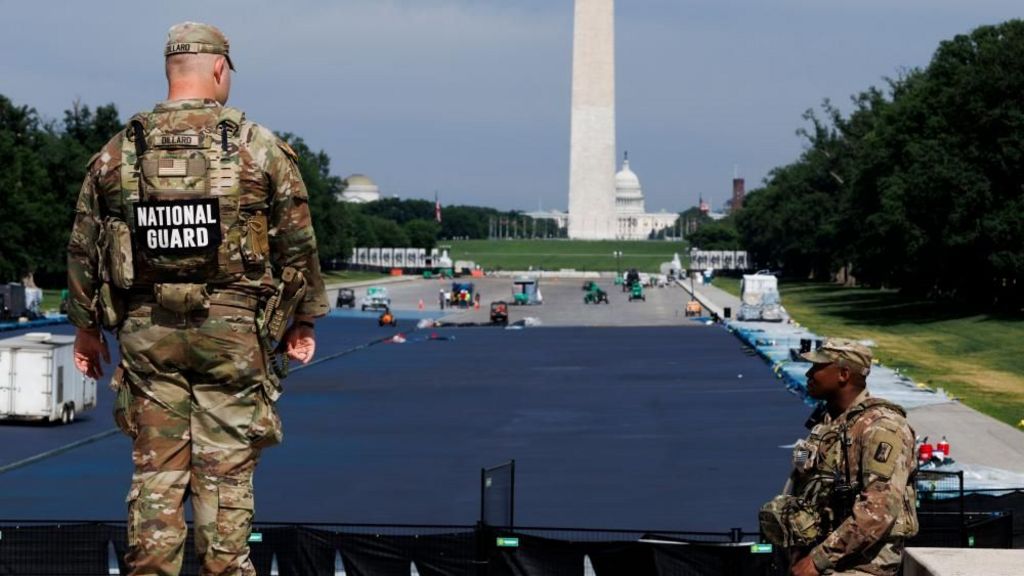
What was supposed to be a low-cost quick-fix renovation of the iconic Lincoln Memorial Reflecting Pool has turned into a controversial, seven-times-over-budget project that raises questions about procurement rules, historic preservation, and executive decision-making just ahead of the United States’ 250th anniversary celebrations this summer.
Federal government records now show the final projected cost for the repair and repainting project has jumped from the $1.8 million that former President Donald Trump publicly claimed it would cost to $13.1 million, more than doubling the original no-bid contract award of $6.9 million. The massive cost overrun comes amid ongoing legal pushback from a historic preservation nonprofit that has asked courts to halt work, arguing the project violates federal laws meant to protect culturally significant landmarks.
Stretching 2,030 feet between the Lincoln Memorial and the Washington Monument, the 104-year-old reflecting pool has suffered from longstanding infrastructure problems for decades: persistent leaks, crumbling structural foundations, corroded pipes, excessive algae growth, and accumulated bird waste. For years, large-scale renovations were projected to cost up to $300 million and take more than three years to complete. Trump positioned his accelerated, low-cost overhaul as a smarter alternative, promising the project would deliver a fully functional, beautifully restored pool in time for the country’s 250th birthday celebrations, with a total price tag between $1.5 million and $2 million.
In a break from standard federal procurement rules that require open competitive bidding for public works projects, the Trump administration awarded the contract to Atlantic Industrial Coatings, a Virginia-based firm that had previously completed pool repair work at one of Trump’s private golf clubs. Administration officials justified the no-bid award using an emergency exemption meant for urgent, unplanned repairs. The contract mandates all work be finished by May 22, a far faster timeline than the multi-year overhaul originally proposed, to meet the anniversary deadline.
Work on the drained pool kicked off over the weekend, and Trump personally inspected the site last week, traveling across the empty pool bed in his motorcade to view progress. During the inspection, he told reporters the renovated pool would be superior to its original condition, saying, “It’s much more beautiful than it was new because it never had the colour people wanted, but now it’s going to have the great colour. So it’s going to be good.” The project is part of a broader slate of capital beautification and construction initiatives Trump has prioritized since returning to office, including a proposal to build a 250-foot national victory arch, the demolition of the White House East Wing to construct a new presidential ballroom, and the rebranding of multiple federal and cultural institutions to add his name.
The administration’s procurement process and the changes to the historic landmark have already drawn legal challenge. The Cultural Landscape Foundation, a nonprofit focused on responsible stewardship of historic public landscapes, filed a lawsuit seeking an immediate halt to construction. The suit argues that the ongoing resurfacing and repainting work is permanently eroding the unique historic character of the reflecting pool, and that Trump’s administration violated federal laws that regulate alterations to protected national landmarks.
Even as costs have ballooned far beyond the president’s original promise, it remains uncertain whether the accelerated, low-impact renovation will actually resolve the pool’s longstanding underlying structural problems. Critics continue to question both the legality of the no-bid contract award and the wisdom of altering a century-old national landmark to meet a political deadline.