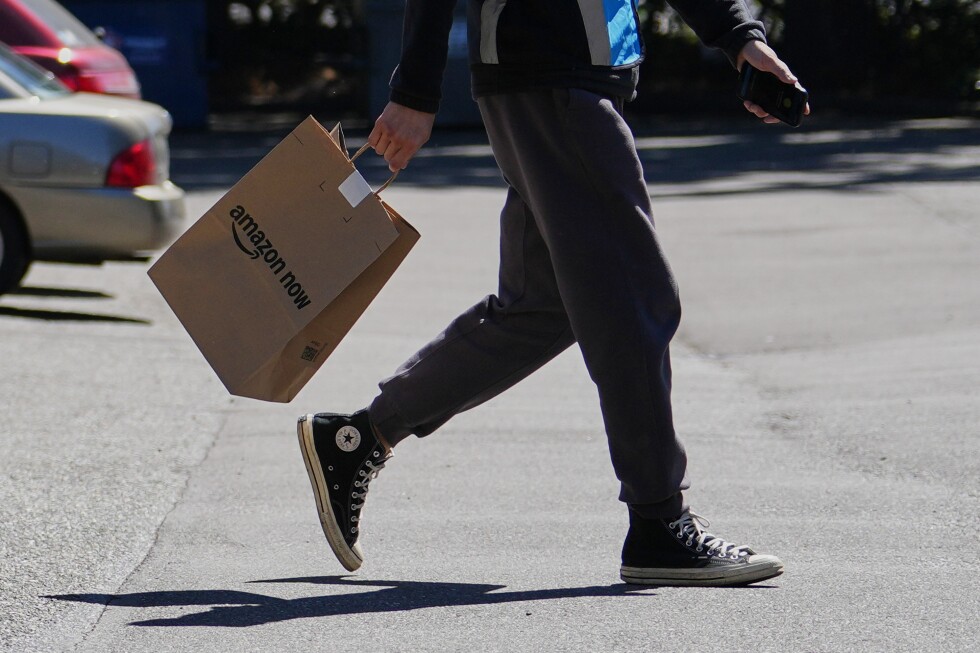
Two decades after Amazon upended e-commerce by redefining fast shipping with Prime’s two-day delivery, the global retail giant is once again raising the bar for consumer expectations—launching a premium 30-minute or faster delivery service tailored to shoppers’ most urgent needs. Named Amazon Now, the ultrafast offering first rolled out in India in June of last year, and has already expanded to major urban centers across Brazil, Mexico, Japan, the United Arab Emirates, the United Kingdom and the United States, with aggressive expansion plans underway.
To support the new service, Amazon is rapidly rolling out a network of compact, neighborhood-focused micro-fulfillment hubs roughly the size of a CVS pharmacy, ranging from 5,000 to 10,000 square feet. Unlike Amazon’s sprawling, robot-aided main fulfillment centers that store millions of products, these small hubs are staffed by just a handful of workers and stock only around 3,500 of the most commonly requested urgent items, including over-the-counter medications, fresh produce, beer, diapers, pet food, cellphone accessories, and basic household goods. Amazon leverages artificial intelligence to tailor each hub’s inventory to local consumer shopping patterns, with top-selling U.S. items so far including soap, toothpaste, citrus fruit, toilet plungers and wireless earbuds.
Pricing for the service starts at $3.99 for existing Prime members, who already pay a $139 annual subscription fee, and jumps to $13.99 for non-Prime customers. A $1.99 small-order fee is added to purchases under $15, a surcharge designed to offset logistics costs for low-basket transactions.
In the U.S., Amazon first tested the service in its home base of Seattle and Philadelphia, before rolling it out to Atlanta and the Dallas-Fort Worth metroplex. By the end of the current year, the company plans to launch Amazon Now in dozens more major U.S. cities, including Houston, Denver, Minneapolis, New York City, Phoenix, Oklahoma City, and Orlando.
Amazon’s transportation head Beryl Tomay explained the logic behind the push in an interview with the Associated Press, noting that faster delivery consistently drives higher spending and keeps the e-commerce giant top-of-mind for consumers. “We know that customers love speed and always have,” Tomay said. “What we see customers doing, when we offer faster speeds, are they purchase more from Amazon. And Amazon becomes more top of mind for that or other types of items as well.”
Yet the push into 30-minute delivery comes alongside growing consumer pushback against hyper-fast shipping, with increasing public concern over both the environmental impact of rushed, fragmented deliveries and the intense workplace pressure placed on order fulfillment and delivery workers.
For Amazon, the new service marks the next incremental step in a decades-long strategy of cutting delivery times to dominate the global e-commerce market. After normalizing two-day delivery in 2005, the company gradually moved to one-day and same-day delivery for Prime members, and launched one-hour and three-hour expedited delivery for hundreds of thousands of products earlier this spring. The 30-minute microhub model is the latest evolution of that vision.
The expansion puts Amazon in direct competition with two sets of established players: on-demand delivery platforms including Instacart, Uber Eats, DoorDash and Grubhub, and rival big-box retail giant Walmart. Independent retail analyst Bruce Winder notes that Amazon’s unmatched global supply chain expertise gives it a unique advantage over smaller on-demand platforms, which lack the e-commerce titan’s massive operational scale.
Smaller competitors, however, reject the idea that Amazon poses an existential threat, pointing to their far broader product selection built on partnerships with local merchants and restaurants. “DoorDash has a mission to empower grocers and retailers and augment their existing footprint, not to replace them,” DoorDash spokesperson Ali Musa said in an emailed statement. “We win only when they win, which is how we can offer over half a million grocery and retail items in under an hour across the country.”
Against Walmart, Amazon is fighting head-to-head for the title of the most reliable ultra-fast retail delivery provider. Walmart already offers its Walmart Express Delivery service, which guarantees delivery of more than 100,000 products within one hour for a $10 extra fee; Walmart CEO John Furner told analysts in February that most customers actually receive their orders in under 30 minutes already.
Industry analysts point to a long history of failed 30-minute delivery ventures that Amazon would do well to heed. The most famous cautionary example is Domino’s Pizza, which launched a “30 minutes or it’s free” delivery guarantee in 1984. While the promotion helped the chain grab market share, it led to reckless speeding by delivery drivers, a string of fatal traffic crashes, and costly public lawsuits that forced the company to scrap the guarantee in 1993 after damaging its public reputation. During the COVID-19 pandemic, a wave of startups promising 10- to 15-minute grocery delivery from urban microhubs also collapsed, done in by sky-high operating costs, low customer loyalty, and a drying up of venture capital funding before the pandemic ended.
Brad Jashinsky, a retail analyst at IT research firm Gartner, said Domino’s legacy should serve as a warning to Amazon. “You get in trouble when you start overpromising something like that,” he said.
For its part, Amazon says it has learned from past missteps: the company will not offer a hard 30-minute delivery guarantee, instead providing customers with real-time order updates, and says it will not pressure in-hub workers or gig delivery drivers to rush orders. Tomay emphasized, “There’s no rushing either in our building workers or the gig workers.”
Even with those safeguards, analysts question whether the 30-minute model can reach cost-effectiveness. Forrester Research analyst Sucharita Kodali notes that the service only works financially if multiple customers in the same or adjacent apartment complexes place orders around the same time to cut down on delivery routes. What’s more, a growing segment of consumers, particularly Gen Z shoppers, are prioritizing sustainability over speed, and actively choose slower delivery options to reduce carbon emissions and packaging waste. For years, Amazon itself has offered incentives for customers to opt for slower, consolidated shipping, which cuts down on excess packaging and fuel use; supply chain experts note that Gen Z shoppers, unlike millennials who grew up expecting instant delivery, are far more willing to wait for non-urgent purchases.
Still, Amazon reports promising early results from the service: in India, Prime members tripled their use of 30-minute delivery after trying the service, and the offering is attracting growing numbers of repeat American customers. Tomay acknowledges the service is still in its early stages, saying, “It’s in early days and time will tell. I think that it will be interesting to see how it evolves.”