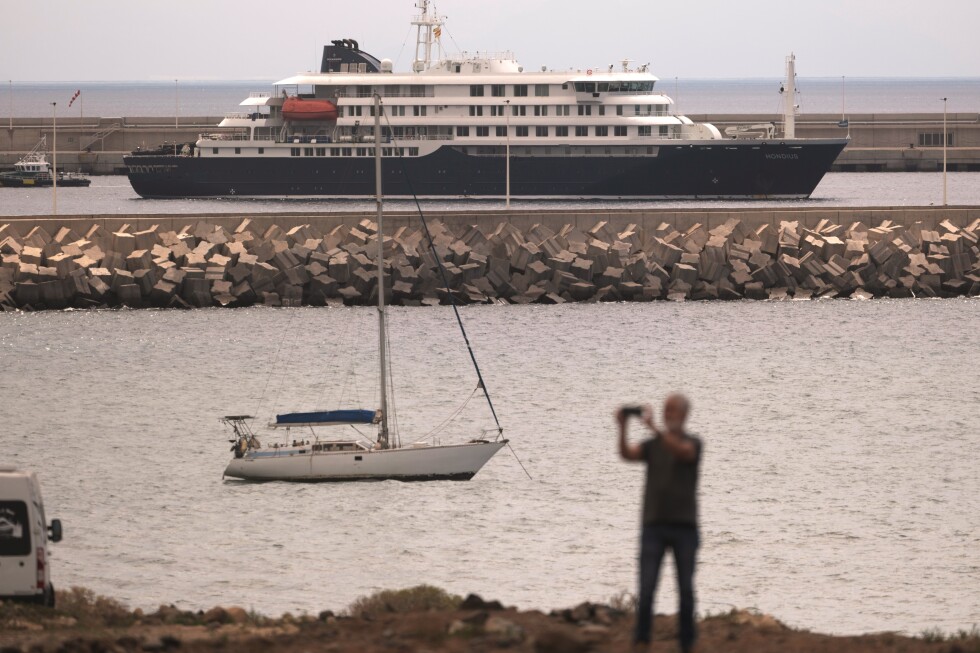
THE HAGUE, Netherlands — A growing public health incident linked to an international cruise ship has yielded a new confirmed case of hantavirus, global and national health authorities confirmed this week, as the death toll from the outbreak stands at three. Spain’s health ministry announced Tuesday that one evacuated Spanish passenger from the MV Hondius — the expedition cruise at the center of the first recorded hantavirus outbreak on a passenger vessel — has returned a positive test result for the pathogen. The infected patient is currently isolated in quarantine at a Madrid military hospital, where 13 other evacuated Spanish nationals, all of whom have tested negative for the virus, are also completing mandatory quarantine stays.
With the full evacuation of all passengers and most crew members completed this week, the MV Hondius has set sail for its home country of the Netherlands, where it will undergo a thorough professional cleaning and full disinfection process before any future use. Speaking from Madrid during an official visit, World Health Organization Director-General Tedros Adhanom Ghebreyesus confirmed that 11 cases of hantavirus have now been validated globally, all tied directly to the cruise ship, with nine of those cases confirmed to be the Andes strain — a variant that differs from most hantaviruses in that it carries a rare risk of person-to-person transmission.
Thankfully, Tedros noted that case numbers have remained largely stable over the past seven days, a development he attributed to coordinated rapid response efforts from multiple national governments and global public health partners. “At the moment, there is no sign that we are seeing the start of a larger outbreak,” he stated, “but of course the situation could change, and given the long incubation period of the virus, it’s possible we might see more cases in the coming weeks.”
In a separate development related to the outbreak, 12 clinical staff at Radboud University Medical Center in the eastern Dutch city of Nijmegen have been ordered into six weeks of preventive quarantine after incorrectly handling bodily fluids from a positive hantavirus patient evacuated from the Hondius. The hospital confirmed Monday that while the overall infection risk for the staff remains low, the precautionary quarantine was implemented out of an abundance of caution, as the patient’s blood and urine were not handled per the stricter safety protocols required for potential hantavirus exposure.
In France, a French woman evacuated from the stricken vessel remains in stable condition in intensive care at a Paris hospital, and Prime Minister confirmed that French authorities scheduled two new emergency hantavirus response meetings for Tuesday to coordinate ongoing monitoring and response.
The MV Hondius outbreak marks the first time a hantavirus outbreak has been recorded on a cruise ship. All 87 passengers and 35 crew members were escorted off the ship by fully protected public health personnel off the coast of Tenerife, with the full evacuation operation wrapping up Monday night. After the final passengers left the vessel, remaining crew took on necessary supplies and set a course for Rotterdam, the Netherlands, per an announcement from the ship’s operator, Oceanwide Expeditions.
Two evacuation flights arrived overnight in the southern Dutch city of Eindhoven. The first carried 19 crew members and three medics; Dutch crew members returned to their homes for quarantine, while 17 Filipino crew members were transported to a dedicated quarantine facility established by Dutch public health authorities. A second plane, chartered by Australian authorities, carried six passengers: four Australians, one New Zealand national, and one British citizen residing in Australia. Per the Dutch foreign ministry, these passengers will complete a short quarantine period near Eindhoven Airport before continuing their travel to Australia as soon as public health officials clear them for departure. Australian authorities have not yet released additional details on the passengers’ status.
Public health guidance notes that most hantavirus strains spread primarily through exposure to rodent droppings, and do not spread easily between humans. The Andes strain detected in this outbreak, however, can spread between people in rare circumstances. Symptoms of hantavirus infection include fever, chills, and muscle aches, and typically develop between one and eight weeks after exposure, a wide window that requires extended monitoring for potentially exposed people. Currently, there is no specific cure or licensed vaccine for hantavirus, though the WHO confirms that early detection and supportive treatment significantly improves patient survival outcomes.
Tedros recommended that all passengers returning from the MV Hondius complete a 42-day quarantine period, either at home or in dedicated public health facilities, to account for the pathogen’s long incubation period. He added that the WHO cannot mandate this guidance globally, and individual nations may adopt different monitoring protocols for asymptomatic passengers who were exposed to the outbreak.