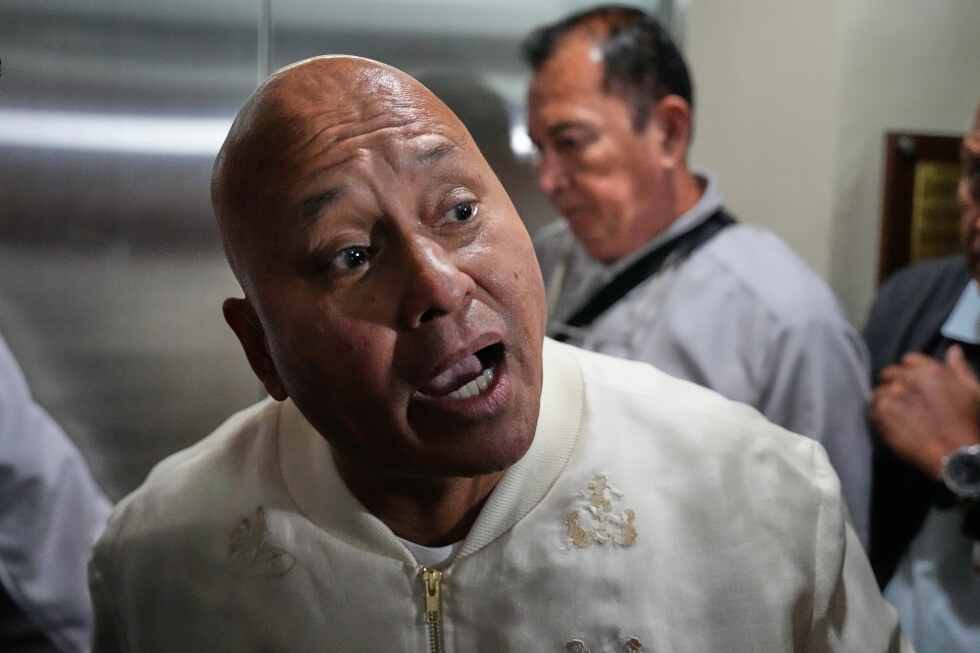
In a dramatic development that reignites global scrutiny of the Philippines’ deadly 2010s anti-drug campaign, former Philippine national police chief and sitting Senator Ronald dela Rosa has publicly pledged to resist any effort to transfer him to the International Criminal Court (ICC) to face charges of crimes against humanity. Dela Rosa, who oversaw the initial phase of then-President Rodrigo Duterte’s brutal war on drugs that killed thousands of mostly low-level suspects, maintains he never sanctioned extrajudicial killings during his tenure.
The ICC based in The Hague unsealed an existing arrest warrant for dela Rosa on Monday, nearly eight months after it was first issued in November 2024. The charge documents accuse the senator of crimes against humanity through murder, alleging he is linked to the unlawful killings of no fewer than 32 people between July 2016 and April 2018, the period when he led the Philippine National Police (PNP).
Dela Rosa emerged from months of public absence on Monday, after which the Philippine Senate placed him under protective custody. Speaking to reporters on the Senate floor Tuesday, he insisted he would only answer to domestic legal authorities, rejecting the global tribunal’s jurisdiction over his case. “If I have something to answer for, I will face those in our local courts and not before foreigners,” dela Rosa told reporters, adding he would leverage every available legal avenue to block extradition. He also made a direct appeal to current Philippine President Ferdinand Marcos Jr., pleading: “Don’t bring me to The Hague.”
Dela Rosa’s ties to the controversial anti-drug campaign run deep. A long-time loyal ally of Duterte, he was appointed PNP chief immediately after Duterte won the 2016 presidential election, tasking him with rolling out the harsh anti-illegal drug initiative that would define Duterte’s six-year term. Prior to his national appointment, dela Rosa served as police chief in Davao City, the southern stronghold where Duterte built his political reputation on an aggressively hardline approach to crime decades before winning the presidency.
When questioned about the massive death toll that resulted from the crackdown, dela Rosa defended his leadership, framing the anti-drug campaign as a public safety initiative, not a deliberate campaign of killing. “My role was to lead the war on drugs, and that war on drugs was not meant to annihilate people,” he said. He added that any fatalities that occurred during police operations were justified acts of self-defense when officers’ lives were put at risk.
Dela Rosa is the second high-profile figure from Duterte’s administration to face ICC detention. Duterte himself was arrested by the ICC in March 2023 and is currently detained in The Netherlands, awaiting trial on charges of crimes against humanity linked to the thousands of killings during his drug war. In 2019, three years before Duterte left office, he withdrew the Philippines from the ICC entirely, a move that human rights advocates have long argued was a deliberate attempt to avoid accountability for the campaign’s deaths. The ICC has repeatedly reaffirmed that it retains legal jurisdiction over crimes committed while the Philippines was still a state member of the court.
Philippine government officials have signaled they are prepared to comply with the ICC’s arrest warrant, a stance aligned with the country’s existing domestic legislation that addresses crimes against humanity including genocide. Communications Undersecretary Claire Castro told reporters that the state has a clear legal obligation to ensure any individual facing credible charges is held accountable. She also clarified that dela Rosa cannot claim parliamentary immunity from arrest, noting that the crimes he is accused of are extremely serious and carry long prison sentences, which disqualify him from such protection.
In a related security development, nearly 350 additional law enforcement officers have been deployed outside the Senate compound, a move that drew concern from dela Rosa and his political allies. Officials moved quickly to downplay speculation that the deployment was preparation for an immediate arrest, stating the officers were assigned to the area solely to maintain public order.