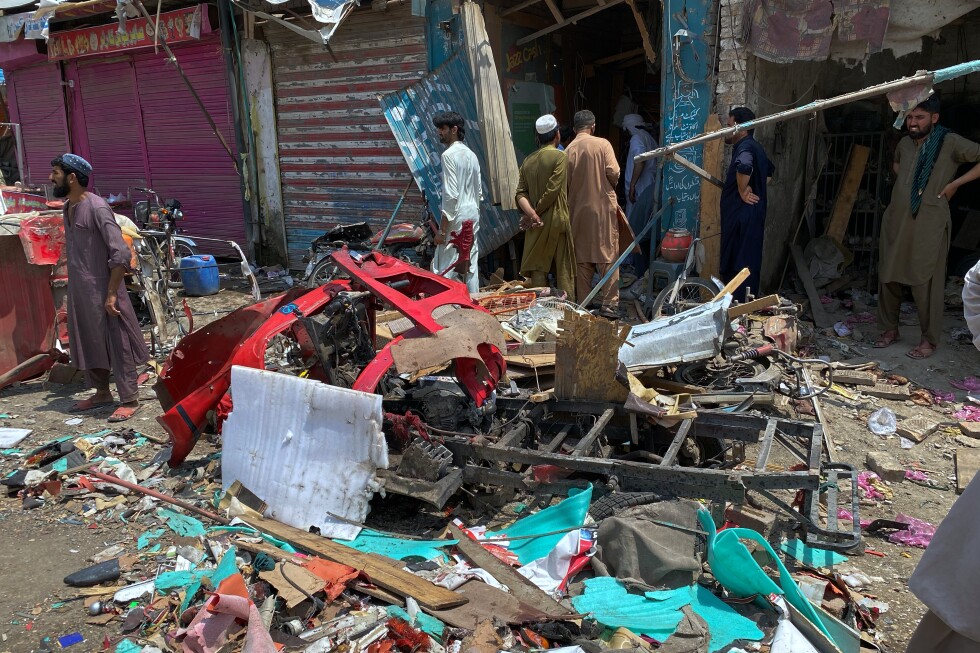
On Tuesday, a devastating improvised explosive device hidden in a rickshaw detonated in a crowded bazaar in northwest Pakistan, leaving at least nine people dead and wounding more than 24 others, local law enforcement confirmed. The blast marks the latest episode in a sharp upward trend of militant violence across the Pakistan-Afghanistan border region.
The attack occurred in Lakki Marwat, a rural district located in Khyber Pakhtunkhwa province, according to Azmat Ullah, the district’s chief of police. Among the fatalities were two serving traffic police officers and one civilian woman, Ullah confirmed. The local police chief noted that traffic police personnel appeared to be the intended target of the bombing, which also left nearby retail shops heavily damaged. The majority of casualties, he added, were ordinary pedestrians and market-goers caught in the blast radius.
No militant organization immediately issued a claim of responsibility for the attack. In past similar attacks in the region, suspicion has routinely fallen on Tehrik-e-Taliban Pakistan (TTP), commonly referred to as the Pakistani Taliban, an insurgent group that has ramped up its militant campaign against Pakistani state security forces over the past several years. While the TTP is operationally separate from Afghanistan’s ruling Taliban government, the two groups maintain close ideological and tactical alliances. Contrary to common assumptions, the TTP issued an official statement Tuesday denying any role in the bazaar bombing, stating that the group had only learned of the incident after the fact and was not involved in its planning or execution.
Tuesday’s attack comes just four days after a large-scale coordinated assault on a Pakistani security outpost in neighboring Bannu district left 15 police officers dead. That incident, which Pakistan formally blamed on the TTP, prompted Islamabad to summon a senior Afghan diplomatic representative to issue an official diplomatic protest over the violence.
Pakistani Prime Minister Shehbaz Sharif quickly issued a formal condemnation of Tuesday’s bombing, extending his deepest condolences to the families of those killed in the attack. In an official public statement, Sharif reaffirmed that the Pakistani government and all relevant national security institutions remain fully committed to rooting out terrorism from the country’s territory. He added that militants would not be allowed to derail Pakistan’s progress toward peace and broad-based socioeconomic development. Sharif also directed law enforcement and investigative agencies to move quickly to conclude their probe, identify all actors responsible for the blast, and ensure that the perpetrators face full legal accountability for their actions.
For years, Pakistani authorities have publicly accused the Afghan Taliban government of providing safe shelter and operational support to TTP militants on Afghan territory. The Taliban-led government in Kabul has consistently rejected these claims, asserting that it does not permit any militant group to use Afghan soil to plan or launch cross-border attacks against neighboring states.
Pakistan has recorded a dramatic surge in militant attacks across its territory in recent years, a development that has significantly strained bilateral relations between Islamabad and Kabul. Security analysts note that the TTP and other allied extremist groups have grown increasingly emboldened in their operations since the Afghan Taliban retook control of Kabul in 2021 following the withdrawal of U.S. and NATO forces.
Cross-border tensions have remained elevated between the two South Asian nations, with repeated armed clashes along the poorly demarcated border killing hundreds of people on both sides since late February 2024. In an effort to de-escalate the crisis, senior diplomatic representatives from Pakistan and Afghanistan held a new round of peace talks in early April, mediated by China. While talks produced tentative agreements to reduce hostilities, sporadic cross-border clashes have continued in the months since, even as violence has dropped to lower levels than seen in the early weeks of 2024.