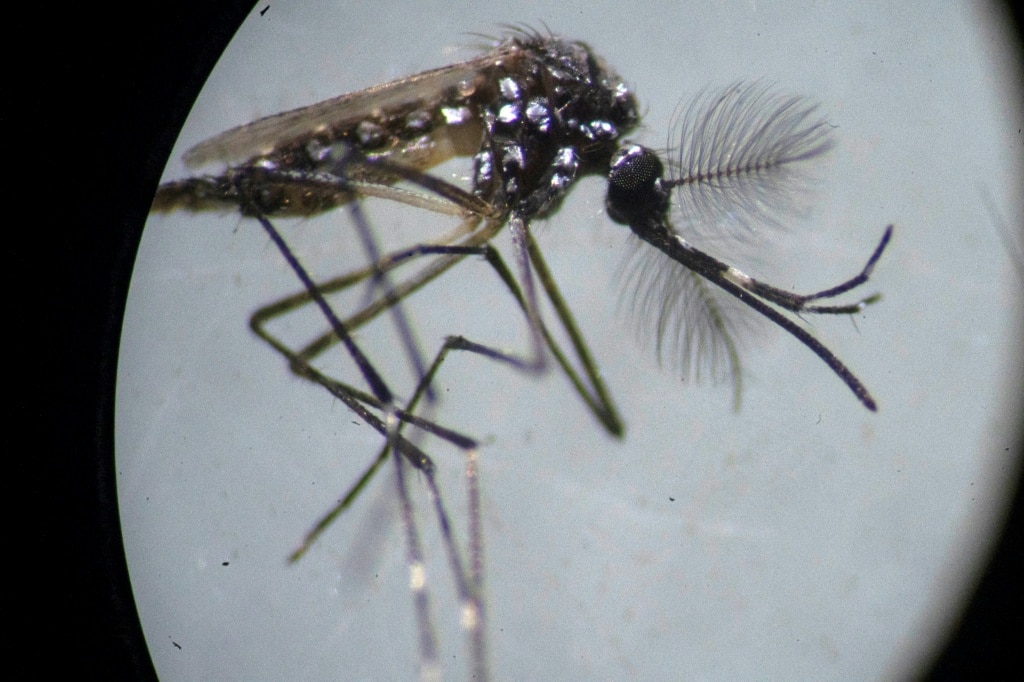
Often overlooked for larger, more intimidating predators, the tiny mosquito stands as humanity’s deadliest natural enemy. Each year, this tiny blood-sucking insect claims an estimated 760,000 human lives — a toll far higher than that of lions, snakes, or even humans themselves, which rank a distant second in annual global deaths caused by animal species, data from research outlet Our World in Data shows.
Mosquitoes are responsible for spreading 17% of all infectious diseases globally, including life-threatening conditions such as malaria, dengue, yellow fever, chikungunya and Zika. As human-caused climate change continues to raise global temperatures, mosquito populations are expanding their ranges into previously uninhabited regions, and longer warm seasons extend their active periods each year, spurring growing concern that these insects could fuel catastrophic new public health crises in the coming decades.
Against this backdrop, a critical question has emerged for the global scientific community: can humanity safely eliminate the most dangerous mosquito species to stop the spread of disease, and what would be the environmental costs of such a move?
To start, experts note that a global eradication campaign would not need to target the more than 3,500 known mosquito species. Out of this entire diversity, only around 100 species actually bite humans, and just five species are responsible for roughly 95% of all mosquito-borne human infections, according to Hilary Ranson, a leading vector biologist at the Liverpool School of Tropical Medicine, in an interview with AFP.
On balance, Ranson argues that the loss of these five high-risk species could be easily tolerated, given the enormous harm they inflict globally, from hundreds of thousands of annual deaths to crippling long-term economic damage in affected regions. Dan Peach, a mosquito entomologist at the University of Georgia, shares this broad perspective but stresses that more research is needed to fully compare the risks and benefits of eradication against alternative disease control strategies.
Ranson explains that the five disease-carrying mosquito species have evolved to be extremely closely tied to human habitats, feeding on people and breeding in areas close to human settlements. This close association means eradicating these specific species would not cause major disruption to broader global ecosystems, she argues. In their absence, other genetically similar, non-lethal mosquito species would likely quickly fill the vacant ecological niche left behind.
Peach, however, cautions that the scientific community still lacks a full understanding of the ecological role of most mosquito species, so it is impossible to be completely certain of the outcome of eradication. Even with this knowledge gap, he notes that it is reasonable to acknowledge the uncertainty and still move forward with controlled research and testing. Mosquitoes do play measurable roles in ecosystems: they transfer nutrients from their aquatic larval habitats to terrestrial food webs, serve as a key food source for fish, birds, insects and other animals, and contribute to pollination of some plant species, though the extent of this pollination role remains poorly understood and varies widely between species, Peach adds.
Ranson also acknowledges the legitimate ethical debate around the concept of human-driven “specicide” — the intentional extinction of an entire species — but points out that human activity is already unintentionally driving the extinction of thousands of species globally every year.
For researchers pursuing targeted elimination of dangerous mosquito populations, two leading technological strategies are currently under development and testing. The most high-profile new approach is gene drive technology, a genetic engineering tool that modifies organisms to ensure a desired trait is passed down to nearly all offspring, rather than the roughly 50% inheritance seen in natural reproduction.
In laboratory trials, scientists used gene drive to modify female Anopheles gambiae — the primary mosquito species that spreads malaria — to be infertile, and the modification wiped out an entire lab population of the insects in just a few generations. Target Malaria, a non-profit research project funded by the Bill & Melinda Gates Foundation, has already begun conducting field trials of the technology in several African nations. However, the project suffered a major setback last year when Burkina Faso’s military-led government suspended testing in the country, after the work faced criticism from local civil society groups and became a target of widespread disinformation campaigns.
A second, more established strategy involves infecting Aedes aegypti mosquitoes, the primary spreaders of dengue, with the naturally occurring bacteria Wolbachia. The bacteria can either crash local mosquito populations or simply reduce the insects’ ability to transmit the dengue virus to humans, leading to an alternative approach: instead of killing the mosquitoes, can we simply make them harmless to people?
Research published last year found that when sterile, Wolbachia-infected mosquitoes were released in the Brazilian city of Niteroi, local dengue cases dropped by 89% compared to previous years. Today, more than 16 million people across 15 countries are protected by this approach, with no recorded negative ecological or public health consequences, according to Scott O’Neill, founder of the World Mosquito Program, speaking to AFP.
Other projects are also working on alternative genetic approaches: the Transmission Zero initiative is working to use gene drive technology not to eradicate Anopheles gambiae, but to modify the species so it can no longer spread the malaria parasite at all. Laboratory research published in *Nature* late last year found the project is making significant progress toward this goal, with the team planning to launch its first in-country field trial in 2030.
Even with these technological advances, the Burkina Faso setback highlighted a key requirement for success: any new mosquito control technology must have sustained political support and local buy-in from the communities and nations where it is tested, according to Dickson Wilson Lwetoijera, a researcher at Tanzania’s Ifakara Health Institute.
Experts warn that there is no single “magic bullet” to solve the threat of mosquito-borne diseases. Ranson argues that rather than relying solely on high-tech solutions, most of which are funded by the Gates Foundation, the global community needs to pursue a more holistic, multifaceted approach to reducing disease burden. This includes expanding access to affordable diagnosis, treatment, improved housing and more effective vaccines for people in high-burden countries.
Over the past year, however, sweeping cuts to foreign aid from Western nations have threatened the significant progress made against mosquito-borne diseases over the last two decades, humanitarian organizations have warned, putting hundreds of thousands of lives at renewed risk.