In a stunning revelation published by The Wall Street Journal, the United Arab Emirates has secretly carried out offensive military strikes against Iran, pulling the Gulf monarchy directly into the expanding Israeli-U.S. conflict that has already destabilized the broader Middle East region.
According to anonymous sources familiar with the operation, Emirati military units targeted a key oil refinery located on Iran’s Lavan Island in the Persian Gulf during the first week of April. The UAE has not issued any public statement confirming or acknowledging its role in the attack. The strike, the Journal reports, ignited a massive blaze at the facility that knocked most of the refinery’s production capacity offline for months.
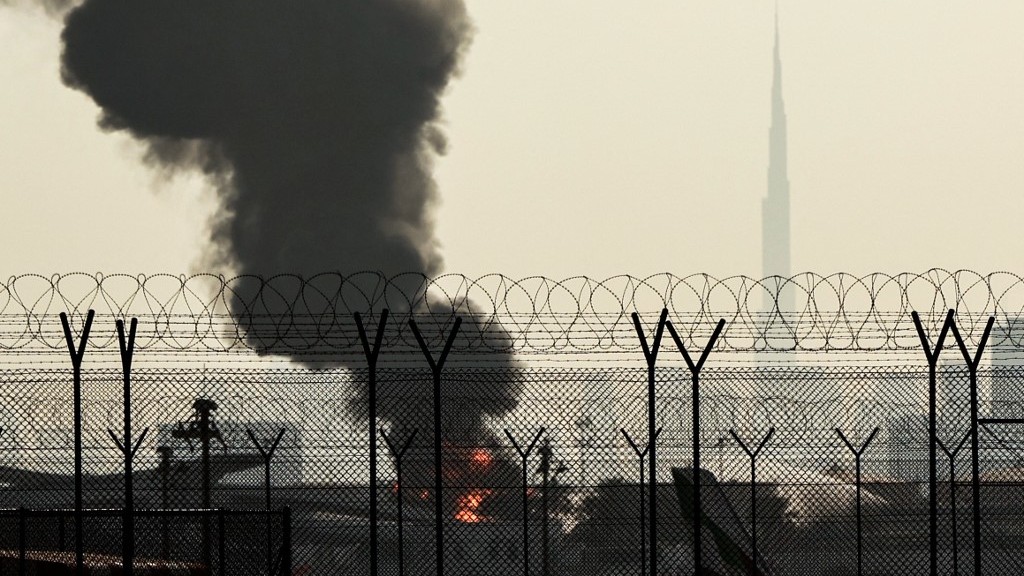
The attack comes at a particularly sensitive juncture: just as former U.S. President Donald Trump was pushing for a ceasefire to end a five-week sustained air campaign against Iran, making the covert strike a major escalation of already soaring tensions. Tehran quickly labeled the incident an “enemy attack” and launched an immediate counteroffensive, firing a large volley of ballistic missiles and attack drones at both the UAE and neighboring Kuwait.
In the weeks since the strike, Iran has concentrated the vast majority of its retaliatory firepower on the Emirates, launching more than 2,800 projectiles – a total that far outpaces the volume of attacks against any other adversary involved in the conflict, including Israel and the United States. This large-scale retaliation has sent shockwaves through the UAE’s economy, disrupting commercial air travel across the country, cutting deep into vital tourism revenue, and triggering widespread instability in the country’s once-booming property market. As the economic fallout spreads across key sectors, dozens of domestic and international companies have implemented mandatory furloughs and begun cutting staff to offset losses.
By the end of April, data shows more than $120 billion had been erased from the total market capitalization of the Dubai and Abu Dhabi stock exchanges, while more than 18,400 commercial flights to and from the UAE have been canceled amid persistent security risks.
The Wall Street Journal’s report also confirms that Washington has privately given its approval to the UAE’s decision to join offensive operations, reinforcing widespread analysis that Abu Dhabi is now operating in full coordination with U.S. and Israeli military goals in the region. This deepening alignment, critics argue, has formed a new confrontational axis that has prolonged and intensified the regional conflict, rather than working to de-escalate or contain it.
In recent years, the UAE has emerged as one of the most hawkish Gulf states, maintaining continuous close military coordination with both the U.S. and Israel throughout the ongoing conflict. This openly confrontational posture has pulled Abu Dhabi directly into the line of Iranian retaliation, despite decades of careful diplomatic balancing by Gulf monarchies seeking to avoid open conflict with Tehran.
Speculation about direct Emirati involvement in offensive operations against Iran first began circulating in mid-March, after publicly shared footage captured an unidentified fighter jet operating inside Iranian airspace that did not match the markings or design of any known U.S. or Israeli aircraft. Around the same time, independent outlet Middle East Eye reported that Iranian air defenses had shot down a Chinese-made Wing Loong II reconnaissance and attack drone near the city of Shiraz, leading independent analysts to question whether other Gulf states, including Saudi Arabia or the UAE, had joined active offensive operations against Iran.
Beyond the military escalation, Tehran has moved to exploit existing tensions among Gulf Cooperation Council members to isolate Abu Dhabi. Per The Wall Street Journal, Iran issued explicit warnings to Saudi Arabia and Oman that it would “heavily target” the UAE in response to its participation in the Israeli-U.S. campaign, a move widely interpreted as an attempt to split the Gulf bloc.
Existing rifts among Gulf powers are already becoming more visible. Long-simmering tensions between the UAE and Saudi Arabia have grown increasingly tense in recent years, and the fallout from the Iran strike has only worsened frictions. The UAE’s recent decision to withdraw from OPEC further strained diplomatic and economic ties with Riyadh, indicating that the ongoing conflict with Iran is deepening historical rivalries rather than uniting Gulf powers against a common perceived threat.