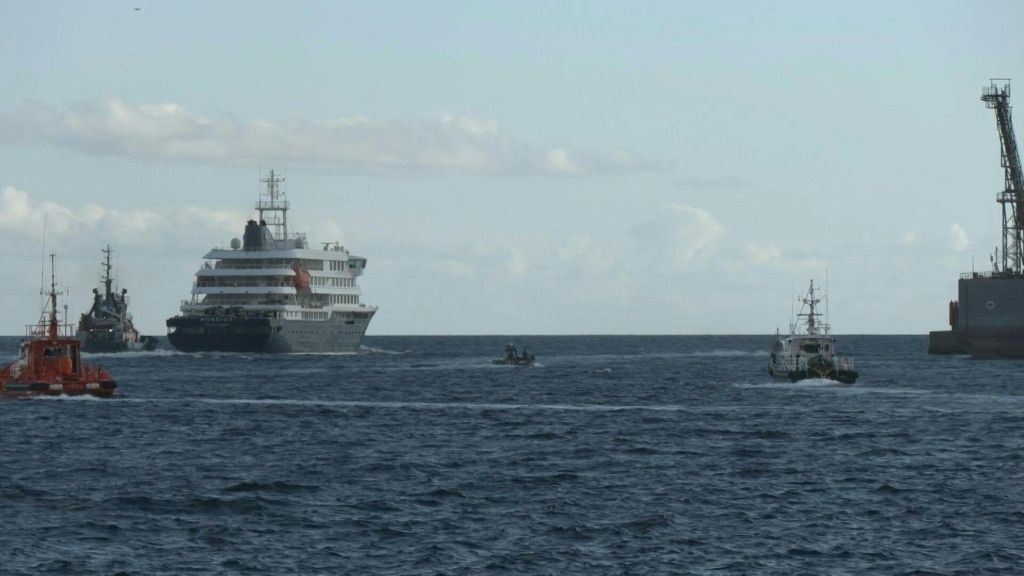
A Dutch-flagged cruise vessel that experienced a deadly hantavirus outbreak that killed three people departed the Canary Islands of Spain on Monday, heading toward its home port of Rotterdam after all remaining passengers were disembarked, repatriated and placed in quarantine across multiple countries.
The outbreak on the MV Hondius, operated by Netherlands-based cruise firm Oceanwide Expeditions, triggered a global public health alert after the rare rodent-borne virus was detected on board. Unlike the Covid-19 pandemic, global and national health officials have repeatedly emphasized that the general public faces a very low risk of transmission, and that no broad public alarm is warranted, despite the fact that no targeted vaccine or specific curative treatment exists for hantavirus infections.
According to on-site reporting from Agence France-Presse, the last 28 passengers and personnel were removed from the vessel before it set sail from the port of Granadilla on the island of Tenerife on Monday evening. Cruise operator Oceanwide Expeditions confirmed in an official statement that the 6-day voyage to Rotterdam is scheduled to arrive at the port on the evening of May 17, 2026. The vessel remains crewed by 25 full-time staff and two medical personnel, and is also transporting the remains of a German passenger who died during the outbreak.
The multi-day, large-scale evacuation wrapped up on Sunday, when 94 people representing 19 nationalities were safely removed from the ship. Spanish health authorities originally only granted permission for the vessel to anchor offshore due to public health protocols, but unfavorable weather conditions forced the ship to dock at the Granadilla industrial port. Spanish officials stressed that all public safety measures were strictly enforced to prevent any contact between people on the ship and local communities. Medical teams escorted all evacuees directly from the vessel to the Tenerife airport for repatriation flights, following mandatory health screenings at every step. The final group of evacuees removed on Monday included citizens of Australia, New Zealand, the United Kingdom and remaining crew members.
As of Monday, eight confirmed cases of hantavirus and two additional probable cases have been recorded across the outbreak, with people from six countries affected, according to data from the World Health Organization and national health agencies. Multiple countries have already reported confirmed infections among repatriated passengers: A French woman repatriated to Paris tested positive for the virus after developing symptoms Sunday night; one Spanish evacuee has also tested positive, while 13 other Spanish evacuees returned negative results. U.S. health authorities confirmed one American evacuee with mild symptoms and a second positive case of the Andes virus, the only strain of hantavirus that can spread from human to human.
In the Netherlands, 12 staff members at Radboud University Medical Center have been placed in six-week preventive quarantine after procedural errors occurred when handling blood work and disposing of urine samples from an infected evacuee being treated at the facility. Hospital officials noted the quarantine is a precautionary measure, as the overall risk of infection remains low.
Health agencies around the world are currently conducting contact tracing operations, tracking all passengers who disembarked the vessel before the full evacuation, as well as any individuals who may have had close contact with infected evacuees.
The origin of the outbreak remains a point of discussion between international health authorities. The MV Hondius departed Ushuaia, Argentina – where hantavirus is endemic – on April 1 for an Atlantic cruise bound for Cape Verde. The WHO has stated it believes the initial infection occurred before the voyage departed, with secondary human-to-human transmission taking place on board the ship. However, Argentine health officials have raised questions about this timeline, pointing to the virus’s multi-week incubation period and other epidemiological factors to cast doubt on the theory that the outbreak originated in Ushuaria.
In a video address shared by the cruise line on Monday, MV Hondius Captain Jan Dobrogowski praised the resilience of everyone on board during the weeks-long crisis, highlighting the “unity and quiet strength” of passengers and the “courage and selfless resolve” of the crew that remained on the vessel to sail it back to Rotterdam.