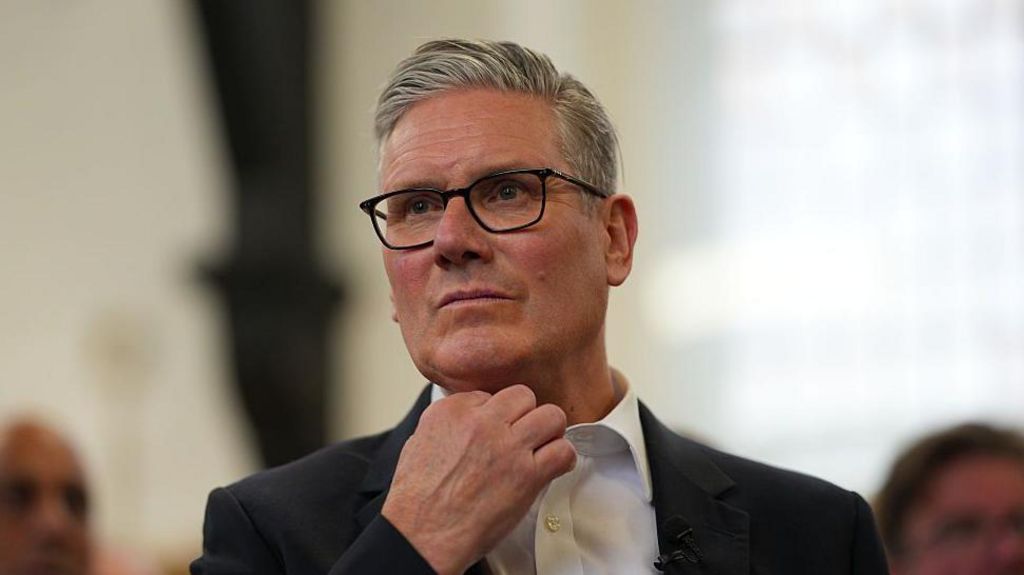
As the 10th anniversary of the Brexit referendum approaches this June, UK Prime Minister Keir Starmer has reignited debate over Britain’s post-Brexit relationship with the European Union, launching a high-profile push to rebuild tighter ties just one week after his Labour Party suffered a devastating defeat in local elections.
In a widely anticipated defiant address, Starmer framed closer alignment with the EU as a core priority for his government, promising to lay the groundwork for deeper collaboration ahead of this summer’s EU-UK summit. “This Labour government will be defined by rebuilding our relationship with Europe, by putting Britain at the heart of Europe, so that we are stronger on the economy, stronger on trade, stronger on defence,” he told the audience. Starmer also argued that incremental changes are insufficient to address the UK’s current challenges in growth, energy and security, calling for a bolder approach to EU engagement than what his administration outlined after taking power in 2024.
However, the speech has drawn widespread criticism for its lack of concrete new policies. Jill Rutter, a former British civil servant and senior research fellow at the UK in a Changing Europe think tank, dismissed Starmer’s announcement as “a damp squib”, noting it failed to deliver a single tangible new proposal. Reactions from across the Channel are deeply divided, split along the lines of defence and security versus economic and trade cooperation.
On defence and global security, European leaders view the UK as a reliable and critical ally. With the EU focused on pressing threats including the ongoing Russia-Ukraine conflict, rising tensions with Iran, and shifting transatlantic relations under Donald Trump’s second U.S. administration, Brussels sees consistent UK cooperation as a strategic asset. This stable dynamic is not expected to change regardless of Starmer’s political future: EU officials widely believe UK foreign policy will remain consistent, including continued support for Ukraine and plans to assemble an international maritime force to protect shipping in the Strait of Hormuz, even if Starmer is ousted by internal leadership rivals.
The mood shifts dramatically when it comes to economic ties, where Brussels holds a stance of weary cynicism. While the EU has repeatedly stated it welcomes closer relations if the UK commits to that path, the sector-specific talks Starmer’s government has pursued so far remain extremely limited. The only active negotiations focus on three areas: a food and drink safety agreement (known as SPS), a carbon emissions trading pact, and a youth mobility scheme that Starmer now touts as a major initiative for underprivileged British youth. Even that proposal, however, was originally an EU demand led by Germany that the Labour government initially rejected. Analysts widely agree that none of these limited deals will deliver meaningful, broad-based growth to the UK economy, even if expanded to other small sectors such as electricity market integration.
The policy measures that could actually move the needle economically – joining the EU single market or forming a full customs union to eliminate most trade barriers – remain off the table for now, bound by Starmer’s pre-election “red lines” that rule out accepting free movement of workers, a non-negotiable requirement for full single market access. When pressed by journalists on whether these red lines might be dropped ahead of the next general election scheduled for 2029, Starmer declined to give a direct answer, sparking speculation of a potential policy shift. But the long timeline to the next election has left Brussels frustrated with the government’s vague positioning.
One senior EU diplomat from a traditionally UK-friendly member state summed up the widespread European view: “For the last two years since Labour won power, we have heard the same thing: we want a ‘reset’ with the EU after Brexit. But what is this famous reset? The words from UK ministers sound increasingly enthusiastic but the actual steps they take are baby steps. Probably because they know the closer you get back to us, the more we ask from you in return. Do their voters know that?”
To date, even modest steps toward closer cooperation have required the UK to accept EU terms, including the “pay to play” model for participation in EU programs. Rejoining the Horizon science research program, agreed by the previous Conservative government, costs the UK £2.2 billion annually, though proponents note British researchers have emerged as leading beneficiaries after two years of membership. In the ongoing sectoral talks, Starmer’s government has also had to agree to align with current and future EU regulations on relevant issues – a compromise that has already drawn fire from eurosceptic opponents. Nigel Farage’s Reform Party, which saw strong gains in last week’s local elections, has accused Labour of quietly reversing Brexit through incremental regulatory alignment. This alignment also complicates the UK’s long-held goal of reaching a comprehensive free trade agreement with the United States, as closer alignment with EU rules narrows the room for negotiating a separate deal that meets U.S. demands.
Reform’s strong performance in last week’s local elections has not gone unnoticed in Brussels. Farage, who spent more than 20 years as a Member of the European Parliament campaigning for Brexit, is a well-known and controversial figure across the EU. While the EU will continue negotiating with the current Labour government, insiders say the European Commission is considering adding penalty clauses to future agreements, which would require the UK to pay compensation if a future eurosceptic government withdraws from existing cooperation deals.
UK Minister for EU Relations Nick Thomas-Symonds has defended the government’s approach, saying Labour is pursuing a “ruthlessly pragmatic” and “ambitious” strategy that will never accept deals that conflict with UK national interests. But with the public increasingly divided over Brexit a decade on, and a rising eurosceptic opposition gaining traction, Starmer’s push to reset relations with the EU remains mired in vagueness – leaving both British voters and European leaders waiting for concrete action.