BOGOTA, COLOMBIA – Indigenous collectives spanning the Amazon basin and Latin America are set to deliver a formal letter to the United Nations on Monday, sounding the alarm that transnational organized criminal networks—engaged in illegal mining, drug trafficking, and unregulated logging—are fueling deadly violence and speeding up irreversible environmental destruction across Indigenous rainforest territories. In a key policy demand, the groups are pushing global leaders to reject the heavy-handed militarized crackdowns that many regional governments have deployed to address the crisis, arguing these measures do more harm than good to Indigenous communities.
The open letter, addressed to all UN member states and specialized agencies including the UN Office on Drugs and Crime (UNODC) and the UN Permanent Forum on Indigenous Issues, details how criminal syndicates are expanding their control across large swathes of the Amazon and other Indigenous-held lands across Latin America, putting at risk local communities, fragile ecosystems, and traditional Indigenous self-governance structures. Signatories emphasize that the spread of these illegal activities is eroding centuries-old Indigenous governance systems, while directly threatening the communities that have long served as the most effective stewards of one of the planet’s most biologically diverse regions.
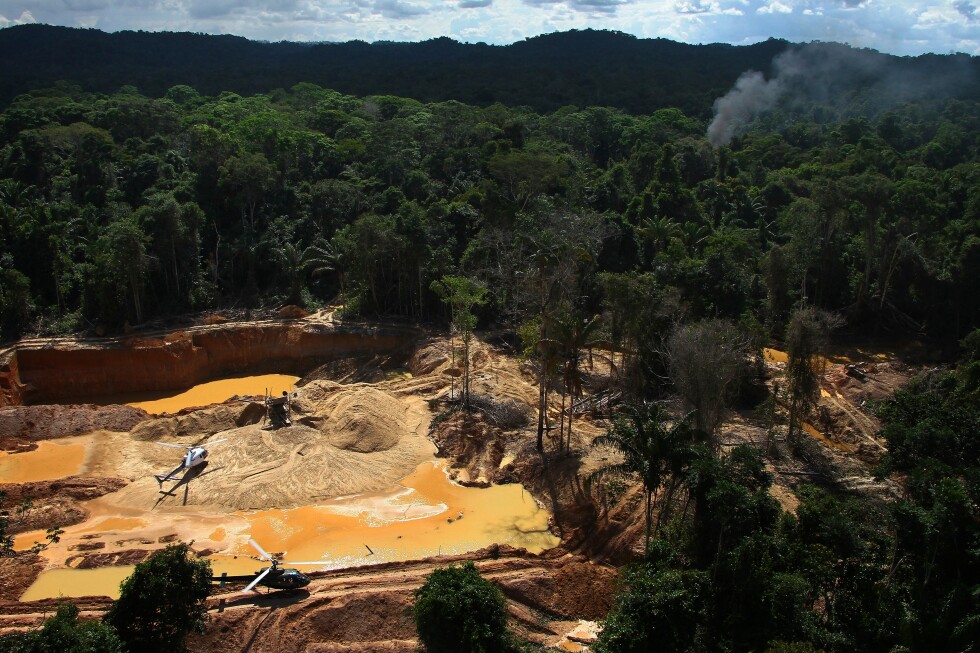
The appeal arrives at a moment when Amazonian Indigenous communities increasingly find themselves trapped between two advancing forces: expanding criminal operations and heavy state security deployments. Over the past decade, illegal gold extraction, unlicensed logging, and drug trafficking routes have pushed deeper into the remote rainforests of Brazil, Peru, Colombia, and Ecuador, leaving a trail of violence, toxic mercury pollution, and widespread deforestation in their wake.
International human rights organizations and independent UN experts have repeatedly warned of a sharp rise in targeted attacks against Indigenous leaders and environmental defenders, tied directly to disputes over land access, natural resources, and control of illicit regional economies. Data from advocacy group Global Witness shows that between 2012 and 2024, at least 2,253 land and environmental defenders have been killed or disappeared globally, with Latin America accounting for more than 80% of these deadly cases. Many of these attacks occur in the Amazon, and rights groups note that the vast majority of these killings never result in prosecutions or convictions—one recent high-profile example is the 2023 murder of Indigenous defender Quinto Inuma Alvarado in Peru, who repeatedly spoke out against illegal logging and drug trafficking in his territory; five men are currently on trial for his killing, a rare case that has reached the courts.
Raphael Hoetmer, Western Amazon Program Director at Amazon Watch, an advocacy group that supports Indigenous rights and environmental protection, told the Associated Press that the letter reflects a sharp escalation in urgency among Indigenous organizations as criminal threats spread across the region. “More and more Indigenous Peoples are experiencing the violence and impacts of illicit economies in their territories, so it is higher on the agenda,” Hoetmer explained in a written statement. “Even four years ago this was not a central topic for most of our partners, but now it is one of the central topics for the wide majority.”
Hoetmer added that the growing control of organized crime is reshaping daily life across most of the Amazon basin, with consequences that extend far beyond the region. “The expansion and control of organized crime and violent conflict is taking over more and more of the Amazon, becoming a risk to their ways of living and to the global climate,” he said.
Of all the illegal activities plaguing the region, unregulated small-scale gold mining has emerged as one of the most damaging drivers of deforestation and toxic contamination, with mercury from mining operations leaching into rivers and food chains across large parts of the Amazon. Armed criminal groups and trafficking networks have also moved to seize control of strategic river transport routes and resource-rich Indigenous lands, creating an interconnected criminal ecosystem where different illegal activities reinforce one another.
“Drug trafficking in the Amazon often connects with illegal mining, logging and land grabbing — a criminal ecosystem where environmental degradation disproportionately impacts local populations and Indigenous people,” explained Jeremy Douglas, Deputy Director of Operations for UNODC, in pre-written comments to AP. Douglas noted that addressing the crisis requires a targeted approach: “Pushing back requires territorial protection, prioritizing environmental crimes, and cooperation against transnational organized crime networks active across the Amazon.” At the time of sharing his comments, UNODC had not yet received the Indigenous organizations’ letter, and the agency noted that Douglas’s comments did not constitute an endorsement of the document’s contents. UNODC added that its regional offices across Latin America are already collaborating with Indigenous communities and national governments to strengthen territorial protections and crack down on environmental crimes linked to organized crime networks. The AP did not receive a response from the UN Permanent Forum on Indigenous Issues requests for comment ahead of publication.
The letter bears the signatures of nearly every major Indigenous organization across the Amazon, including the Coordinator of Indigenous Organizations of the Amazon River Basin (COICA), Brazil’s national Indigenous umbrella group APIB, Peru’s leading Indigenous organization AIDESEP, and Ecuador’s CONAIE, alongside dozens of regional Indigenous federations and global advocacy groups.
Ercilia Castañeda, vice president of CONAIE, Ecuador’s largest Indigenous organization, pointed out that regional governments have increasingly responded to rising organized crime and illegal mining with widespread militarization, a strategy that has consistently failed to resolve the crisis for Indigenous communities. “Militarization has not provided answers,” Castañeda said. Instead, she explained, militarized deployments have forced many Indigenous communities from their traditional lands, leaving residents living in constant fear and suffering long-term psychological harm. “It has affected their relationship with the land, with the water, with sacred sites, with their spiritual life,” she said. “We are talking about a deterioration of the identity and life of Indigenous peoples.”
Herlín Odicio, vice president of Organización Regional AIDESEP Ucayali (ORAU), which represents Indigenous communities in Peru’s Ucayali Amazon region, said criminal groups have adapted their operating strategies in recent years to maintain control of Indigenous territories. “Organized crime in Indigenous territories has changed its strategies significantly,” Odicio said in a phone interview with AP. “They no longer make direct threats. Now they use other strategies.” Odicio explained that criminal networks are increasingly infiltrating local political structures and election campaigns to entrench their influence and continue operating with impunity. He added that the expansion of organized crime has exploited deep existing inequalities in Indigenous communities, where widespread poverty and a persistent lack of basic state services leave many young people vulnerable to recruitment into illegal activities. “They recruit young people to work as ‘mochileros,’” he said, referring to low-level couriers who transport drugs and illegal supplies across remote rainforest terrain. “Then, in the end, when they no longer want them or do not want to pay them, they kill them.” Odicio also warned of a growing crisis of sexual exploitation of Indigenous girls in communities and border areas controlled by criminal groups, with some victims as young as 13 or 14.
In the letter, Indigenous organizations warn that government responses focused exclusively on military force are likely to worsen conditions for Indigenous communities if they fail to recognize formal Indigenous territorial rights and legitimate traditional self-governance systems. “In light of this situation, it is essential that responses to organized crime and illicit economies do not translate into new processes of militarization, criminalization, or the subordination of Indigenous governance systems,” the letter states.
The groups are calling on the UN Permanent Forum on Indigenous Issues to launch a formal, dedicated study on the impact of organized crime and illicit economies in Indigenous territories, and are urging all UN agencies to center Indigenous perspectives when developing regional anti-crime and anti-corruption policies. Castañeda reiterated that the stakes of inaction could not be higher for Indigenous peoples across the Amazon: “We are talking about a deterioration of the identity and life of Indigenous peoples.”
This reporting on climate and the environment by The Associated Press is supported by funding from multiple private foundations. AP retains full editorial control over all content. More information on AP’s ethical standards for philanthropic partnerships, a full list of supporters, and funded coverage areas is available at AP.org.