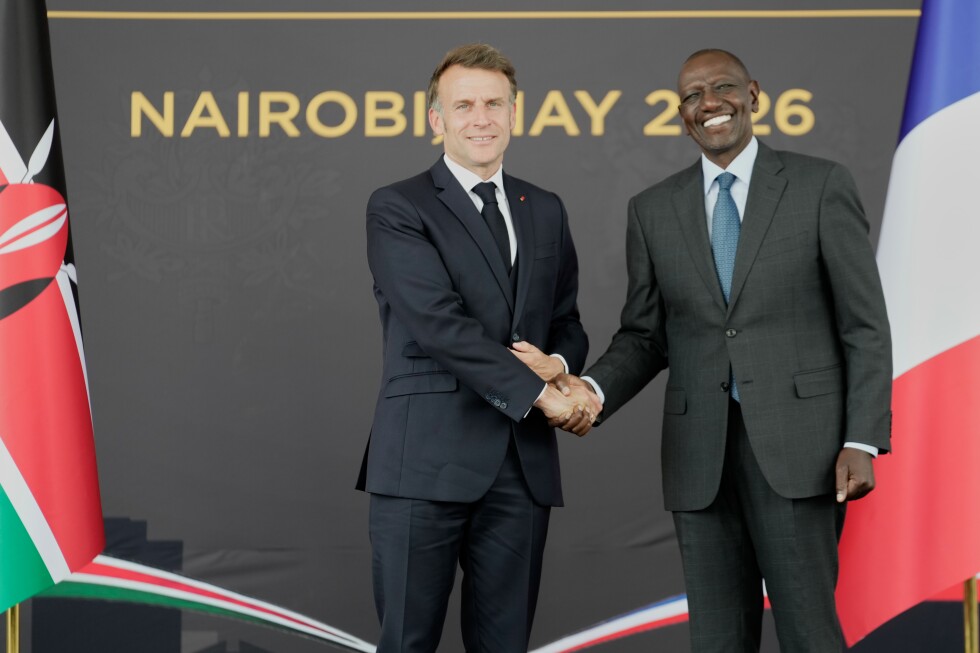
As France finalizes its full military withdrawal from West African nations, a move widely interpreted as a signal of its waning traditional influence across the African continent, Paris is launching a revised model of engagement with African nations at the two-day Africa Forward Summit kicking off Monday in Nairobi, Kenya. Co-hosted by France and Kenya, this gathering marks the first time France has held such a major Africa-focused summit in an English-speaking African nation, representing a deliberate strategic shift toward expanding ties with non-Francophone countries under a new framework billed as a ‘partnership of equals’.
For decades, France maintained a system of economic, political, and military dominance over its former African colonies, a network of influence widely known as Françafrique that included stationing thousands of French troops across the region. Growing criticism from African leaders and opposition movements, who decried the approach as condescending and overly interventionist, eventually forced Paris to pull back the bulk of its deployed forces from West Africa and the Sahel. Today, Paris is seeking to reframe its role on the continent through this new policy direction, with the recently ratified Kenya-France Defense Cooperation Agreement laying out the roadmap for its future engagement.
More than 30 heads of state and government from across Africa, including delegations from longstanding Francophone nations, are in attendance for the summit. Arriving in Kenya a day ahead of the summit’s official opening Sunday, French President Emmanuel Macron sought to soften tensions with West African leaders who pushed for France’s military exit, noting that while Paris may hold policy disagreements with some West African governments, ‘never disagrees with the people.’
The new bilateral defense pact with Kenya, signed in October 2024 by Kenyan Defense Minister Soipan Tuya and French Ambassador to Kenya Arnaud Suquet, was ratified by Kenya’s national parliament on April 8 this year. That same month, Kenya also moved to ratify similar defense cooperation agreements with the Czech Republic, China, and Italy, part of the East African nation’s broader strategy of expanding multilateral security ties at a moment when many Sahel nations are expelling foreign military presences to reclaim full national sovereignty.
The defense agreement has not been without controversy, however. Kenyan civil society organizations have raised sharp criticism of provisions that grant French troops broad immunity from domestic Kenyan law for on-duty offenses, a provision that echoes controversial terms in a decades-long defense pact with the United Kingdom that has left multiple serious crimes committed by British personnel against Kenyan civilians difficult to prosecute. Most notably, the 2012 murder of 21-year-old Kenyan woman Agnes Wanjiru, who was last seen in the company of a British soldier near a UK training base in central Kenya’s Nanyuki, and the 2021 deadly Lolldaiga ranch fire linked to British military training activities, have become high-profile examples of the harms caused by these broad immunity clauses. It took more than a decade for Kenyan courts to order the extradition of the British soldier charged in Wanjiru’s killing, a process delayed for years by the legal protections in the UK-Kenya defense pact.
Defending the new agreement and Kenya’s broader strategy of security partnerships, Nelson Koech, chair of Kenya’s parliamentary defense committee, emphasized that the pacts with advanced militaries deliver tangible benefits: access to specialized military training and critical intelligence-sharing opportunities that will strengthen Kenya’s own national defense capabilities. Koech rejected claims that the agreements amount to a ‘surrender of sovereignty’, noting that updated provisions in the new pacts require foreign personnel to face Kenyan prosecution for serious violent offenses including murder. Even so, the immunity provision for most on-duty offenses remains unchanged, mirroring the controversial structure of the UK agreement. Roughly 800 French military personnel arrived in Kenya aboard a French navy ship one month ahead of the summit, the first deployment under the new defense cooperation framework.