A deadly hantavirus outbreak aboard the expedition cruise ship MV Hondius has triggered a coordinated global repatriation operation, with multiple nations arranging emergency evacuations after three passengers died and new positive cases were detected among returnees. The vessel, which completed a voyage through South America, is currently anchored off the coast of Tenerife in Spain’s Canary Islands, where authorities have overseen the gradual disembarkation of more than 90 international passengers since Sunday.
The U.S. Department of Health and Human Services confirmed Monday that one American national returning on a government-chartered repatriation flight tested positive for hantavirus, while a second passenger is experiencing mild symptoms consistent with the infection. Out of an abundance of caution, both patients were transported in specialized biocontainment units during the flight. All 17 U.S. citizens on the charter, plus one British national residing in the U.S. who joined the evacuation, are now undergoing comprehensive clinical assessment and further screening at the University of Nebraska Medical Center. Seven additional U.S. passengers returned to the country earlier and are currently under active monitoring by public health officials in their home states. Officials from the U.S. have emphasized that the risk of a large-scale community outbreak remains extremely low.
Three passengers have already died from complications linked to the outbreak: a Dutch couple and a German woman, two of whom have been officially confirmed to have contracted hantavirus. The Andes strain of hantavirus, which the World Health Organization (WHO) suspects infected passengers during a stop in South America, is most commonly carried by rodents, but limited human-to-human transmission is possible. Typical symptoms of infection include high fever, extreme muscle fatigue, body aches, abdominal pain, vomiting, diarrhea and progressive shortness of breath.
The outbreak has sparked public disagreement between global health leaders and U.S. public health officials over safety protocols. WHO Director-General Tedros Adhanom Ghebreyesus has warned that the U.S. decision to deviate from WHO-recommended guidelines carries potential public health risks. The global health body has mandated a 42-day isolation period for all passengers disembarking the MV Hondius. However, Dr. Jay Bhattacharya, acting head of the U.S. Centers for Disease Control and Prevention (CDC), pushed back against the strict measures, saying he sought to avoid unnecessary public panic. He noted that human-to-human transmission of the virus is rare, and it should not be managed using the same strict protocols implemented during the COVID-19 pandemic.
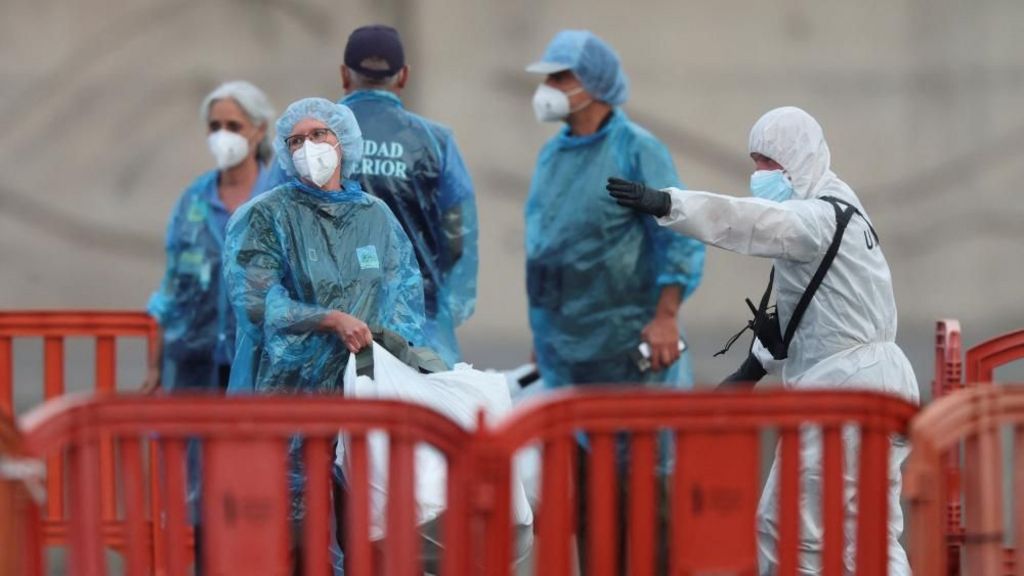
Photographs captured Sunday showed disembarking passengers donning full personal protective equipment, including blue medical gowns, bouffant caps and surgical face masks, as they entered the port of Granadilla de Abona in Tenerife. Multiple countries have launched their own repatriation and quarantine operations for their citizens:
– French health authorities confirmed a French passenger who returned to Paris tested positive for hantavirus, and is currently in isolation as her health condition deteriorates. She was one of five French nationals on board the ship, and contact tracers have already identified 22 close contacts who are being monitored.
– A charter flight carrying 20 British nationals landed at Manchester Airport on Sunday, with all passengers transported to Arrowe Park Hospital in Merseyside for a 72-hour precautionary isolation period. No passengers have reported symptoms so far, though two other British citizens with confirmed hantavirus are receiving treatment in the Netherlands and South Africa respectively.
– Fourteen Spanish nationals repatriated to Madrid are currently undergoing mandatory quarantine at a military hospital, with two additional evacuation flights scheduled for Monday afternoon.
– A separate flight carrying 26 passengers and crew, including eight Dutch nationals, landed in the Netherlands on Sunday. Six passengers are scheduled to travel to Australia, while another 18 will be repatriated to the Netherlands on additional flights. Both of these final flights will also carry passengers from other nations that did not arrange their own independent repatriation missions.