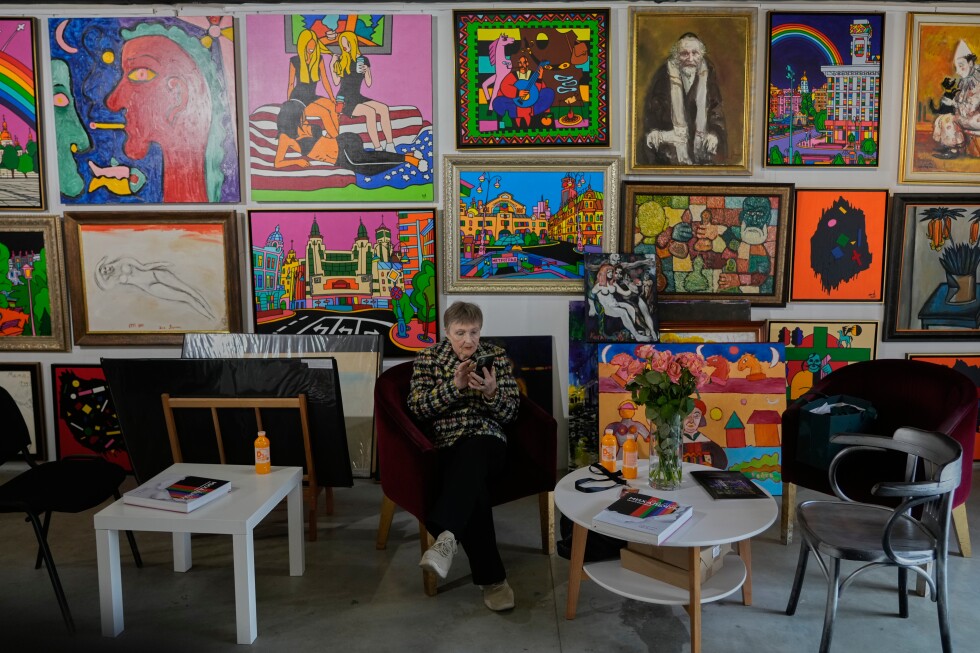
Against the persistent backdrop of air-raid sirens and the constant threat of missile strikes, Ukraine’s capital Kyiv has played host to a landmark contemporary art fair that carries a profound, quiet mission: to help a war-battered nation process the unthinkable new normal that full-scale conflict has imposed on daily life. Organized by the long-running cultural platform Art Kyiv, the exhibition, titled *This is Normal*, opened at the city’s Lavra Gallery this cycle, marking only the second time the event has been held since Russia’s full-scale invasion began in 2022, following an inaugural launch last October.
Anna Avetova, director of Art Kyiv, explains that the decision to hold the fair amid active conflict was not an oversight, but a deliberate ideological choice. “Holding the event during wartime means not waiting for a better moment, but working with reality as it is,” Avetova says. Unlike many cultural initiatives in Ukraine that center overt narratives of war, *This is Normal* makes a purposeful choice: no exhibition booth is dedicated exclusively to conflict. The war permeates every conversation and every unspoken moment in the gallery, Avetova notes, but curators intentionally rejected the urge to force the topic to the forefront. Instead, the fair positions art as a unifying thread that binds everyday life to cultural memory, rather than a separate compartment separated from the national crisis. “In this context, art does not stand apart from life — it helps make sense of the present, preserve cultural continuity, and lay the groundwork for the future,” Avetova adds. “Art is one of the things that keeps us human. It sustains us and warms our soul when things are very hard.”
Hundreds of works fill the gallery space, spanning an extraordinary range of mediums and styles: from abstract ceramic sculpture and textured mixed-media installations to expressive abstract canvases, surreal portraits, and atmospheric landscape paintings. All works on display are primarily available for purchase, part of a secondary yet critical goal of the fair: to revitalize Ukraine’s stagnant domestic art market. The sector already ground to a near-halt during the COVID-19 pandemic, and the full-scale invasion delivered a far more devastating blow, shuttering galleries, displacing artists, and drying up collector demand. Today, as the market begins to stir back to slow life, the fair stands as proof that Ukrainian creators are ready not only to create for reflection, but to participate in the global and domestic art economy once more.
The fair has drawn together dozens of Ukraine’s most prominent galleries, leading artists, local collectors, and leading cultural institutions, all gathering in a space where air-raid sirens occasionally cut through artist talks and gallery walks. For many participating creators, the opportunity to exhibit in Kyiv right now carries personal as well as national meaning.
Ceramic artist Tala Vovk is showing her work at a major Kyiv fair for the first time. She makes a point of attending every cultural event she can in the capital, explaining that these gatherings offer a vital chance to step away from the constant stress of war and detach from the pervasive grief surrounding the conflict. “Art is a place where the everyday doesn’t exist,” Vovk says. She argues that sustaining cultural activity through wartime is not a trivial distraction, but an investment in Ukraine’s long-term future. Nourishing the country’s cultural foundation now, she explains, gives it space to take root and grow stronger once the war ends, and that strength will sustain the nation through every challenge ahead.
For artist Yuriy Vatkin, whose work is featured at the fair, art has already served as a lifeline through the darkest days of the invasion. When the full-scale war began, Vatkin found himself trapped under Russian occupation in the corridor between Kharkiv, Ukraine’s second-largest city, and the Russian border. Even after an attack damaged his studio, painting remained a tool to survive and protect his mental health, according to his representative Denys Dmytriev. True to the fair’s ethos, Vatkin’s displayed works avoid explicit war imagery. Instead, they lean into his signature style: thick, layered brushstrokes, fragmented forms, and vivid, unexpected color palettes that evoke a quiet sense of motion and instability that resonates with the current moment.
Visitors echo the artists’ belief that continuing cultural life amid war is a radical act of resilience. Anna Domashchenko, a first-time attendee, says she was drawn to Vatkin’s rich, saturated hues, which stir intense, vital emotions that feel missing from daily life under war. She attends as many art events as possible in Kyiv, and says she often hears questions about whether such events are appropriate amid ongoing death and destruction. For her, the answer is clear. “Sometimes you wonder whether it’s appropriate… but these are exactly the things that inspire you and remind you that life is full of color, and all of those colors should be present at any time,” Domashchenko says. “Even in times as hard as these.”