A major public health response has been activated in France after one of five French citizens repatriated from the hantavirus-outbreak cruise ship MV Hondius has developed symptoms consistent with the rare virus, according to French Prime Minister Sebastien Lecornu. The five passengers were flown back to France on Sunday, following a deadly outbreak that has already claimed three lives on the vessel anchored off Spain’s Tenerife Island.
In an official post on social platform X, Lecornu confirmed that one individual began showing signs of the illness mid-flight during repatriation. “These five passengers have immediately been placed in strict isolation until further notice,” the prime minister wrote, adding that all five are already receiving targeted medical care and will undergo comprehensive diagnostic testing and full health screenings to confirm their status. Lecornu also announced plans to sign an official executive decree later the same day to formalize enforceable public health isolation protocols designed to limit any potential community spread and protect the general French public.
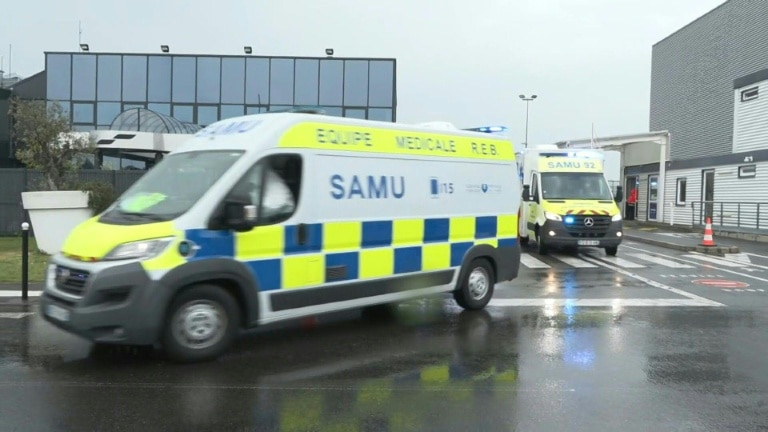
AFP journalists on the ground confirmed that the evacuation flight carrying the five French passengers touched down at Paris’ Le Bourget Airport, located north of the capital, shortly before 4:30 pm local time (1430 GMT). Minutes after landing, the group was transferred to a fleet of five dedicated ambulances and transported under heavy police escort to Paris’ Bichat Hospital, a leading facility for infectious disease care, an AFP photographer documented.
The evacuation of all passengers from the MV Hondius began early Sunday, after an outbreak that has killed three people – a Dutch married couple and a German woman – and sickened multiple others with the rare virus, which is most commonly carried by rodent populations. Repatriation flights have been coordinated to move passengers to their home countries or to specialized medical facilities in the Netherlands for urgent screening, with additional flights carrying passengers bound for the United Kingdom, Canada, Ireland, Turkey, the United States and other nations continuing through Sunday.
Prior to departure from Tenerife, one French passenger, Roland Seitre, told reporters that the planned 72-hour pre-release quarantine did not concern the group. “We haven’t had any cases on board since the end of April and nobody is sick,” Seitre said. The original protocol called for a 72-hour in-facility quarantine for full medical evaluation, followed by an additional 45 days of at-home supervised monitoring. However, Lecornu’s confirmation of a symptomatic passenger indicates French public health officials are set to implement stricter, more expansive containment measures than initially planned.
That shift aligns with earlier guidance released Sunday in a joint statement from France’s foreign and health ministries, which explicitly outlined that any repatriated individual developing symptoms would immediately be reclassified as a “suspect case” and moved to a specialized medical facility for full evaluation and treatment. Later Sunday afternoon, Lecornu convened an emergency high-level meeting with top cabinet ministers and senior public health leaders at his office to coordinate the response to the repatriated group. Attendees included Health Minister Stephanie Rist, Interior Minister Laurent Nunez and Foreign Minister Jean-Noel Barrot, with Lecornu noting that the health minister would release a full public update on the situation later that evening.
The World Health Organization (WHO) has classified all former passengers of the MV Hondius as “high-risk” contacts, requiring a full 42 days of continuous medical monitoring – a timeline that matches the virus’ maximum six-week incubation period. Of particular global concern is the confirmation that the strain detected in positive cases on the ship is the Andes virus, the only known hantavirus variant capable of person-to-person transmission. Despite the elevated risk, WHO officials have moved quickly to downplay comparisons to the 2020 COVID-19 pandemic, stressing that the current outbreak poses far lower overall public health risk at a global scale.