On a recent evening along a busy central thoroughfare in Tehran, two starkly contrasting scenes played out just meters apart, laying bare the fractured reality of everyday life in Iran’s capital after months of rapid, disorienting crisis. On one side of the street, a street vendor knelt on the asphalt, sorting small household goods across a spread of clothing, his work illuminated only by the headlights of passing honking cars. “Look, this is our life now,” he muttered, a quiet complaint more than a conversation, as pedestrians drifted past—some pausing to glance at his wares, others hurrying on without stopping.
Across the road, a crowd had slowly assembled, their rally amplified by blaring loudspeakers. Flags waved, patriotic songs rang out, and slogans denouncing the United States and Israel echoed into the dark night. This juxtaposition of private hardship and public mobilization is no accident: it has become the defining feature of life in Tehran in 2025, after a sequence of events that has upended long-held assumptions about what Iranians can expect from the future.
It was just last June when Iran entered into a 12-day direct conflict with Israel, a confrontation that eventually drew in the United States and marked the most large-scale direct clash between the major powers in the region in decades. That confrontation was followed in January by nationwide protests, which were met with a harsh government crackdown and a nearly four-week total national internet shutdown. By April, just a few months later, Iranians found themselves locked in another 40-day cycle of escalating tension, breaking only for a fragile ceasefire that has done little to resolve underlying instability.
For decades, most Iranians’ core daily worries centered on slow-burning economic decline and tightening civil restrictions, not the sudden threat of open war and persistent systemic instability. This new wave of crisis has shifted not just daily routines, but the very boundaries of what residents believe could happen next.
“Before all of this – the war, the destruction, seeing civilians caught in the crossfire – we thought we just had to struggle through economic pressure, rising prices, and growing restrictions,” explained Nafiseh, a Tehran-based language teacher, in an interview with Middle East Eye. “Life was already difficult, but we never imagined it could reach this point, or God forbid, get even worse.”
Even after the fragile April ceasefire took hold, the economic damage of repeated crises remains impossible to miss. Strikes on key industrial and petrochemical facilities, paired with months of broad instability, have exacerbated long-running economic strain that touches every corner of daily life. Residents consistently describe the same tangible hardships: skyrocketing prices for essential goods, soaring costs for food and medication, and rapidly shrinking purchasing power. Job losses have also spiked dramatically.
Some businesses have been hit by direct damage to industrial sites or supply chain disruptions tied to conflict, while thousands more have been pushed to the brink by the prolonged internet shutdown—recognized as the longest nationwide internet blackout in modern global history. The restrictions have pushed large swathes of the workforce out of stable formal employment, particularly for those who rely on digital platforms to reach customers.
One small manufacturing business owner, who previously built his entire customer base through Instagram, told MEE that his revenue has declined steadily since the start of the year, and he now struggles to cover even basic operating costs. “These past months have been heavy,” he said. “First the protests, then the war. After that, everything slowed down. Some days pass so slowly it feels like they never end.”
The most recent conflict has stretched an already deteriorating economy to breaking point, leaving household incomes increasingly unstable and making even short-term life planning feel like a gamble. This uncertainty extends far beyond economics: it has reshaped how Iranians of all ages think about and prepare for the future. A ride-hailing driver described how his 10-year-old daughter now regularly follows international news updates about the risk of renewed war, a weight no child should have to carry. “A child should be thinking about games,” he said, his voice mixing frustration and disbelief. “Not about war.”
A short distance from the vendor’s spot on the street, one of the recurring public pro-government rallies that have become common in the two months since the latest escalation got underway. A woman holding a portrait of Iran’s current leadership urged attendees in an on-camera interview to bear current hardships in order to defend the country’s national independence. These events frame the current moment not as a systemic crisis, but as a test of resilience for true believers in the state’s project.
The rallies are widely understood as part of a coordinated push by Iran’s establishment to maintain a visible public presence and project an image of national unity and control to both domestic audiences and the international community. Most are organized or backed by state-linked institutions and networks, combining logistical support like free food distribution with speeches, patriotic music, and religious and cultural messaging.
Interpretations of the gatherings split sharply along already existing divides. For supporters, they are a genuine display of national unity and resistance against external pressure. “We won’t give in to pressure from the US or people like [Donald] Trump,” one rally participant told MEE. “This is not just politics for us. It’s about defending our country and what we believe in. Being here is our way of showing support for those on the front line. We stand by our Nezam (system).”
For many other Tehran residents, however, the rallies are seen as staged displays that ignore the growing everyday struggles most people face. These deep divides are not just about material conditions—they are about how people perceive hardship, stability, and sacrifice, shaping completely different understandings of the same moment.
Access to information has also become deeply unequal across the capital. Most ordinary residents face severe restrictions on internet connectivity, limited only to tightly controlled domestic platforms, with access to global websites only available through overpriced VPN packages that are out of reach for many. A small minority of residents with authorized or privileged access retain stable uncensored connectivity, creating completely separate information ecosystems that coexist within the same city blocks.
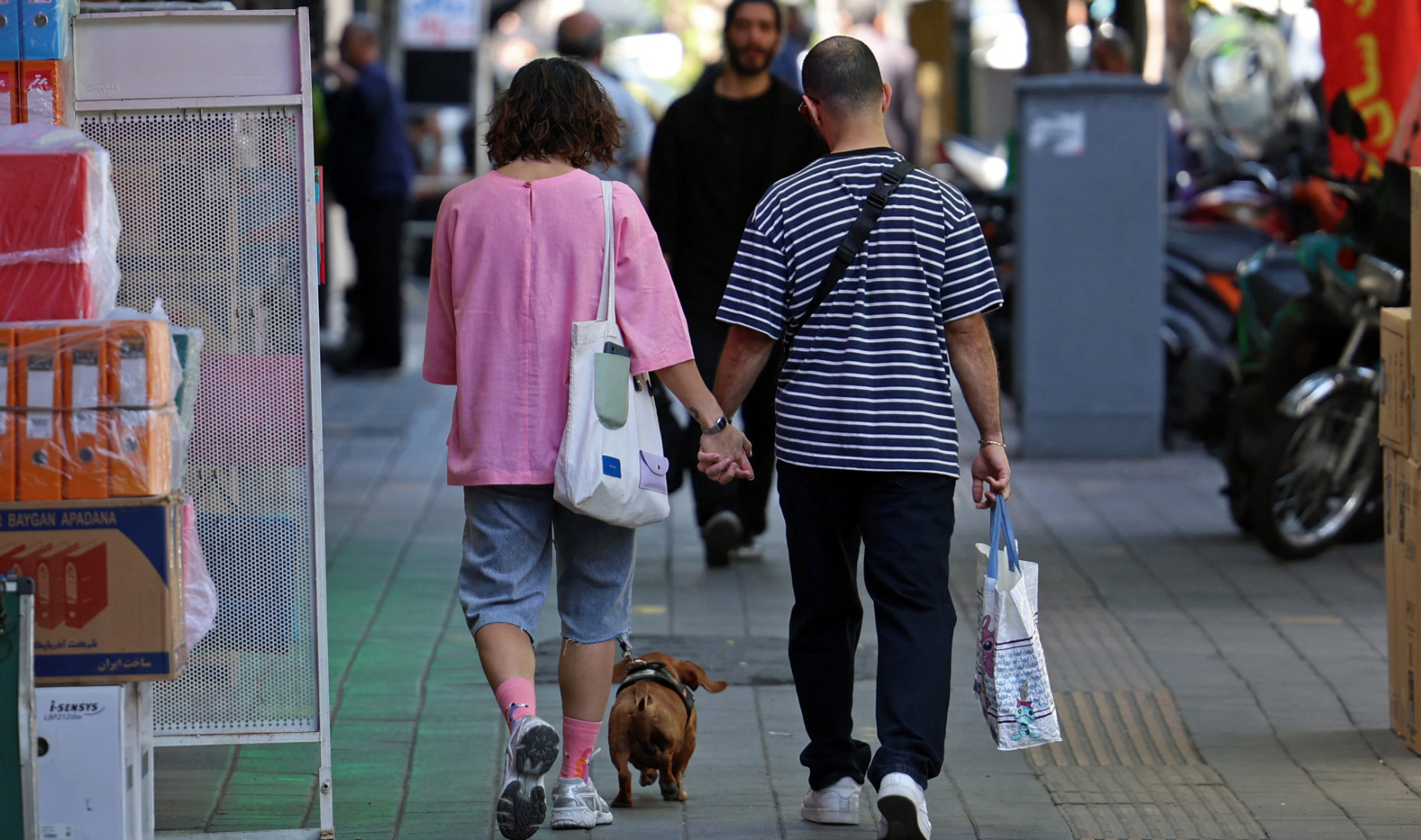
Even with these divides, everyday life continues, though it often unfolds under a constant current of low-grade tension. In many neighborhoods, outward signs of normalcy remain: traffic still moves, restaurants stay open, and people still meet friends and family for social gatherings. Markets and shopping malls still see foot traffic, though visitor numbers are far lower than they were a year ago. A shopkeeper at a mall in northern Tehran said the shift in consumer behavior has become impossible to miss since January. “People come in, they look, but they don’t buy like before,” he explained.
Occasionally, passersby will confront rally participants, calling out the gap between the public displays of unity and the widespread economic pain felt across the city. Open public dissent remains rare, however, shaped by a pervasive climate of security presence and self-censorship. Online, though, frustrations surface far more openly, even on state-approved platforms that many users have been forced to join after global messaging apps were blocked.
“Politics needs thinking, not street slogans,” one user wrote on a domestic social platform. “What’s the point of standing in the streets shouting? If things go on like this and these people refuse to see reality, it’s our own lives that get smaller.”
As rumors of possible further escalation spread across the city, some residents have adopted a pragmatic approach to coping with rising anxiety. “I know it’s hard,” said Hamid, a local entrepreneur. “But worrying won’t change anything. We just have to get on with our lives.”
For many Iranians, this quiet adjustment has become routine. It does not resolve the deep tensions and divides visible across the capital, but it allows daily life to continue. From a distance, Tehran looks like a city functioning as normal: up close, it is a tapestry of overlapping, often contradictory experiences. The same street holds both quiet economic struggle and public displays of patriotic commitment. In Tehran today, life goes on—not as a single shared experience, but as two parallel realities unfolding in the same space.