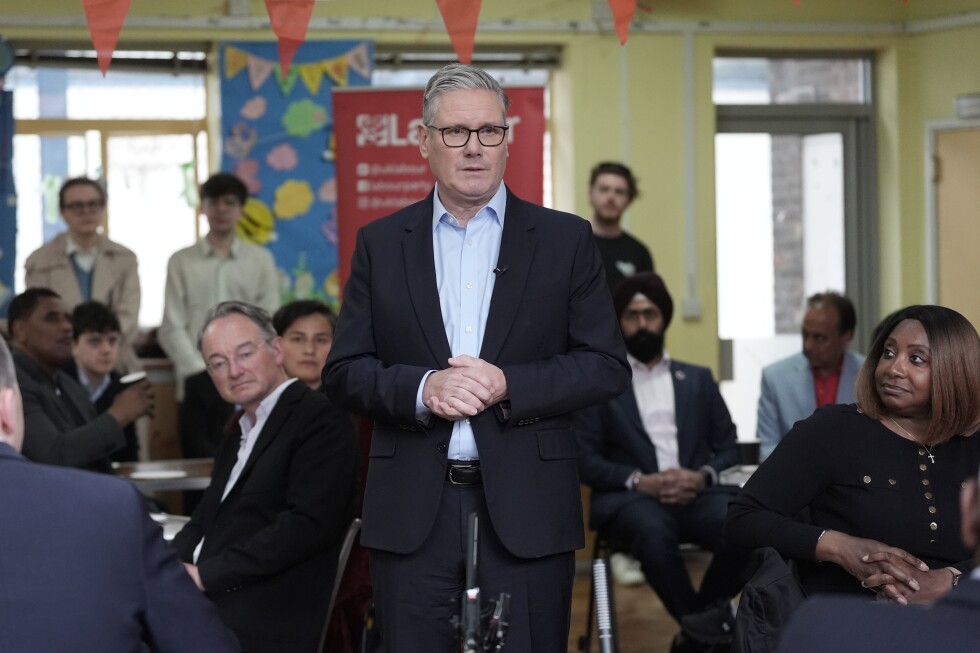
LONDON – Just 18 months after Keir Starmer’s centre-left Labour Party swept to power ending 14 years of Conservative rule, the British prime minister is fighting for his political future after a catastrophic showing in the UK’s 2025 local and regional elections. The final vote counts, certified Saturday, delivered a string of humiliating defeats for Labour: the party lost more than 1,000 local council seats across England, and was ousted from government in Wales after holding power there for 27 consecutive years. Meanwhile, hard-right anti-immigration party Reform UK, led by veteran nationalist figure Nigel Farage, secured a historic breakthrough, picking up nearly 1,300 seats across England, claiming second place in Wales and making unexpected inroads in Scotland. The elections were widely framed as an informal midterm referendum on Starmer’s leadership, and the final outcome delivered a clear, unforgiving rejection from voters that has sent shockwaves through Westminster. Below are the five most critical lessons emerging from the poll results.
## Starmer’s leadership is hanging by a thread
Despite the overwhelming rejection at the polls, Starmer has repeatedly rejected calls to step down, arguing that his resignation would plunge the UK into unnecessary political instability. So far, the prime minister has avoided an immediate open challenge to his leadership: most senior cabinet members have issued public statements of support, and the party’s most high-profile potential contenders – including Health Secretary Wes Streeting, former deputy leader Angela Rayner and Greater Manchester Mayor Andy Burnham – have all remained publicly silent on any leadership bid. But pressure is building quickly from within the Labour parliamentary party: a growing number of backbench lawmakers are now calling on Starmer to announce a formal timeline for his departure before the end of 2025. Under UK political rules, parties can replace a sitting prime minister mid-term without triggering an early general election, making a leadership transition logistically possible. “There has to be a timetable,” veteran Labour MP Clive Betts told the BBC, while fellow legislator Tony Vaughan called for an “orderly transition of leadership.” To demonstrate a quick shift in direction, Starmer announced two senior appointments Saturday, bringing veteran figures from previous Labour governments back into senior roles: former prime minister Gordon Brown was named a special envoy for global finance, and former deputy leader Harriet Harman was appointed as an advisor on women and gender equity. Starmer is set to deliver a major policy speech Monday in a bid to rebuild momentum, ahead of the government’s upcoming legislative agenda announcement, which will be delivered by King Charles III at the State Opening of Parliament on Wednesday.
## Reform UK claims a historic political breakthrough
The 2025 local elections marked a turning point for Reform UK, Farage’s hard-right anti-establishment party that has positioned itself as a populist alternative to the UK’s long-dominant major parties. Running on a platform centered on aggressive anti-immigration rhetoric and anti-establishment appeals, the party flipped hundreds of council seats in working-class northern English communities – including Sunderland – that have been solid Labour strongholds for decades. It also made significant gains at the expense of the Conservative Party in traditionally right-leaning areas such as Essex, east of London. Farage hailed the results as a “historic change in British politics,” saying he was confident the voters who switched to Reform were not just casting a protest vote, but making a long-term ideological shift. “Voters who have come to us are not doing it as a short-term protest,” Farage said. The party currently holds just 8 of the 650 seats in the UK House of Commons, and it remains unclear whether it can translate this local success into gains in a future national general election.
## The United Kingdom’s constitutional unity faces growing pressure
The election results also highlighted growing regional divides across the UK, with pro-independence parties set to take power in both of the country’s semi-autonomous regional governments in Scotland and Wales – though neither has placed an immediate independence referendum on their agenda. The Scottish National Party (SNP), which has held power in Edinburgh since 2007, secured another term in government, but fell short of an outright parliamentary majority, making a new independence referendum unlikely in the near term. Labour and Reform UK tied for a distant second place in the Scottish Parliament. In Wales, Plaid Cymru – the Welsh nationalist party that aims to secure full independence from the UK but has no immediate plans to hold a vote – won the most seats in the Senedd, Wales’ devolved legislature. Though it fell short of a majority, it is widely expected to form a new governing administration. Reform UK took second place, while incumbent Labour fell to a disappointing third place, with outgoing Welsh First Minister Eluned Morgan losing her own seat.
## Economic frustrations are at the root of Labour’s collapse
As with most sitting governments facing voter backlash, the state of the UK economy lies at the heart of Labour’s poor showing. After ending 14 years of Conservative rule marked by austerity policies and the upheaval of the COVID-19 pandemic, Starmer’s government has struggled to bring down the cost of living and stimulate growth, hampered by ongoing global economic headwinds from the war in Ukraine and escalating geopolitical tensions involving Iran. Starmer has also alienated many of the party’s core left-wing supporters with proposed cuts to welfare spending, several of which were reversed after open rebellions from Labour lawmakers. Some senior Labour figures argue that the government’s progressive achievements – including new renter protections and an increase to the national minimum wage – have been overlooked by voters, with many pinning the blame on Starmer, who has been criticized as an uninspiring leader whose tenure has been marred by repeated scandals. The most high-profile of these was his failed attempt to appoint Peter Mandelson, a longtime party insider with ties to convicted sex offender Jeffrey Epstein, as UK ambassador to Washington. But outgoing Barnsley Council leader Stephen Houghton, whose Labour administration was ousted by Reform UK in last week’s vote, said the problem ran far deeper than Starmer’s leadership. “This has been coming for 30 years around the country, in post-industrial communities, coastal communities, that have been left behind,” Houghton said. “You can change prime ministers all day long. If you don’t change policy, it’s not going to change.”
## The UK’s decades-old two-party system is collapsing
Last week’s results confirm what political analysts have warned about for years: the UK’s long-standing two-party system, dominated for more than a century by Labour and the Conservatives, is fracturing beyond repair. The Conservatives also suffered massive losses in the local elections, leaving both major parties bleeding support to smaller, ideologically driven groups. Voters now have a far broader range of options than in previous decades, including the centrist Liberal Democrats and pro-independence nationalist parties in Scotland and Wales. But the biggest gains went to populist insurgent parties: Reform UK and the Green Party. Led by self-described “eco-populist” Zack Polanski, the Greens have expanded their policy focus beyond environmental action to include social justice and support for Palestinian statehood, and the party picked up hundreds of council seats from Labour in urban centers and university towns, taking control of multiple local authorities. Tony Travers, a professor of government at the London School of Economics, said the results make it almost certain that the next UK general election, scheduled to take place by 2029, will not deliver an outright majority to any single party. “So then you’re in the world of, after the election, two or three big minority parties trying to work out how they would govern,” Travers said – an outcome that has long been considered “very un-British.”