As Russia prepared to mark its annual Victory Day holiday commemorating the Soviet Union’s defeat of Nazi Germany over the weekend, planned ceasefires on both sides of the Russia-Ukraine conflict unraveled within hours, with Kyiv and Moscow trading accusations of widespread violations that have pushed tensions to new highs.
Russian President Vladimir Putin first announced a 48-hour unilateral ceasefire set to run from 8 to 9 May, timed to align with the country’s main Victory Day celebrations scheduled for Saturday. Ukraine had previously proposed its own indefinite truce starting 6 May, which Russian forces never acknowledged. By early Friday, just hours after Putin’s ceasefire entered into force at local midnight, both militaries were reporting hundreds of breaches across the front line and deep strikes into each other’s territory.
The Russian Ministry of Defence released an update via Telegram Friday morning claiming it had documented 1,365 ceasefire violations across the conflict zone, including 153 separate artillery barrages and 887 drone incursions and strikes. The ministry added that Ukrainian forces continued targeting civilian infrastructure in Russia’s border regions of Kursk and Belgorod, which lie adjacent to the main front line, and that Russian troops had launched a proportional “mirror response” to the breaches.
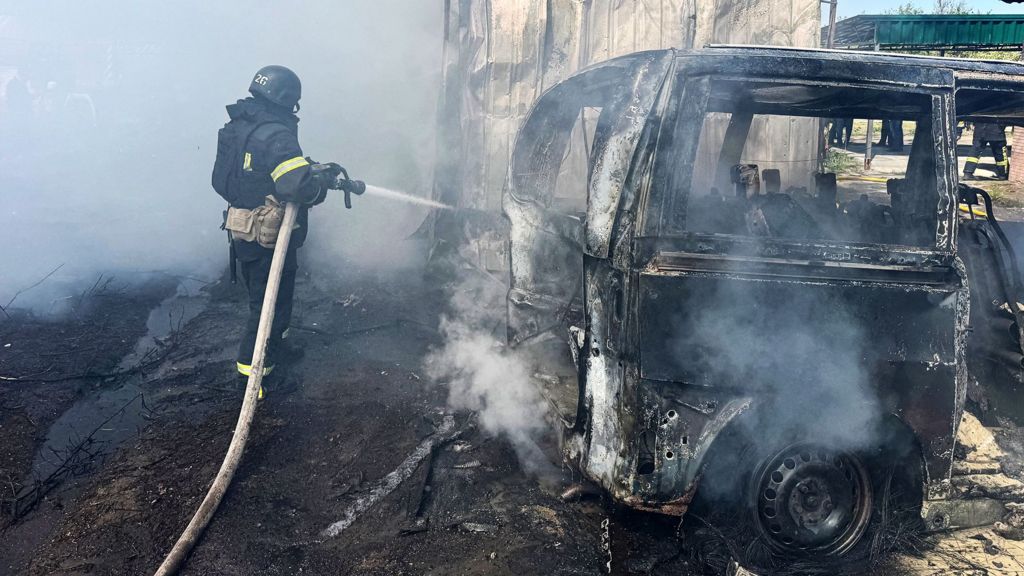
Moscow Mayor Sergey Sobyanin confirmed that roughly 20 drones had been intercepted and downed in areas surrounding the Russian capital within the first two hours of the ceasefire, marking one of the largest concentrated drone attempts on Moscow in recent weeks. Additional Ukrainian drone strikes were reported across a wide swath of Russian territory, hitting industrial sites in Perm and Yaroslavl regions, military-related infrastructure in Rostov region, and locations in Grozny, the capital of Russia’s Chechen Republic. Thirteen commercial airports across southern Russia were forced to temporarily suspend all flight operations following the wave of attacks, disrupting holiday travel for thousands of passengers.
On the Ukrainian side, President Volodymyr Zelenskyy echoed the accusations in his own Telegram post, stating that Russian forces had carried out more than 140 separate attacks on Ukrainian positions and launched over 850 drone strikes in the opening hours of the truce. “All of this clearly indicates that there was not even a simulated attempt from the Russian side to cease fire at the front,” Zelenskyy wrote, adding that Ukraine would “act in kind” to Russian breaches, matching its offensive operations.
A day earlier, on Thursday, Ukraine had already accused Russia of violating its own earlier unilateral ceasefire, pointing to a drone strike on a kindergarten in Sumy region that killed two civilians. No children were present at the facility at the time of the attack, Ukrainian officials confirmed.
Amid widespread fears that Ukraine will attempt to disrupt the high-profile Victory Day parade on Moscow’s Red Square, Russian security officials have implemented unprecedented security measures across the capital. In a break from tradition that marks the first shift in nearly 20 years, no heavy military hardware will be displayed during the parade, only marching infantry units. Russian authorities have also issued direct threats in response to any potential attack on the parade: the defence ministry warned it would launch a “retaliatory, massive missile strike” against central Kyiv if Moscow is targeted, and urged foreign diplomatic staff to evacuate the Ukrainian capital before 9 May.
Russian authorities have also issued formal warnings to residents of Moscow and St. Petersburg that mobile internet connectivity will be intentionally limited across large areas of both cities during the celebrations, a step officials say is necessary for security purposes. Many Russians have been advised to prepare for temporary full internet outages over the holiday period.
Unlike pre-war Victory Day celebrations, which regularly drew thousands of foreign guests and high-level dignitaries to Moscow, this year’s event will have an extremely limited international attendance. Only the leaders of Belarus, Malaysia, Laos, and a small number of other low-level foreign dignitaries are scheduled to participate in this year’s events.