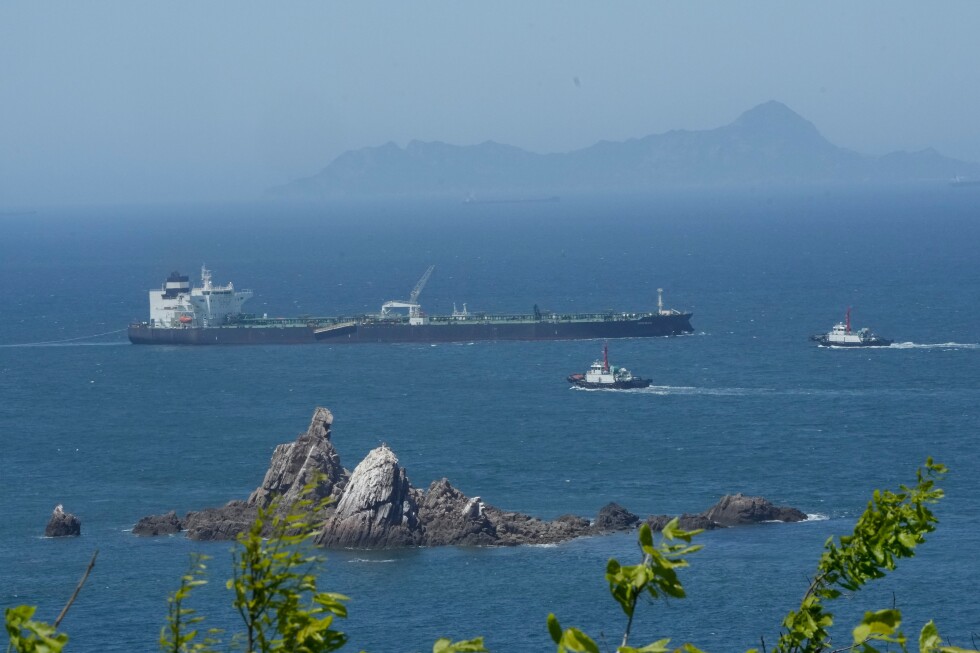
SEOSAN, South Korea — A Malta-flagged crude oil tanker carrying 1 million barrels of Middle Eastern crude has reached offshore waters near South Korea’s west coast port of Seosan, industry officials confirmed Friday, marking a critical delivery for the Asian trade-reliant nation as it navigates escalating energy security risks tied to tensions around the Strait of Hormuz.
The vessel, named Odessa, completed its transit through the strategically vital Strait of Hormuz in mid-April, a window that aligned with temporary ceasefire negotiations between Iran and the United States, according to HD Hyundai Oilbank, the South Korean refinery that procured the cargo. The tanker is on track to dock at the firm’s offshore mooring facility later the same day to begin unloading its shipment, which will then be processed into end products including gasoline, diesel, and naphtha at the refinery’s complex. HD Hyundai Oilbank notes it holds a total daily crude processing capacity of 690,000 barrels, making it one of the country’s major refining operators.
For South Korea, an export-driven economy heavily dependent on foreign energy imports, this delivery arrives at a moment of acute anxiety over global supply chains. Over 60% of the nation’s annual crude imports and half of its imports of naphtha — a core petrochemical feedstock critical to plastics manufacturing — pass through the Strait of Hormuz each year. The 1 million barrels carried by the Odessa accounts for between 35% and 50% of South Korea’s total daily crude consumption, underscoring the scale and importance of the single shipment.
Ongoing instability linked to the prolonged conflict involving Iran, paired with Iran’s control over chokepoint traffic that jolts global markets, has sent international fuel prices soaring in recent months, triggering fears of a full-blown energy crisis across South Korea’s trade-exposed economy. In response, the South Korean government has implemented sweeping emergency measures to curb runaway energy costs: for the first time in decades, it has imposed legally binding price caps on gasoline and other refined petroleum products, ordered domestic refiners to redirect existing naphtha cargoes originally destined for export to meet domestic demand, and launched a national push to secure alternative crude oil supply sources and alternate shipping routes to reduce reliance on the Hormuz chokepoint.