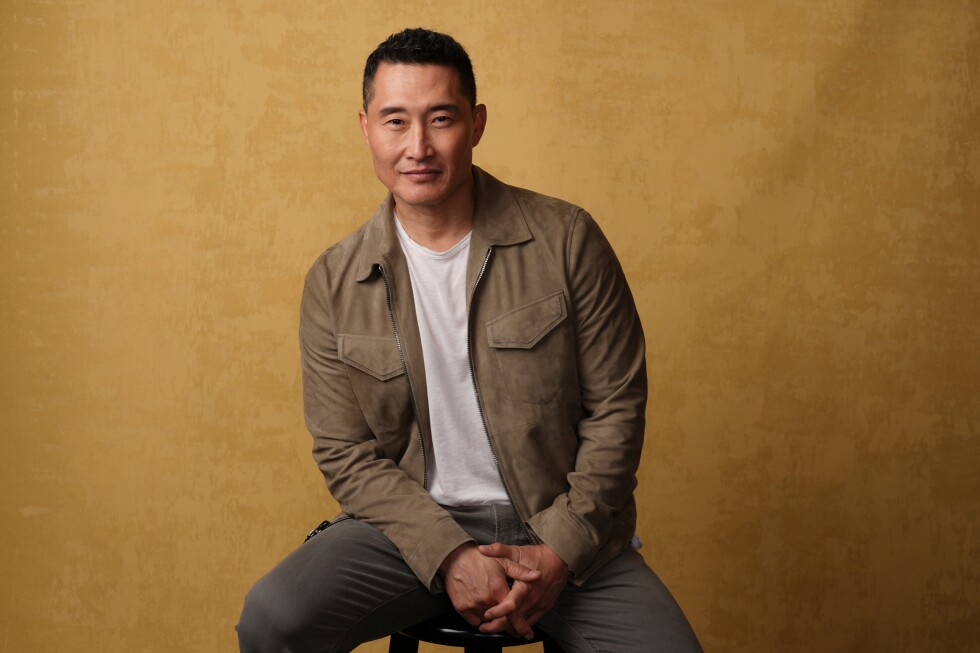
In a surprising twist that blends personal curiosity and professional storytelling, veteran entertainer Daniel Dae Kim recently tried an unconventional K-beauty treatment few celebrities would volunteer for: microinjections of salmon sperm DNA into his face, administered at a Seoul clinic. The procedure, intended to lower facial inflammation and boost skin elasticity, left Kim with a faint sunburn-like flush, but he brushed off the minor side effect and declared himself camera-ready within minutes.
That on-camera experiment is just one small segment of Kim’s ambitious new project, the CNN original series *K-Everything: The Global Rise of Korean Culture*, a passion project he calls a “love letter” to South Korea’s most beloved cultural exports, spanning beauty, food, music and film. The series is set to premiere Saturday on CNN International, with additional streaming availability on CNN and HBO Max.
For Kim, the series is far more than a typical travel documentary. Born in South Korea before moving to the U.S. at the age of one, the multi-hyphenate actor, director and producer has long held deep ties to the country, and the show frames its exploration of South Korea’s transformation through a deeply personal lens. In just three generations, the nation climbed from a war-ravaged developing nation to one of the world’s most dynamic, modern cultural powerhouses, and *K-Everything* traces that extraordinary shift through the lens of its most popular global exports.
Viewers can expect Kim to guide them across the full breadth of modern Korean culture. At the energetic annual kimchi festival in Pyeongchang, he unpacks how fermented Korean cuisine is upending long-held norms in fine dining scenes across the globe. In separate episodes, he sits down for one-on-one conversations with some of South Korea’s biggest entertainment figures, including A-list actor Lee Byung-hun, “Gangnam Style” pioneer Psy, BigBang member Taeyang, and the songwriters behind the Oscar-winning hit “Golden”. The K-beauty episode takes Kim even further: after chatting with beauty influencer LeoJ and model Irene Kim about shifting global beauty standards, he tests a range of viral K-beauty products from serums to sheet masks, even takes a tour of a facility that harvests snail slime for skincare formulations.
The personal journey extends to Kim’s own family, too. During filming, he accompanied his parents around Seoul, which has transformed so dramatically in recent decades that every landmark they remembered from their youth has disappeared. For his parents, navigating the hyper-modern capital felt almost like exploring a foreign country, leaving Kim as their trusted guide—a role that mirrors his work on the series.
Kim is joining a booming trend of A-list celebrities taking on travel and culture hosting roles, with high-profile names from Stanley Tucci and Eugene Levy to Chris Hemsworth and Will Smith launching their own documentary series in recent years. Kim cites iconic late chef and travel host Anthony Bourdain as a major inspiration; Bourdain pioneered the modern format of the celebrity travel host, leaning into personal perspective rather than rigid scripted narration.
“I wouldn’t say that this show is as irreverent as Anthony Bourdain’s show was, but I loved it because I felt like he was showing me his take on each country and he was a trusted guide,” Kim explained. “If I can be that for some people then that’s the spirit that I’d like to bring into this show.”
CNN executives say Kim’s unique background makes him the perfect person for this project. Amy Entelis, executive vice president for talent, CNN Originals and creative development, noted that Kim brings an unmatched combination of passion, firsthand knowledge, and ability to connect with global audiences that can’t be replicated by an outside host.
“From the first time I met him, it was clear he was incredibly well equipped to tackle this — deeply passionate about the subject and highly knowledgeable. He was also very focused on making sure the way we look at Korean culture translates to a broad global audience, really putting a spotlight on it,” Entelis said.
While this marks Kim’s first time hosting a full television series, he says the role felt natural, not outside his comfort zone. As an artist who has been shaped by his Korean heritage throughout his life and career, introducing the culture he loves to a global audience felt like a calling, not work.
Beyond entertainment, Kim also hopes the series will serve a larger social purpose: bridging cultural divides and pushing back against the sharp rise in anti-Asian racism that surged globally during the COVID-19 pandemic. “If we can start to understand one another a little bit better through culture, then I think it is one step toward bringing together a global community. And I think the world could use a little more understanding in general,” he said.
For new viewers unfamiliar with South Korea, Kim says the series offers a accessible, human introduction that no textbook or classroom lecture can match. By bringing together people from every corner of Korean society—from different cities, socioeconomic backgrounds, and creative fields—the series broadens understanding of just how diverse and dynamic modern Korean culture is, beyond the viral trends that dominate global social media.