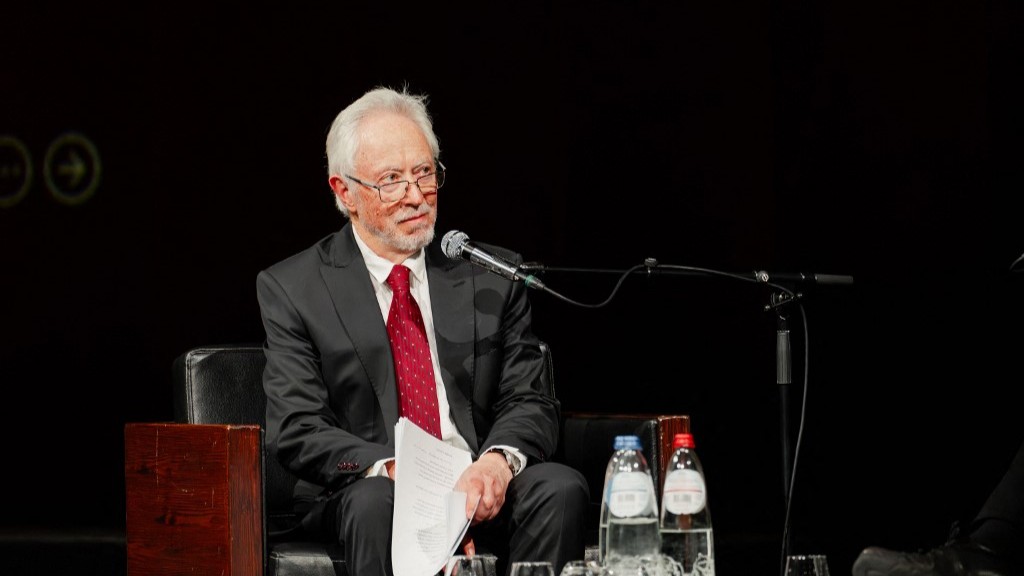
One of the world’s most decorated literary figures has sparked international debate after confirming he will skip a major Israeli literary festival, citing profound moral objection to what he terms Israel’s “genocidal campaign” in the Gaza Strip.
John Maxwell Coetzee, the 2003 Nobel Prize in Literature winner and two-time Booker Prize recipient, outlined his decision in a private November letter to Julia Fermentto-Tzaisler, artistic director of the Jerusalem International Writers Festival, a copy of which was obtained by The Guardian. In the correspondence, the South African-born writer made an unusual public break from his long-held position as a self-identified supporter of Israel, explaining that the current actions of the Israeli state and widespread public backing for the campaign make his attendance impossible.
“For the past two years the state of Israel has been conducting a genocidal campaign in Gaza that has been vastly disproportionate to the murderous provocation of 7 October 2023,” Coetzee wrote in the letter. He added that the military campaign waged by the Israel Defense Forces has retained the enthusiastic backing of the vast majority of Israeli citizens. “For this reason it is not possible for any considerable sector of Israeli society, including its intellectual and arts community, to claim that it should not share in the blame for the atrocities in Gaza,” he emphasized.
This is not Coetzee’s first connection to high-profile cultural events in Jerusalem: in 1987, he traveled to the city to accept the prestigious Jerusalem Prize for the Freedom of the Individual in Society. During that appearance, he delivered a widely noted speech calling for an urgent end to apartheid in his native South Africa. Today, multiple human rights organizations categorize the Israeli occupation of Palestinian territories as a system of apartheid, a framing Coetzee appears to align with in his current stance.
“Long-time supporters of Israel have turned away in revulsion at the actions of the Israeli military,” Coetzee wrote. “It will take many years for Israel to clear its name, assuming that it wishes to do so, and to re-establish itself in the international community.”
Coetzee’s high-profile boycott comes amid a shifting military landscape in the region, according to recent Israeli reporting. Last week, Israel’s Army Radio revealed that Israeli forces have expanded their territorial control across Gaza to nearly 60 percent of the enclave, even amid a formally declared ceasefire. Senior military officials told the broadcaster that the Israeli military is pushing aggressively to resume full-scale hostilities, arguing that the current moment presents an optimal opportunity to dismantle Hamas. Operational plans for renewed offensive attacks have already been finalized, the report added, with a final go-ahead waiting only for approval from Israel’s top political leadership. Military leaders have also pulled back troop presence from southern Lebanon to reposition key brigades in Gaza and the occupied West Bank, indicating a looming shift in military focus.
The current nominal ceasefire was brokered by the United States earlier this year, with the stated goal of halting Israeli offensive operations and opening corridors for life-saving humanitarian aid to enter the blockaded Gaza Strip. But the ceasefire has been repeatedly violated by Israeli forces, according to the Palestinian Ministry of Health, which records that at least 832 Palestinians have been killed in near-daily Israeli shelling since the truce took effect.
Restrictions on the entry of food, medicine, and essential infrastructure equipment have only worsened catastrophic conditions for Gaza’s population of roughly two million displaced people, fueling widespread hunger, the rapid spread of preventable disease, and a humanitarian catastrophe that has drawn global condemnation. Since the resumption of large-scale Israeli hostilities in October 2023, more than 72,000 Palestinians have been killed in Gaza, per local health authorities, with thousands more still missing and trapped under the rubble of destroyed residential and civilian infrastructure.
Coetzee’s decision is one of the highest-profile cultural boycotts of Israeli institutions since the current conflict escalated, joining a growing wave of artists, academics, and writers who have canceled appearances in Israel to protest military policy in Gaza.