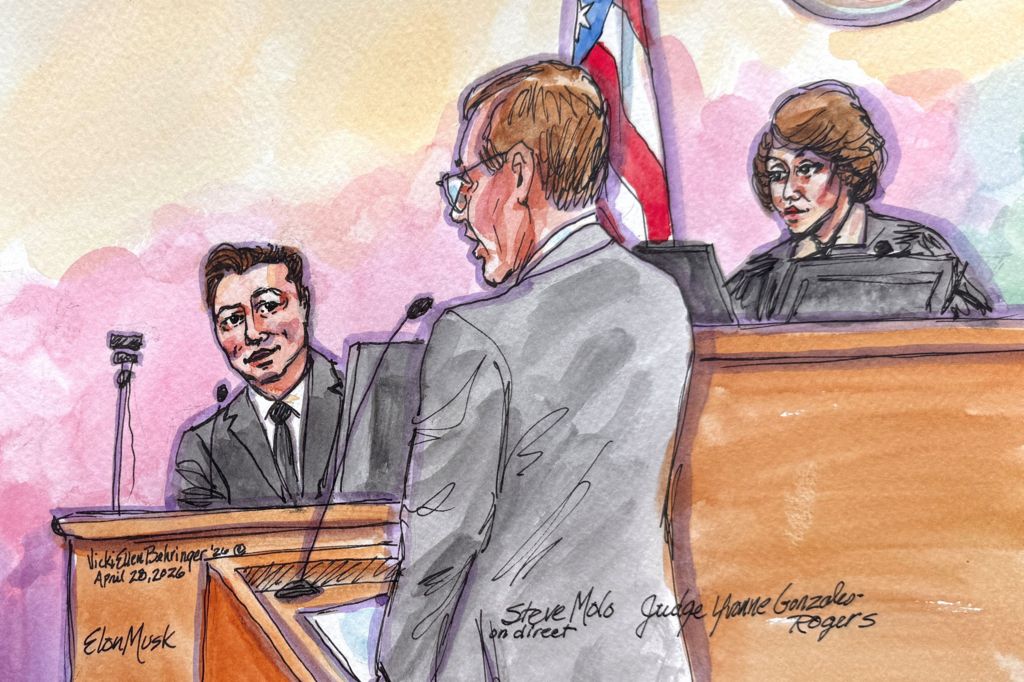
As the world’s wealthiest individual, boasting a net worth that exceeds $750 billion, Elon Musk has long grown accustomed to leveraging his vast resources, influence, and industry connections to shape outcomes across Silicon Valley on his own terms. But in the high-stakes $150 billion legal clash between Musk and OpenAI unfolding in a Northern California federal courtroom, the tech billionaire has finally encountered a counterpart who answers to no one but the law: District Judge Yvonne Gonzalez Rogers.
The legal dispute at the heart of this high-profile trial dates back to 2015, when Musk co-founded OpenAI alongside current CEO Sam Altman. Musk stepped away from the organization three years later following an internal power struggle, and now alleges that Altman and OpenAI President Greg Brockman breached a founding charitable trust and gained unjust enrichment when OpenAI launched a for-profit subsidiary in 2019, three years before the runaway commercial success of ChatGPT ignited a global AI boom. OpenAI has pushed back against the claims, arguing Musk’s lawsuit is nothing more than a play to gain a competitive edge for his own rival AI startup, xAI.
The trial, which began in late April, has already delivered one of its most memorable moments: when Musk attempted to act as his own legal counsel during testimony last week, objecting that OpenAI’s lead attorney William Savitt was asking improper leading questions. Gonzalez Rogers did not hesitate to rein in the billionaire, immediately interjecting to clarify courtroom procedure. She reminded Musk that unlike attorneys conducting direct examination of their own clients, opposing counsel are permitted to pose leading questions during cross-examination, before delivering the now-viral line: “Let’s remind everyone in the courtroom that you are not a lawyer.” Musk quickly acknowledged the correction, joking that while he had taken an introductory law course in college, he ultimately conceded: “Yes – I am not a lawyer,” drawing laughter from the packed gallery.
For legal observers who have worked with Gonzalez Rogers, the moment was entirely in character for the 61-year-old judge, who hails from southern Texas and has built a decades-long reputation for her no-nonsense, firm-but-fair approach to high-stakes Big Tech litigation. “I think it’s a function of the fact that she’s now so experienced – nothing’s going to faze her,” explained Michael Rhodes, a retired former partner at Cooley LLP, where Gonzalez Rogers once practiced law, and who has previously represented both Musk and OpenAI in separate matters.
Veteran courtroom artist Vicki Behringer, who has documented multiple of Gonzalez Rogers’ high-profile cases including this current OpenAI trial, noted the striking contrast between the two central figures in the courtroom. “It does make an interesting juxtaposition. He’s the wealthiest man in the world. He’s used to being on top. She’s definitely on top now. She’s in charge,” Behringer said.
A key detail that underscores the weight of Gonzalez Rogers’ role in this case: while a nine-person advisory jury is hearing testimony and expected to deliver a verdict by the end of May, their decision is non-binding. Ultimately, the judge will hand down the final ruling in the dispute. As plaintiffs’ attorney Jay Edelson, who currently has wrongful death lawsuits pending against OpenAI, put it: “That changes the whole landscape. It really means that this is completely her show.”
Gonzalez Rogers is no stranger to navigating the most complex, closely watched Big Tech legal battles in the country. Beyond the Musk-OpenAI clash, she currently oversees a massive multi-district litigation that consolidates dozens of social media addiction lawsuits brought by U.S. states and school districts against Meta, Snap, TikTok, and Google. She also previously presided over the high-profile Epic Games antitrust lawsuit against Apple, in which Fortnite-maker Epic accused Apple of anti-competitive practices by forcing app developers to use Apple’s in-house payment system in the App Store. In a stunning 2024 court filing, Gonzalez Rogers found that a top Apple executive had lied under oath, referring the matter to the U.S. Attorney for the Northern District of California. While an appeals court upheld her contempt finding, it struck down her order barring Apple from collecting commissions on transactions via third-party payment systems, and just this week Apple asked the U.S. Supreme Court to issue a stay of the appeals court ruling that would require Gonzalez Rogers to reopen the case to set a fair commission rate.
Legal professionals who appear before her universally acknowledge that her reputation for rigor demands extra preparation. “There are certain judges who, if they’re on the case, you kind of stand up a little bit straighter,” Edelson said. “You want to make sure everything’s right, that your tie’s on straight, and that you don’t mis-cite a case.”
Appointed to a lifetime federal bench seat in Oakland, California in 2011 by then-President Barack Obama, Gonzalez Rogers’ path to the judiciary was rooted in humble origins. During her confirmation hearings, then-U.S. Senator Dianne Feinstein shared that Gonzalez Rogers worked cleaning houses and mowing lawns during school breaks and weekends to cover her Princeton University tuition. After graduating from law school, she spent more than a decade in private practice, making partner at her firm before California Governor Arnold Schwarzenegger appointed her to a state superior court judgeship. She declined to comment for this report through a spokesperson.
Throughout the Musk-OpenAI trial, Gonzalez Rogers has run an extremely tight, efficient courtroom: proceedings start promptly at 8 a.m. every morning, with no formal lunch break, only two 20-minute recesses per day. While she is uncompromising with parties and counsel, she maintains a warm, approachable rapport with the advisory jury, regularly thanking them for their public service and acknowledging the fatigue that comes with daily proceedings. On one occasion, she joked, “If you get cranky with family, just know it’s because you’re tired.”
Despite her stern reputation in court, those who know her describe her as having a sharp, self-deprecating sense of humor. Rhodes called her “wickedly funny,” noting she often jokes that her children tell her her jokes are bad, and that lawyers only laugh out of politeness. When a courtroom microphone malfunctioned during the trial last week, she drew genuine laughter from the room with her deadline quip: “What can I tell you? We are funded by the federal government.”
When it comes to the parties involved in the OpenAI dispute, however, she wastes no time on pleasantries and holds all high-powered players to the same standard. In the first week of trial, she publicly chided Musk for inflammatory posts he made to his social platform X, where he referred to Altman as “Scam Altman” and made disparaging comments about OpenAI outside the courtroom. “How can we get this done without you making things worse outside the courtroom?” she asked Musk. When Musk argued he was only responding to OpenAI’s own public statements about the case, she pushed for a truce: “How about a clean slate? Beginning today.” Musk agreed, and Gonzalez Rogers extended the same request to Altman and Brockman, saying, “Let’s just try it, gentlemen. Let’s just try it and see if we can make things work.”
At a March pre-trial hearing, she made clear that the fame and wealth of the parties involved would not earn them special treatment, though she has made small accommodations for security and privacy: Musk and other top executives complete standard security screenings, but use a non-public entrance to avoid reporters and crowds outside the courthouse. She has also worked to keep the proceedings focused on legal facts rather than sensational speculation, cutting off Musk when he compared the risks of unregulated AI to the *Terminator* film franchise, telling him after jurors adjourned: “You’ve made your little statement. But that’s it.”
As the trial heads toward its conclusion, all eyes remain on Gonzalez Rogers, the steady, unflappable judge who will ultimately decide the outcome of one of the most consequential AI industry legal battles in history.