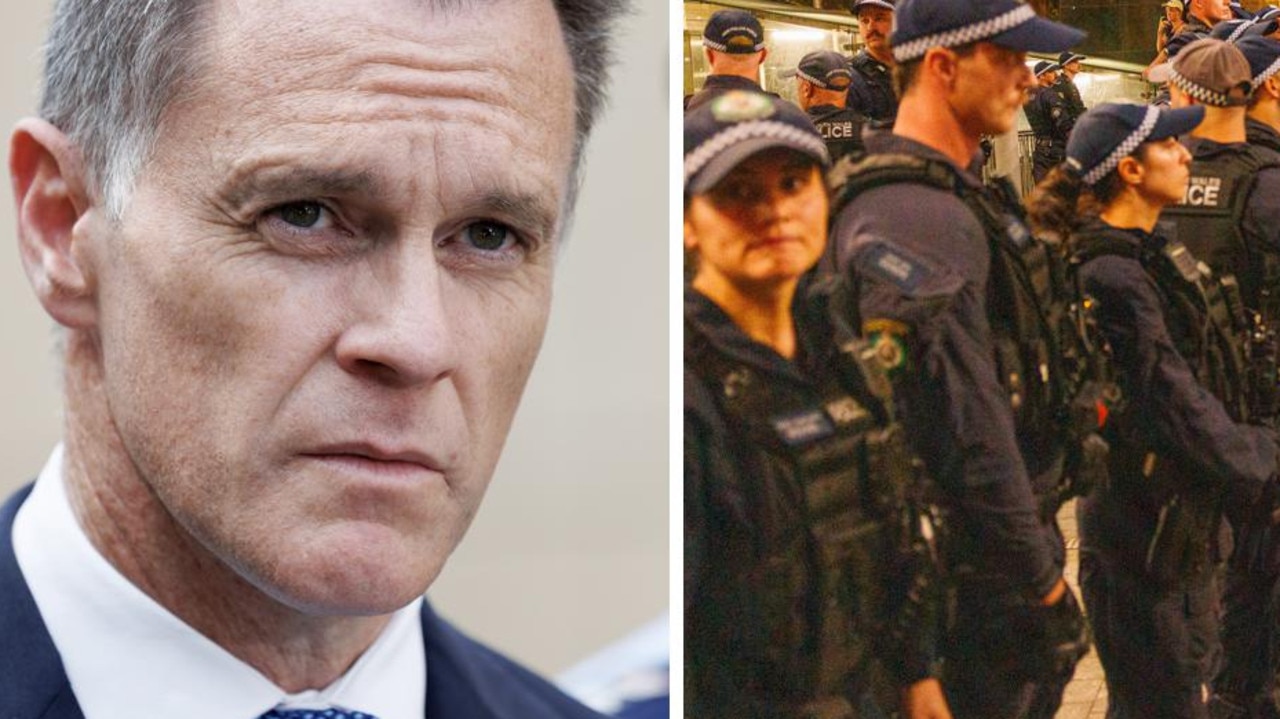
New South Wales Premier Chris Minns has announced that any state-level ban on the controversial pro-Palestinian slogan “globalise the intifada” will only move forward if Queensland’s existing ban on the phrase survives an upcoming High Court constitutional challenge. The announcement comes after a NSW parliamentary inquiry, convened in the aftermath of the alleged Bondi Beach terrorist attack, formally recommended the state government draft legislation to prohibit the phrase.
The slogan, commonly deployed by pro-Palestinian advocacy groups, references two historical popular uprisings in the occupied Palestinian territories. Australian Jewish community organizations have long argued that the slogan constitutes an explicit call for violence against Jewish people, making its public use unacceptable. Queensland’s center-right Liberal-National government was the first to act, banning both “globalise the intifada” and a second contentious phrase, “from the river to the sea”, earlier this year. The ban has already led to at least one individual being formally charged under the new legislation, but activist groups have challenged the law’s constitutionality and will argue their case before Australia’s highest court.
Speaking to NewsWire, Minns emphasized that his government will prioritize constitutional viability over rushed action. “If the laws in Queensland are successfully challenged, that means we can’t pursue them in NSW,” Minns said. “I’m being judicious here. I have to think about how these laws would be implemented not just next month, but years from now, and I want to make sure that our next step is constitutionally sound. If the Queensland ban is ultimately upheld by the High Court, we’ll pursue the ban here as well.”
Minns went on to defend his government’s post-attack crackdown on public protests, even as two key policy measures have already been struck down by the courts. Last month, a judicial ruling overturned emergency regulations that prohibited moving protests for a set window after a terror attack, with the judge finding the rules “impermissibly burdened” the implied constitutional right to freedom of political communication. An earlier ban on protests outside religious houses of worship was also overturned by the courts.
When asked if repeated court defeats had eroded public trust in his government, Minns rejected the suggestion. “I don’t think so, but I can guarantee you can find someone to come on a podcast and say the opposite is true,” he said. “My sense is people accept that it’s extraordinary times and that in extraordinary times you do need to pursue policies that you wouldn’t ordinarily implement. I’m not going to allow a situation where the temperature just gets repeatedly turned up after the worst terrorism event in the country’s history.”
On the overturned Bondi-specific protest laws, Minns argued the policy achieved its core goal despite its eventual defeat in court. “We received advice that it was the right policy at the right time, and despite being defeated in court, it was in place during the critical summer period,” he said. “It meant the police could say we’re not going to allow major divisive protests, for example, in the eastern suburbs of Sydney. I think that would have been a combustible situation. It’s difficult to give a counterfactual because the laws were in place and that unrest didn’t happen, but I think they were the right call. We’ve won a lot of court cases, too.”
Turning to broader questions of immigration and multiculturalism ahead of the 2027 state election, where Minns’ Labor government will face a resurgent right-wing One Nation party that has sought to capitalize on growing anti-immigrant sentiment, Minns called for clearer, more responsible rhetoric from political leaders. He specifically addressed recent comments by federal Opposition Leader Angus Taylor, who claimed migration from “bad countries” carries a higher risk of bringing “bad people” to Australia.
“Leaders have a responsibility to be specific about what you mean and what you say,” Minns said. “We’ve all seen, in different political guises, leaders step up and be ambiguous about what they mean to try and score a political advantage that way.”
Minns reaffirmed that multiculturalism has been a historic success for Australia, but argued the framework needs to adapt to current social tensions. “Multiculturalism has been a success in our country, but I think there’s an argument to say it needs to evolve a little bit,” he explained. “It does need to celebrate and understand differences. I also think we’ve got a responsibility to call out commonalities and the things that not only we have in common but we aspire to have in common.”
“There’s nothing wrong with saying that in Australia we want and expect, and the vast majority of people believe in, democracy, in freedom of association, in respect for women, in the rule of law,” he added. “That’s why millions of people have come from around the world to start a new life in Australia.”